

134
5 Supersonic Wind Tunnels
throat region in order to reduce the development of so-called Görtler instabilities
along the wall of the divergent. The maximum permissible stagnation pressure for
quiet operation is 11.7 bar. The wind tunnel can also operate with a noise level
comparable to that of conventional wind tunnels without suction of the boundary
layer at the throat.
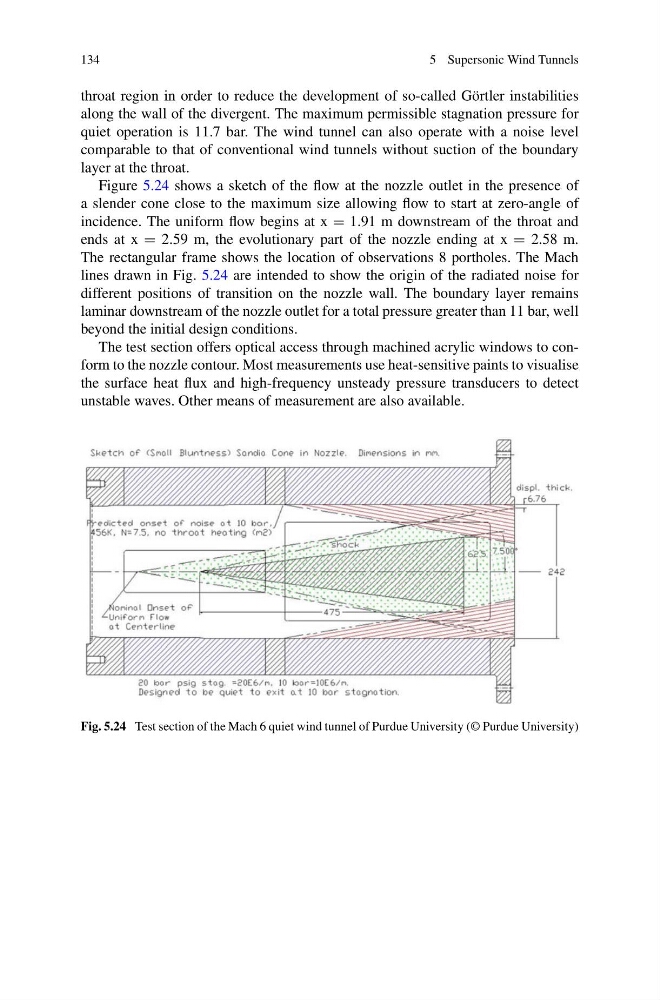
Figure 5.24 shows a sketch of the flow at the nozzle outlet in the presence of
a slender cone close to the maximum size allowing flow to start at zero-angle of
incidence. The uniform flow begins at x = 1.91 m downstream of the throat and
ends at x = 2.59 m, the evolutionary part of the nozzle ending at x = 2.58 m.
The rectangular frame shows the location of observations 8 portholes. The Mach
lines drawn in Fig. 5.24 are intended to show the origin of the radiated noise for
different positions of transition on the nozzle wall. The boundary layer remains
laminar downstream of the nozzle outlet for a total pressure greater than 11 bar, well
beyond the initial design conditions.
The test section offers optical access through machined acrylic windows to conform to the nozzle contour. Most measurements use heat-sensitive paints to visualise
the surface heat flux and high-frequency unsteady pressure transducers to detect
unstable waves. Other means of measurement are also available.
Fig. 5.24 Test section of the Mach 6 quiet wind tunnel of Purdue University (© Purdue University)
5 Supersonic Wind Tunnels
throat region in order to reduce the development of so-called Görtler instabilities
along the wall of the divergent. The maximum permissible stagnation pressure for
quiet operation is 11.7 bar. The wind tunnel can also operate with a noise level
comparable to that of conventional wind tunnels without suction of the boundary
layer at the throat.
Figure 5.24 shows a sketch of the flow at the nozzle outlet in the presence of
a slender cone close to the maximum size allowing flow to start at zero-angle of
incidence. The uniform flow begins at x = 1.91 m downstream of the throat and
ends at x = 2.59 m, the evolutionary part of the nozzle ending at x = 2.58 m.
The rectangular frame shows the location of observations 8 portholes. The Mach
lines drawn in Fig. 5.24 are intended to show the origin of the radiated noise for
different positions of transition on the nozzle wall. The boundary layer remains
laminar downstream of the nozzle outlet for a total pressure greater than 11 bar, well
beyond the initial design conditions.
The test section offers optical access through machined acrylic windows to conform to the nozzle contour. Most measurements use heat-sensitive paints to visualise
the surface heat flux and high-frequency unsteady pressure transducers to detect
unstable waves. Other means of measurement are also available.
Fig. 5.24 Test section of the Mach 6 quiet wind tunnel of Purdue University (© Purdue University)