

92
3 Subsonic Wind Tunnels
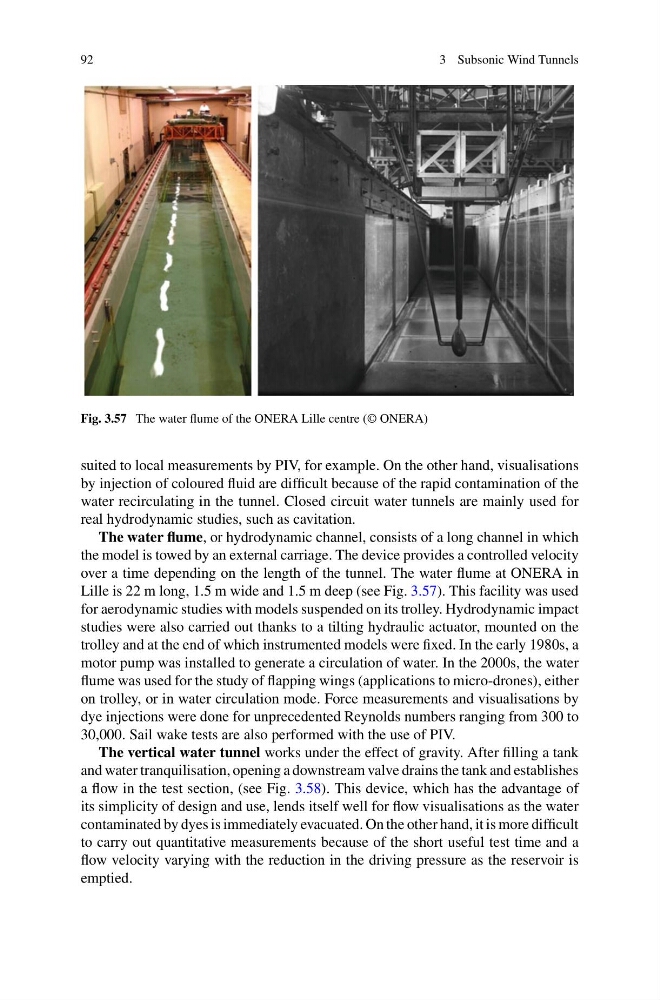
Fig. 3.57 The water flume of the ONERA Lille centre (© ONERA)
suited to local measurements by PIV, for example. On the other hand, visualisations
by injection of coloured fluid are difficult because of the rapid contamination of the
water recirculating in the tunnel. Closed circuit water tunnels are mainly used for
real hydrodynamic studies, such as cavitation.
The water flume, or hydrodynamic channel, consists of a long channel in which
the model is towed by an external carriage. The device provides a controlled velocity
over a time depending on the length of the tunnel. The water flume at ONERA in
Lille is 22 m long, 1.5 m wide and 1.5 m deep (see Fig. 3.57). This facility was used
for aerodynamic studies with models suspended on its trolley. Hydrodynamic impact
studies were also carried out thanks to a tilting hydraulic actuator, mounted on the
trolley and at the end of which instrumented models were fixed. In the early 1980s, a
motor pump was installed to generate a circulation of water. In the 2000s, the water
flume was used for the study of flapping wings (applications to micro-drones), either
on trolley, or in water circulation mode. Force measurements and visualisations by
dye injections were done for unprecedented Reynolds numbers ranging from 300 to
30,000. Sail wake tests are also performed with the use of PIV.
The vertical water tunnel works under the effect of gravity. After filling a tank
and water tranquilisation, opening a downstream valve drains the tank and establishes
a flow in the test section, (see Fig. 3.58). This device, which has the advantage of
its simplicity of design and use, lends itself well for flow visualisations as the water
contaminated by dyes is immediately evacuated. On the other hand, it is more difficult
to carry out quantitative measurements because of the short useful test time and a
flow velocity varying with the reduction in the driving pressure as the reservoir is
emptied.
3 Subsonic Wind Tunnels
Fig. 3.57 The water flume of the ONERA Lille centre (© ONERA)
suited to local measurements by PIV, for example. On the other hand, visualisations
by injection of coloured fluid are difficult because of the rapid contamination of the
water recirculating in the tunnel. Closed circuit water tunnels are mainly used for
real hydrodynamic studies, such as cavitation.
The water flume, or hydrodynamic channel, consists of a long channel in which
the model is towed by an external carriage. The device provides a controlled velocity
over a time depending on the length of the tunnel. The water flume at ONERA in
Lille is 22 m long, 1.5 m wide and 1.5 m deep (see Fig. 3.57). This facility was used
for aerodynamic studies with models suspended on its trolley. Hydrodynamic impact
studies were also carried out thanks to a tilting hydraulic actuator, mounted on the
trolley and at the end of which instrumented models were fixed. In the early 1980s, a
motor pump was installed to generate a circulation of water. In the 2000s, the water
flume was used for the study of flapping wings (applications to micro-drones), either
on trolley, or in water circulation mode. Force measurements and visualisations by
dye injections were done for unprecedented Reynolds numbers ranging from 300 to
30,000. Sail wake tests are also performed with the use of PIV.
The vertical water tunnel works under the effect of gravity. After filling a tank
and water tranquilisation, opening a downstream valve drains the tank and establishes
a flow in the test section, (see Fig. 3.58). This device, which has the advantage of
its simplicity of design and use, lends itself well for flow visualisations as the water
contaminated by dyes is immediately evacuated. On the other hand, it is more difficult
to carry out quantitative measurements because of the short useful test time and a
flow velocity varying with the reduction in the driving pressure as the reservoir is
emptied.