

3.3 Wind Tunnels for Ground Vehicles
87
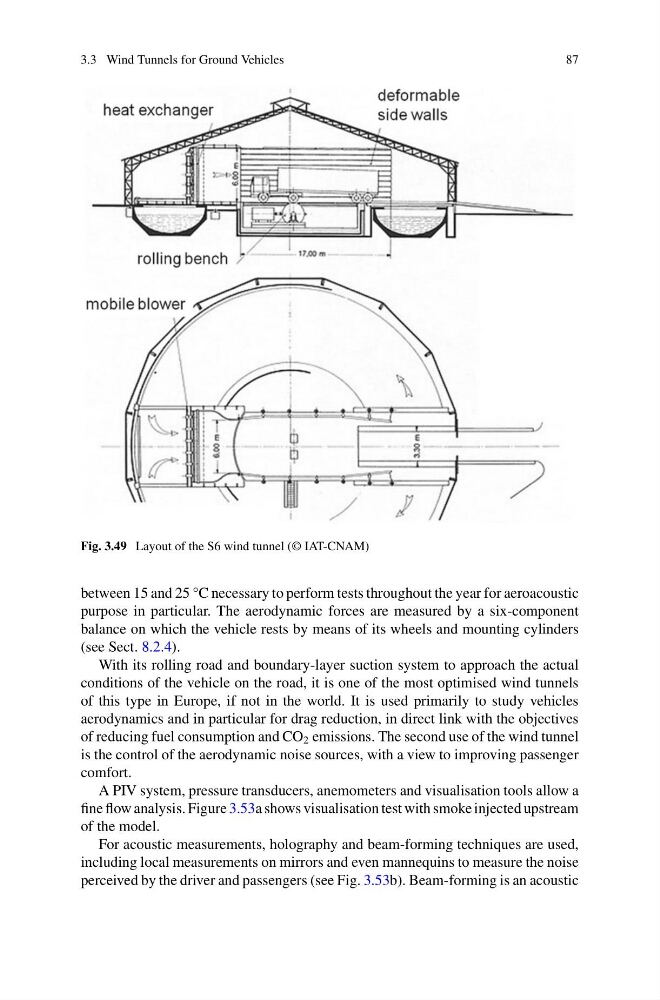
Fig. 3.49 Layout of the S6 wind tunnel (© IAT-CNAM)
between 15 and 25 °C necessary to perform tests throughout the year for aeroacoustic
purpose in particular. The aerodynamic forces are measured by a six-component
balance on which the vehicle rests by means of its wheels and mounting cylinders
(see Sect. 8.2.4).
With its rolling road and boundary-layer suction system to approach the actual
conditions of the vehicle on the road, it is one of the most optimised wind tunnels
of this type in Europe, if not in the world. It is used primarily to study vehicles
aerodynamics and in particular for drag reduction, in direct link with the objectives
of reducing fuel consumption and CO 2 emissions. The second use of the wind tunnel
is the control of the aerodynamic noise sources, with a view to improving passenger
comfort.
A PIV system, pressure transducers, anemometers and visualisation tools allow a
fine flow analysis. Figure 3.53a shows visualisation test with smoke injected upstream
of the model.
For acoustic measurements, holography and beam-forming techniques are used,
including local measurements on mirrors and even mannequins to measure the noise
perceived by the driver and passengers (see Fig. 3.53b). Beam-forming is an acoustic
87
Fig. 3.49 Layout of the S6 wind tunnel (© IAT-CNAM)
between 15 and 25 °C necessary to perform tests throughout the year for aeroacoustic
purpose in particular. The aerodynamic forces are measured by a six-component
balance on which the vehicle rests by means of its wheels and mounting cylinders
(see Sect. 8.2.4).
With its rolling road and boundary-layer suction system to approach the actual
conditions of the vehicle on the road, it is one of the most optimised wind tunnels
of this type in Europe, if not in the world. It is used primarily to study vehicles
aerodynamics and in particular for drag reduction, in direct link with the objectives
of reducing fuel consumption and CO 2 emissions. The second use of the wind tunnel
is the control of the aerodynamic noise sources, with a view to improving passenger
comfort.
A PIV system, pressure transducers, anemometers and visualisation tools allow a
fine flow analysis. Figure 3.53a shows visualisation test with smoke injected upstream
of the model.
For acoustic measurements, holography and beam-forming techniques are used,
including local measurements on mirrors and even mannequins to measure the noise
perceived by the driver and passengers (see Fig. 3.53b). Beam-forming is an acoustic