

82
Z. Xiao et al.
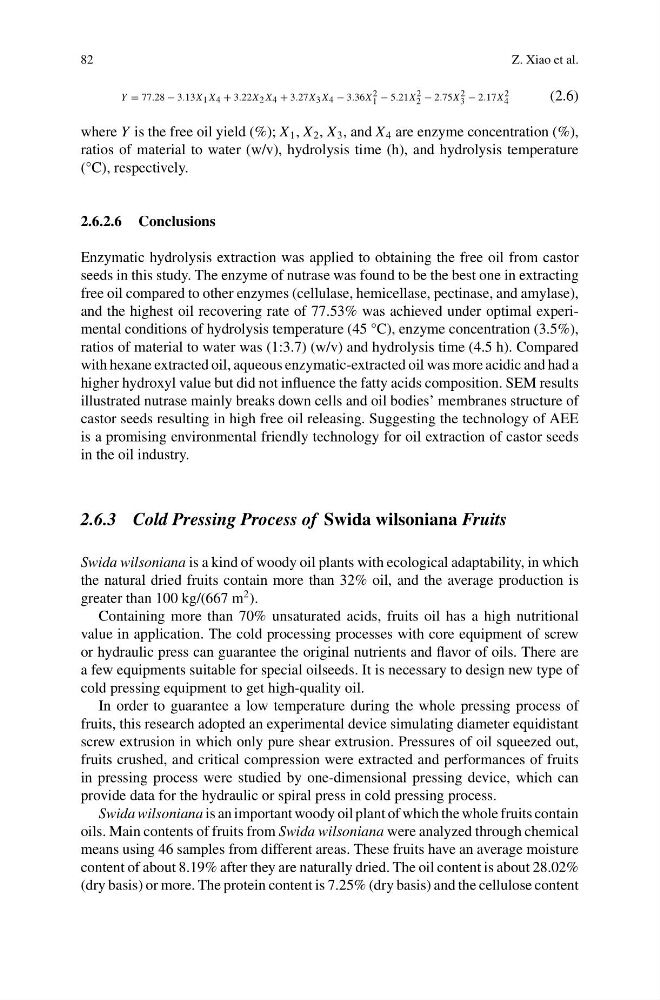
Y = 77.28 − 3.13X 1 X 4 + 3.22X 2 X 4 + 3.27X 3 X 4 − 3.36X 2
1 − 5.21X 2
2 − 2.75X 2
3 − 2.17X 2
4
(2.6)
where Y is the free oil yield (%); X 1 , X 2 , X 3 , and X 4 are enzyme concentration (%),
ratios of material to water (w/v), hydrolysis time (h), and hydrolysis temperature
(°C), respectively.
2.6.2.6 Conclusions
Enzymatic hydrolysis extraction was applied to obtaining the free oil from castor
seeds in this study. The enzyme of nutrase was found to be the best one in extracting
free oil compared to other enzymes (cellulase, hemicellase, pectinase, and amylase),
and the highest oil recovering rate of 77.53% was achieved under optimal experimental conditions of hydrolysis temperature (45 °C), enzyme concentration (3.5%),
ratios of material to water was (1:3.7) (w/v) and hydrolysis time (4.5 h). Compared
with hexane extracted oil, aqueous enzymatic-extracted oil was more acidic and had a
higher hydroxyl value but did not influence the fatty acids composition. SEM results
illustrated nutrase mainly breaks down cells and oil bodies’ membranes structure of
castor seeds resulting in high free oil releasing. Suggesting the technology of AEE
is a promising environmental friendly technology for oil extraction of castor seeds
in the oil industry.
2.6.3 Cold Pressing Process of Swida wilsoniana Fruits
Swida wilsoniana is a kind of woody oil plants with ecological adaptability, in which
the natural dried fruits contain more than 32% oil, and the average production is
greater than 100 kg/(667 m
2 ).
Containing more than 70% unsaturated acids, fruits oil has a high nutritional
value in application. The cold processing processes with core equipment of screw
or hydraulic press can guarantee the original nutrients and flavor of oils. There are
a few equipments suitable for special oilseeds. It is necessary to design new type of
cold pressing equipment to get high-quality oil.
In order to guarantee a low temperature during the whole pressing process of
fruits, this research adopted an experimental device simulating diameter equidistant
screw extrusion in which only pure shear extrusion. Pressures of oil squeezed out,
fruits crushed, and critical compression were extracted and performances of fruits
in pressing process were studied by one-dimensional pressing device, which can
provide data for the hydraulic or spiral press in cold pressing process.
Swida wilsoniana is an important woody oil plant of which the whole fruits contain
oils. Main contents of fruits from Swida wilsoniana were analyzed through chemical
means using 46 samples from different areas. These fruits have an average moisture
content of about 8.19% after they are naturally dried. The oil content is about 28.02%
(dry basis) or more. The protein content is 7.25% (dry basis) and the cellulose content
Z. Xiao et al.
Y = 77.28 − 3.13X 1 X 4 + 3.22X 2 X 4 + 3.27X 3 X 4 − 3.36X 2
1 − 5.21X 2
2 − 2.75X 2
3 − 2.17X 2
4
(2.6)
where Y is the free oil yield (%); X 1 , X 2 , X 3 , and X 4 are enzyme concentration (%),
ratios of material to water (w/v), hydrolysis time (h), and hydrolysis temperature
(°C), respectively.
2.6.2.6 Conclusions
Enzymatic hydrolysis extraction was applied to obtaining the free oil from castor
seeds in this study. The enzyme of nutrase was found to be the best one in extracting
free oil compared to other enzymes (cellulase, hemicellase, pectinase, and amylase),
and the highest oil recovering rate of 77.53% was achieved under optimal experimental conditions of hydrolysis temperature (45 °C), enzyme concentration (3.5%),
ratios of material to water was (1:3.7) (w/v) and hydrolysis time (4.5 h). Compared
with hexane extracted oil, aqueous enzymatic-extracted oil was more acidic and had a
higher hydroxyl value but did not influence the fatty acids composition. SEM results
illustrated nutrase mainly breaks down cells and oil bodies’ membranes structure of
castor seeds resulting in high free oil releasing. Suggesting the technology of AEE
is a promising environmental friendly technology for oil extraction of castor seeds
in the oil industry.
2.6.3 Cold Pressing Process of Swida wilsoniana Fruits
Swida wilsoniana is a kind of woody oil plants with ecological adaptability, in which
the natural dried fruits contain more than 32% oil, and the average production is
greater than 100 kg/(667 m
2 ).
Containing more than 70% unsaturated acids, fruits oil has a high nutritional
value in application. The cold processing processes with core equipment of screw
or hydraulic press can guarantee the original nutrients and flavor of oils. There are
a few equipments suitable for special oilseeds. It is necessary to design new type of
cold pressing equipment to get high-quality oil.
In order to guarantee a low temperature during the whole pressing process of
fruits, this research adopted an experimental device simulating diameter equidistant
screw extrusion in which only pure shear extrusion. Pressures of oil squeezed out,
fruits crushed, and critical compression were extracted and performances of fruits
in pressing process were studied by one-dimensional pressing device, which can
provide data for the hydraulic or spiral press in cold pressing process.
Swida wilsoniana is an important woody oil plant of which the whole fruits contain
oils. Main contents of fruits from Swida wilsoniana were analyzed through chemical
means using 46 samples from different areas. These fruits have an average moisture
content of about 8.19% after they are naturally dried. The oil content is about 28.02%
(dry basis) or more. The protein content is 7.25% (dry basis) and the cellulose content