

76
Z. Xiao et al.
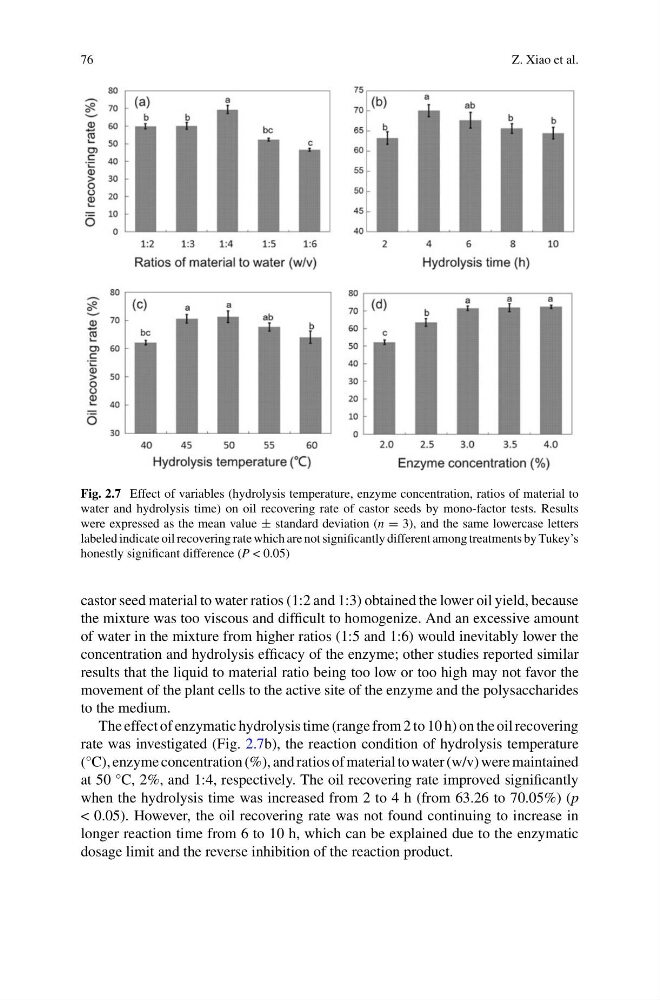
Fig. 2.7 Effect of variables (hydrolysis temperature, enzyme concentration, ratios of material to
water and hydrolysis time) on oil recovering rate of castor seeds by mono-factor tests. Results
were expressed as the mean value ± standard deviation (n = 3), and the same lowercase letters
labeled indicate oil recovering rate which are not significantly different among treatments by Tukey’s
honestly significant difference (P < 0.05)
castor seed material to water ratios (1:2 and 1:3) obtained the lower oil yield, because
the mixture was too viscous and difficult to homogenize. And an excessive amount
of water in the mixture from higher ratios (1:5 and 1:6) would inevitably lower the
concentration and hydrolysis efficacy of the enzyme; other studies reported similar
results that the liquid to material ratio being too low or too high may not favor the
movement of the plant cells to the active site of the enzyme and the polysaccharides
to the medium.
The effect of enzymatic hydrolysis time (range from 2 to 10 h) on the oil recovering
rate was investigated (Fig. 2.7b), the reaction condition of hydrolysis temperature
(°C), enzyme concentration (%), and ratios of material to water (w/v) were maintained
at 50 °C, 2%, and 1:4, respectively. The oil recovering rate improved significantly
when the hydrolysis time was increased from 2 to 4 h (from 63.26 to 70.05%) (p
< 0.05). However, the oil recovering rate was not found continuing to increase in
longer reaction time from 6 to 10 h, which can be explained due to the enzymatic
dosage limit and the reverse inhibition of the reaction product.
Z. Xiao et al.
Fig. 2.7 Effect of variables (hydrolysis temperature, enzyme concentration, ratios of material to
water and hydrolysis time) on oil recovering rate of castor seeds by mono-factor tests. Results
were expressed as the mean value ± standard deviation (n = 3), and the same lowercase letters
labeled indicate oil recovering rate which are not significantly different among treatments by Tukey’s
honestly significant difference (P < 0.05)
castor seed material to water ratios (1:2 and 1:3) obtained the lower oil yield, because
the mixture was too viscous and difficult to homogenize. And an excessive amount
of water in the mixture from higher ratios (1:5 and 1:6) would inevitably lower the
concentration and hydrolysis efficacy of the enzyme; other studies reported similar
results that the liquid to material ratio being too low or too high may not favor the
movement of the plant cells to the active site of the enzyme and the polysaccharides
to the medium.
The effect of enzymatic hydrolysis time (range from 2 to 10 h) on the oil recovering
rate was investigated (Fig. 2.7b), the reaction condition of hydrolysis temperature
(°C), enzyme concentration (%), and ratios of material to water (w/v) were maintained
at 50 °C, 2%, and 1:4, respectively. The oil recovering rate improved significantly
when the hydrolysis time was increased from 2 to 4 h (from 63.26 to 70.05%) (p
< 0.05). However, the oil recovering rate was not found continuing to increase in
longer reaction time from 6 to 10 h, which can be explained due to the enzymatic
dosage limit and the reverse inhibition of the reaction product.