

162
L. Lin et al.
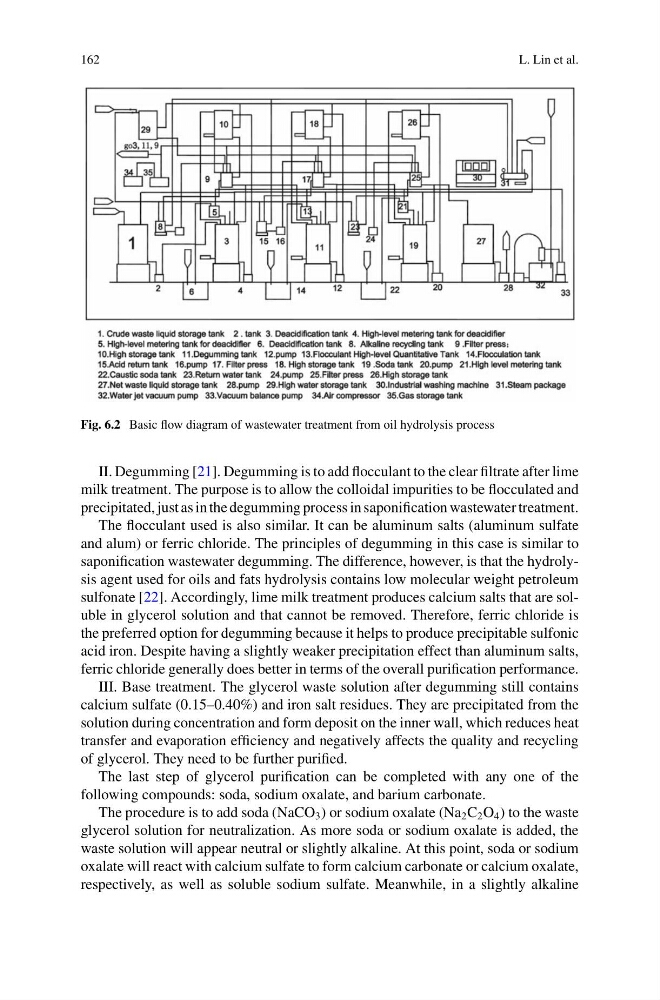
Fig. 6.2 Basic flow diagram of wastewater treatment from oil hydrolysis process
II. Degumming [21]. Degumming is to add flocculant to the clear filtrate after lime
milk treatment. The purpose is to allow the colloidal impurities to be flocculated and
precipitated, just as in the degumming process in saponification wastewater treatment.
The flocculant used is also similar. It can be aluminum salts (aluminum sulfate
and alum) or ferric chloride. The principles of degumming in this case is similar to
saponification wastewater degumming. The difference, however, is that the hydrolysis agent used for oils and fats hydrolysis contains low molecular weight petroleum
sulfonate [22]. Accordingly, lime milk treatment produces calcium salts that are soluble in glycerol solution and that cannot be removed. Therefore, ferric chloride is
the preferred option for degumming because it helps to produce precipitable sulfonic
acid iron. Despite having a slightly weaker precipitation effect than aluminum salts,
ferric chloride generally does better in terms of the overall purification performance.
III. Base treatment. The glycerol waste solution after degumming still contains
calcium sulfate (0.15–0.40%) and iron salt residues. They are precipitated from the
solution during concentration and form deposit on the inner wall, which reduces heat
transfer and evaporation efficiency and negatively affects the quality and recycling
of glycerol. They need to be further purified.
The last step of glycerol purification can be completed with any one of the
following compounds: soda, sodium oxalate, and barium carbonate.
The procedure is to add soda (NaCO 3 ) or sodium oxalate (Na 2 C 2 O 4 ) to the waste
glycerol solution for neutralization. As more soda or sodium oxalate is added, the
waste solution will appear neutral or slightly alkaline. At this point, soda or sodium
oxalate will react with calcium sulfate to form calcium carbonate or calcium oxalate,
respectively, as well as soluble sodium sulfate. Meanwhile, in a slightly alkaline
L. Lin et al.
Fig. 6.2 Basic flow diagram of wastewater treatment from oil hydrolysis process
II. Degumming [21]. Degumming is to add flocculant to the clear filtrate after lime
milk treatment. The purpose is to allow the colloidal impurities to be flocculated and
precipitated, just as in the degumming process in saponification wastewater treatment.
The flocculant used is also similar. It can be aluminum salts (aluminum sulfate
and alum) or ferric chloride. The principles of degumming in this case is similar to
saponification wastewater degumming. The difference, however, is that the hydrolysis agent used for oils and fats hydrolysis contains low molecular weight petroleum
sulfonate [22]. Accordingly, lime milk treatment produces calcium salts that are soluble in glycerol solution and that cannot be removed. Therefore, ferric chloride is
the preferred option for degumming because it helps to produce precipitable sulfonic
acid iron. Despite having a slightly weaker precipitation effect than aluminum salts,
ferric chloride generally does better in terms of the overall purification performance.
III. Base treatment. The glycerol waste solution after degumming still contains
calcium sulfate (0.15–0.40%) and iron salt residues. They are precipitated from the
solution during concentration and form deposit on the inner wall, which reduces heat
transfer and evaporation efficiency and negatively affects the quality and recycling
of glycerol. They need to be further purified.
The last step of glycerol purification can be completed with any one of the
following compounds: soda, sodium oxalate, and barium carbonate.
The procedure is to add soda (NaCO 3 ) or sodium oxalate (Na 2 C 2 O 4 ) to the waste
glycerol solution for neutralization. As more soda or sodium oxalate is added, the
waste solution will appear neutral or slightly alkaline. At this point, soda or sodium
oxalate will react with calcium sulfate to form calcium carbonate or calcium oxalate,
respectively, as well as soluble sodium sulfate. Meanwhile, in a slightly alkaline