

738
8 Modern Weapons: Possibilities and Limitations
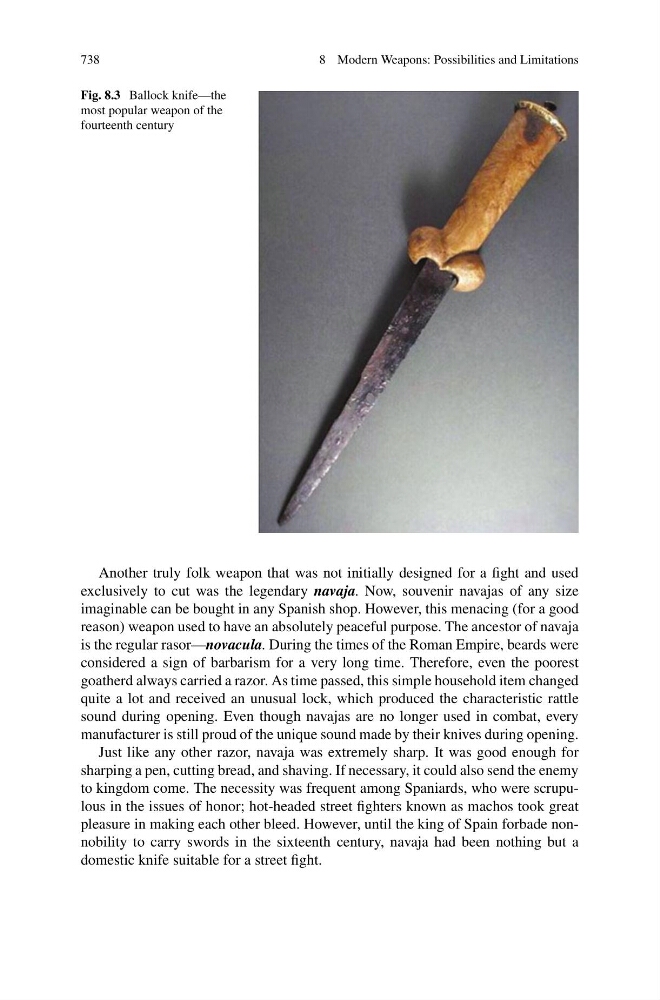
Fig. 8.3 Ballock knife—the
most popular weapon of the
fourteenth century
Another truly folk weapon that was not initially designed for a fight and used
exclusively to cut was the legendary navaja. Now, souvenir navajas of any size
imaginable can be bought in any Spanish shop. However, this menacing (for a good
reason) weapon used to have an absolutely peaceful purpose. The ancestor of navaja
is the regular rasor—novacula. During the times of the Roman Empire, beards were
considered a sign of barbarism for a very long time. Therefore, even the poorest
goatherd always carried a razor. As time passed, this simple household item changed
quite a lot and received an unusual lock, which produced the characteristic rattle
sound during opening. Even though navajas are no longer used in combat, every
manufacturer is still proud of the unique sound made by their knives during opening.
Just like any other razor, navaja was extremely sharp. It was good enough for
sharping a pen, cutting bread, and shaving. If necessary, it could also send the enemy
to kingdom come. The necessity was frequent among Spaniards, who were scrupulous in the issues of honor; hot-headed street fighters known as machos took great
pleasure in making each other bleed. However, until the king of Spain forbade nonnobility to carry swords in the sixteenth century, navaja had been nothing but a
domestic knife suitable for a street fight.