

7.4 Using Classic Methods of Reliable …
685
Example from
papers
Real example
Set of Trojans
Expert database
Design
Implementation
Table of
connections
Topology
Design
Extraction rules and models
Exceptions
Information base
Acquired information
Error analysis
Labeling of suspicious
structures
Design rules, negative image
(RTL, table of connections),
structural rules, formal variation
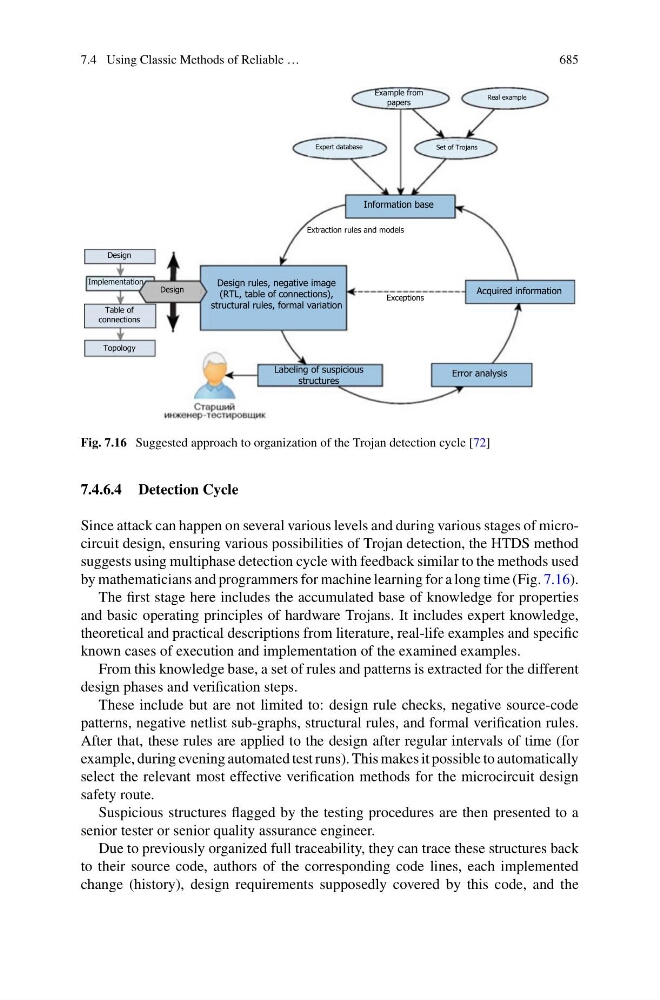
Fig. 7.16 Suggested approach to organization of the Trojan detection cycle [72]
7.4.6.4 Detection Cycle
Since attack can happen on several various levels and during various stages of microcircuit design, ensuring various possibilities of Trojan detection, the HTDS method
suggests using multiphase detection cycle with feedback similar to the methods used
by mathematicians and programmers for machine learning for a long time (Fig. 7.16).
The first stage here includes the accumulated base of knowledge for properties
and basic operating principles of hardware Trojans. It includes expert knowledge,
theoretical and practical descriptions from literature, real-life examples and specific
known cases of execution and implementation of the examined examples.
From this knowledge base, a set of rules and patterns is extracted for the different
design phases and verification steps.
These include but are not limited to: design rule checks, negative source-code
patterns, negative netlist sub-graphs, structural rules, and formal verification rules.
After that, these rules are applied to the design after regular intervals of time (for
example, during evening automated test runs). This makes it possible to automatically
select the relevant most effective verification methods for the microcircuit design
safety route.
Suspicious structures flagged by the testing procedures are then presented to a
senior tester or senior quality assurance engineer.
Due to previously organized full traceability, they can trace these structures back
to their source code, authors of the corresponding code lines, each implemented
change (history), design requirements supposedly covered by this code, and the