

6.7 Methods of Counteracting Microcircuit Re-engineering Processes
607
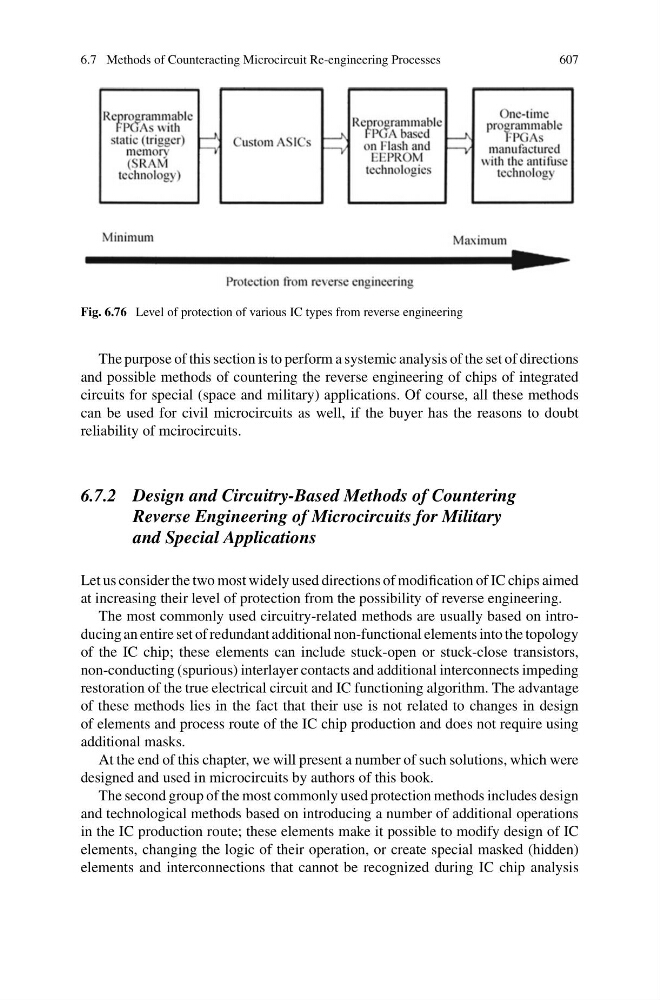
Fig. 6.76 Level of protection of various IC types from reverse engineering
The purpose of this section is to perform a systemic analysis of the set of directions
and possible methods of countering the reverse engineering of chips of integrated
circuits for special (space and military) applications. Of course, all these methods
can be used for civil microcircuits as well, if the buyer has the reasons to doubt
reliability of mcirocircuits.
6.7.2 Design and Circuitry-Based Methods of Countering
Reverse Engineering of Microcircuits for Military
and Special Applications
Let us consider the two most widely used directions of modification of IC chips aimed
at increasing their level of protection from the possibility of reverse engineering.
The most commonly used circuitry-related methods are usually based on introducing an entire set of redundant additional non-functional elements into the topology
of the IC chip; these elements can include stuck-open or stuck-close transistors,
non-conducting (spurious) interlayer contacts and additional interconnects impeding
restoration of the true electrical circuit and IC functioning algorithm. The advantage
of these methods lies in the fact that their use is not related to changes in design
of elements and process route of the IC chip production and does not require using
additional masks.
At the end of this chapter, we will present a number of such solutions, which were
designed and used in microcircuits by authors of this book.
The second group of the most commonly used protection methods includes design
and technological methods based on introducing a number of additional operations
in the IC production route; these elements make it possible to modify design of IC
elements, changing the logic of their operation, or create special masked (hidden)
elements and interconnections that cannot be recognized during IC chip analysis
607
Fig. 6.76 Level of protection of various IC types from reverse engineering
The purpose of this section is to perform a systemic analysis of the set of directions
and possible methods of countering the reverse engineering of chips of integrated
circuits for special (space and military) applications. Of course, all these methods
can be used for civil microcircuits as well, if the buyer has the reasons to doubt
reliability of mcirocircuits.
6.7.2 Design and Circuitry-Based Methods of Countering
Reverse Engineering of Microcircuits for Military
and Special Applications
Let us consider the two most widely used directions of modification of IC chips aimed
at increasing their level of protection from the possibility of reverse engineering.
The most commonly used circuitry-related methods are usually based on introducing an entire set of redundant additional non-functional elements into the topology
of the IC chip; these elements can include stuck-open or stuck-close transistors,
non-conducting (spurious) interlayer contacts and additional interconnects impeding
restoration of the true electrical circuit and IC functioning algorithm. The advantage
of these methods lies in the fact that their use is not related to changes in design
of elements and process route of the IC chip production and does not require using
additional masks.
At the end of this chapter, we will present a number of such solutions, which were
designed and used in microcircuits by authors of this book.
The second group of the most commonly used protection methods includes design
and technological methods based on introducing a number of additional operations
in the IC production route; these elements make it possible to modify design of IC
elements, changing the logic of their operation, or create special masked (hidden)
elements and interconnections that cannot be recognized during IC chip analysis