

6.6 Methods of Preparing Samples of Submicron Microcircuits …
599
a)
b)
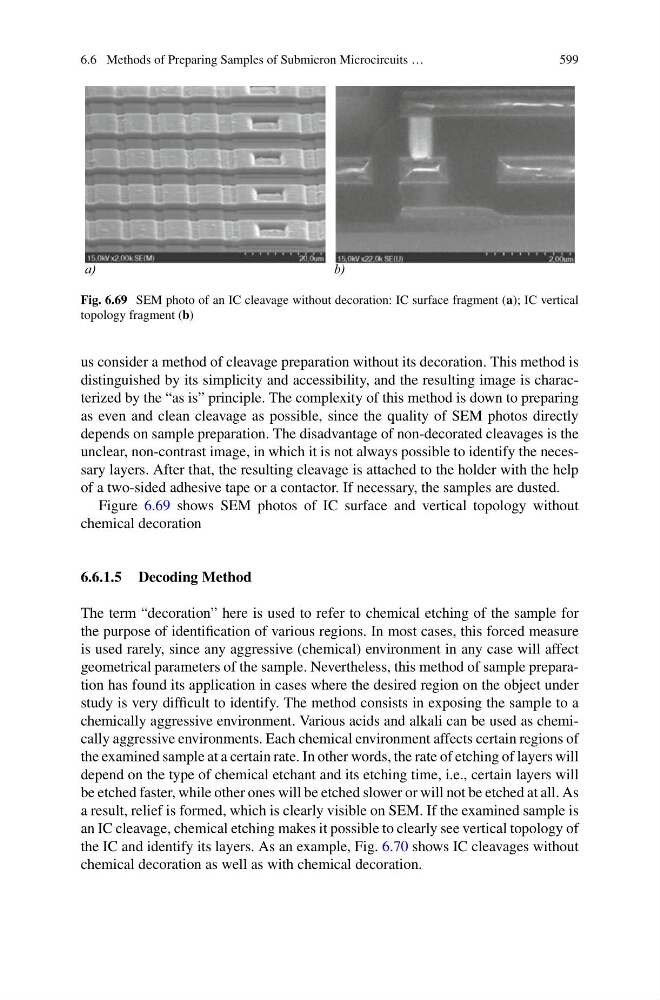
Fig. 6.69 SEM photo of an IC cleavage without decoration: IC surface fragment (a); IC vertical
topology fragment (b)
us consider a method of cleavage preparation without its decoration. This method is
distinguished by its simplicity and accessibility, and the resulting image is characterized by the “as is” principle. The complexity of this method is down to preparing
as even and clean cleavage as possible, since the quality of SEM photos directly
depends on sample preparation. The disadvantage of non-decorated cleavages is the
unclear, non-contrast image, in which it is not always possible to identify the necessary layers. After that, the resulting cleavage is attached to the holder with the help
of a two-sided adhesive tape or a contactor. If necessary, the samples are dusted.
Figure 6.69 shows SEM photos of IC surface and vertical topology without
chemical decoration
6.6.1.5 Decoding Method
The term “decoration” here is used to refer to chemical etching of the sample for
the purpose of identification of various regions. In most cases, this forced measure
is used rarely, since any aggressive (chemical) environment in any case will affect
geometrical parameters of the sample. Nevertheless, this method of sample preparation has found its application in cases where the desired region on the object under
study is very difficult to identify. The method consists in exposing the sample to a
chemically aggressive environment. Various acids and alkali can be used as chemically aggressive environments. Each chemical environment affects certain regions of
the examined sample at a certain rate. In other words, the rate of etching of layers will
depend on the type of chemical etchant and its etching time, i.e., certain layers will
be etched faster, while other ones will be etched slower or will not be etched at all. As
a result, relief is formed, which is clearly visible on SEM. If the examined sample is
an IC cleavage, chemical etching makes it possible to clearly see vertical topology of
the IC and identify its layers. As an example, Fig. 6.70 shows IC cleavages without
chemical decoration as well as with chemical decoration.
599
a)
b)
Fig. 6.69 SEM photo of an IC cleavage without decoration: IC surface fragment (a); IC vertical
topology fragment (b)
us consider a method of cleavage preparation without its decoration. This method is
distinguished by its simplicity and accessibility, and the resulting image is characterized by the “as is” principle. The complexity of this method is down to preparing
as even and clean cleavage as possible, since the quality of SEM photos directly
depends on sample preparation. The disadvantage of non-decorated cleavages is the
unclear, non-contrast image, in which it is not always possible to identify the necessary layers. After that, the resulting cleavage is attached to the holder with the help
of a two-sided adhesive tape or a contactor. If necessary, the samples are dusted.
Figure 6.69 shows SEM photos of IC surface and vertical topology without
chemical decoration
6.6.1.5 Decoding Method
The term “decoration” here is used to refer to chemical etching of the sample for
the purpose of identification of various regions. In most cases, this forced measure
is used rarely, since any aggressive (chemical) environment in any case will affect
geometrical parameters of the sample. Nevertheless, this method of sample preparation has found its application in cases where the desired region on the object under
study is very difficult to identify. The method consists in exposing the sample to a
chemically aggressive environment. Various acids and alkali can be used as chemically aggressive environments. Each chemical environment affects certain regions of
the examined sample at a certain rate. In other words, the rate of etching of layers will
depend on the type of chemical etchant and its etching time, i.e., certain layers will
be etched faster, while other ones will be etched slower or will not be etched at all. As
a result, relief is formed, which is clearly visible on SEM. If the examined sample is
an IC cleavage, chemical etching makes it possible to clearly see vertical topology of
the IC and identify its layers. As an example, Fig. 6.70 shows IC cleavages without
chemical decoration as well as with chemical decoration.