

508
6 Reverse Engineering of Microcircuits
Physical block
Digital block
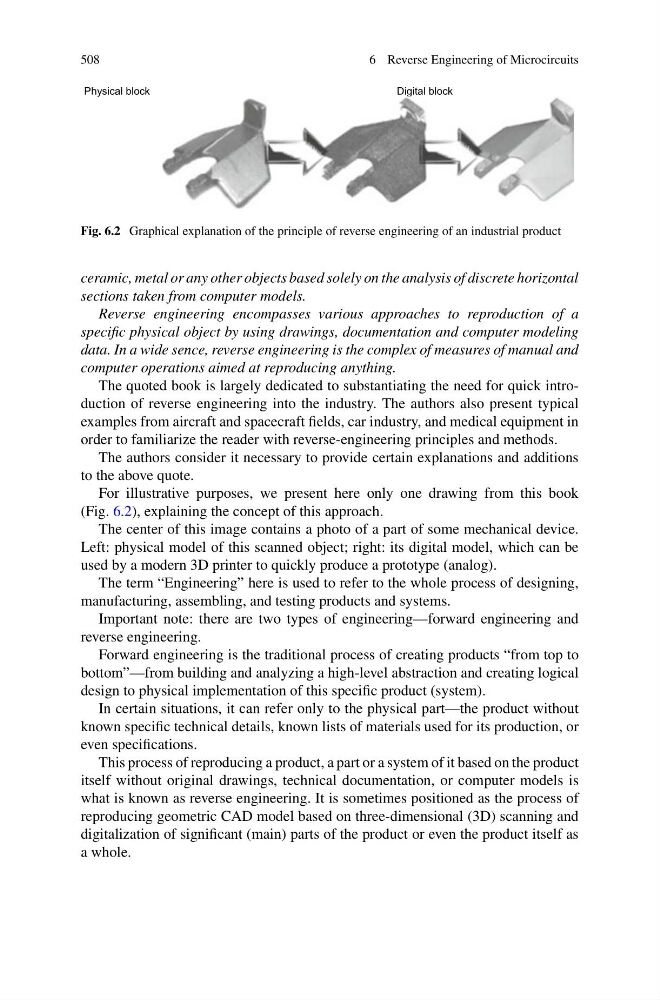
Fig. 6.2 Graphical explanation of the principle of reverse engineering of an industrial product
ceramic, metal or any other objects based solely on the analysis of discrete horizontal
sections taken from computer models.
Reverse engineering encompasses various approaches to reproduction of a
specific physical object by using drawings, documentation and computer modeling
data. In a wide sence, reverse engineering is the complex of measures of manual and
computer operations aimed at reproducing anything.
The quoted book is largely dedicated to substantiating the need for quick introduction of reverse engineering into the industry. The authors also present typical
examples from aircraft and spacecraft fields, car industry, and medical equipment in
order to familiarize the reader with reverse-engineering principles and methods.
The authors consider it necessary to provide certain explanations and additions
to the above quote.
For illustrative purposes, we present here only one drawing from this book
(Fig. 6.2), explaining the concept of this approach.
The center of this image contains a photo of a part of some mechanical device.
Left: physical model of this scanned object; right: its digital model, which can be
used by a modern 3D printer to quickly produce a prototype (analog).
The term “Engineering” here is used to refer to the whole process of designing,
manufacturing, assembling, and testing products and systems.
Important note: there are two types of engineering—forward engineering and
reverse engineering.
Forward engineering is the traditional process of creating products “from top to
bottom”—from building and analyzing a high-level abstraction and creating logical
design to physical implementation of this specific product (system).
In certain situations, it can refer only to the physical part—the product without
known specific technical details, known lists of materials used for its production, or
even specifications.
This process of reproducing a product, a part or a system of it based on the product
itself without original drawings, technical documentation, or computer models is
what is known as reverse engineering. It is sometimes positioned as the process of
reproducing geometric CAD model based on three-dimensional (3D) scanning and
digitalization of significant (main) parts of the product or even the product itself as
a whole.
6 Reverse Engineering of Microcircuits
Physical block
Digital block
Fig. 6.2 Graphical explanation of the principle of reverse engineering of an industrial product
ceramic, metal or any other objects based solely on the analysis of discrete horizontal
sections taken from computer models.
Reverse engineering encompasses various approaches to reproduction of a
specific physical object by using drawings, documentation and computer modeling
data. In a wide sence, reverse engineering is the complex of measures of manual and
computer operations aimed at reproducing anything.
The quoted book is largely dedicated to substantiating the need for quick introduction of reverse engineering into the industry. The authors also present typical
examples from aircraft and spacecraft fields, car industry, and medical equipment in
order to familiarize the reader with reverse-engineering principles and methods.
The authors consider it necessary to provide certain explanations and additions
to the above quote.
For illustrative purposes, we present here only one drawing from this book
(Fig. 6.2), explaining the concept of this approach.
The center of this image contains a photo of a part of some mechanical device.
Left: physical model of this scanned object; right: its digital model, which can be
used by a modern 3D printer to quickly produce a prototype (analog).
The term “Engineering” here is used to refer to the whole process of designing,
manufacturing, assembling, and testing products and systems.
Important note: there are two types of engineering—forward engineering and
reverse engineering.
Forward engineering is the traditional process of creating products “from top to
bottom”—from building and analyzing a high-level abstraction and creating logical
design to physical implementation of this specific product (system).
In certain situations, it can refer only to the physical part—the product without
known specific technical details, known lists of materials used for its production, or
even specifications.
This process of reproducing a product, a part or a system of it based on the product
itself without original drawings, technical documentation, or computer models is
what is known as reverse engineering. It is sometimes positioned as the process of
reproducing geometric CAD model based on three-dimensional (3D) scanning and
digitalization of significant (main) parts of the product or even the product itself as
a whole.