

The Art and Signs of a Few Good Mechanical Designs in MEMS
43
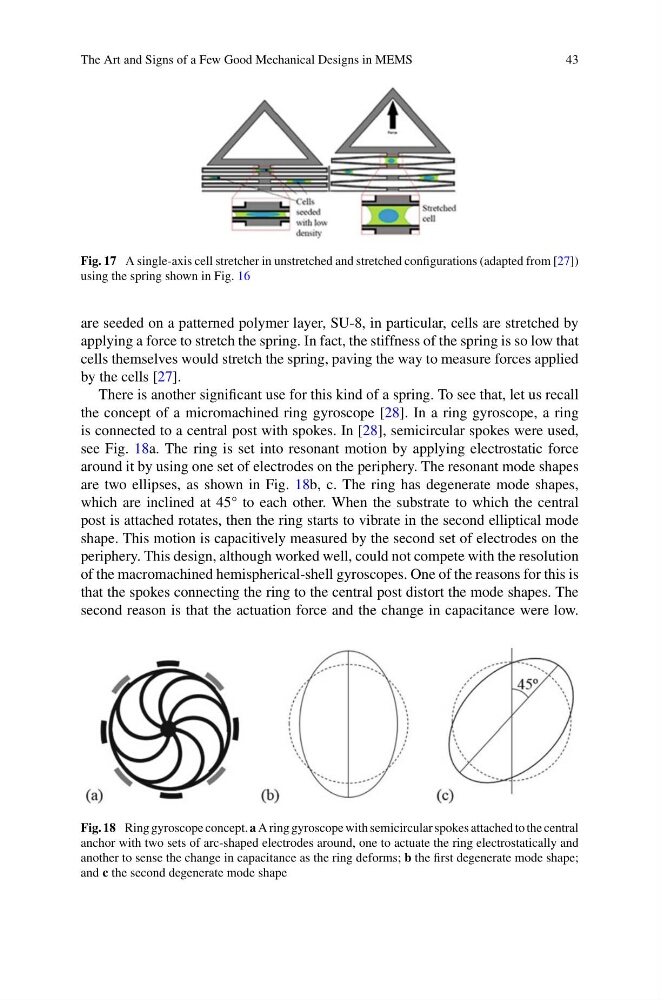
Fig. 17 A single-axis cell stretcher in unstretched and stretched configurations (adapted from [27])
using the spring shown in Fig. 16
are seeded on a patterned polymer layer, SU-8, in particular, cells are stretched by
applying a force to stretch the spring. In fact, the stiffness of the spring is so low that
cells themselves would stretch the spring, paving the way to measure forces applied
by the cells [27].
There is another significant use for this kind of a spring. To see that, let us recall
the concept of a micromachined ring gyroscope [28]. In a ring gyroscope, a ring
is connected to a central post with spokes. In [28], semicircular spokes were used,
see Fig. 18a. The ring is set into resonant motion by applying electrostatic force
around it by using one set of electrodes on the periphery. The resonant mode shapes
are two ellipses, as shown in Fig. 18b, c. The ring has degenerate mode shapes,
which are inclined at 45° to each other. When the substrate to which the central
post is attached rotates, then the ring starts to vibrate in the second elliptical mode
shape. This motion is capacitively measured by the second set of electrodes on the
periphery. This design, although worked well, could not compete with the resolution
of the macromachined hemispherical-shell gyroscopes. One of the reasons for this is
that the spokes connecting the ring to the central post distort the mode shapes. The
second reason is that the actuation force and the change in capacitance were low.
Fig. 18 Ring gyroscope concept. a A ring gyroscope with semicircular spokes attached to the central
anchor with two sets of arc-shaped electrodes around, one to actuate the ring electrostatically and
another to sense the change in capacitance as the ring deforms; b the first degenerate mode shape;
and c the second degenerate mode shape
43
Fig. 17 A single-axis cell stretcher in unstretched and stretched configurations (adapted from [27])
using the spring shown in Fig. 16
are seeded on a patterned polymer layer, SU-8, in particular, cells are stretched by
applying a force to stretch the spring. In fact, the stiffness of the spring is so low that
cells themselves would stretch the spring, paving the way to measure forces applied
by the cells [27].
There is another significant use for this kind of a spring. To see that, let us recall
the concept of a micromachined ring gyroscope [28]. In a ring gyroscope, a ring
is connected to a central post with spokes. In [28], semicircular spokes were used,
see Fig. 18a. The ring is set into resonant motion by applying electrostatic force
around it by using one set of electrodes on the periphery. The resonant mode shapes
are two ellipses, as shown in Fig. 18b, c. The ring has degenerate mode shapes,
which are inclined at 45° to each other. When the substrate to which the central
post is attached rotates, then the ring starts to vibrate in the second elliptical mode
shape. This motion is capacitively measured by the second set of electrodes on the
periphery. This design, although worked well, could not compete with the resolution
of the macromachined hemispherical-shell gyroscopes. One of the reasons for this is
that the spokes connecting the ring to the central post distort the mode shapes. The
second reason is that the actuation force and the change in capacitance were low.
Fig. 18 Ring gyroscope concept. a A ring gyroscope with semicircular spokes attached to the central
anchor with two sets of arc-shaped electrodes around, one to actuate the ring electrostatically and
another to sense the change in capacitance as the ring deforms; b the first degenerate mode shape;
and c the second degenerate mode shape