

26
A. Ghosh
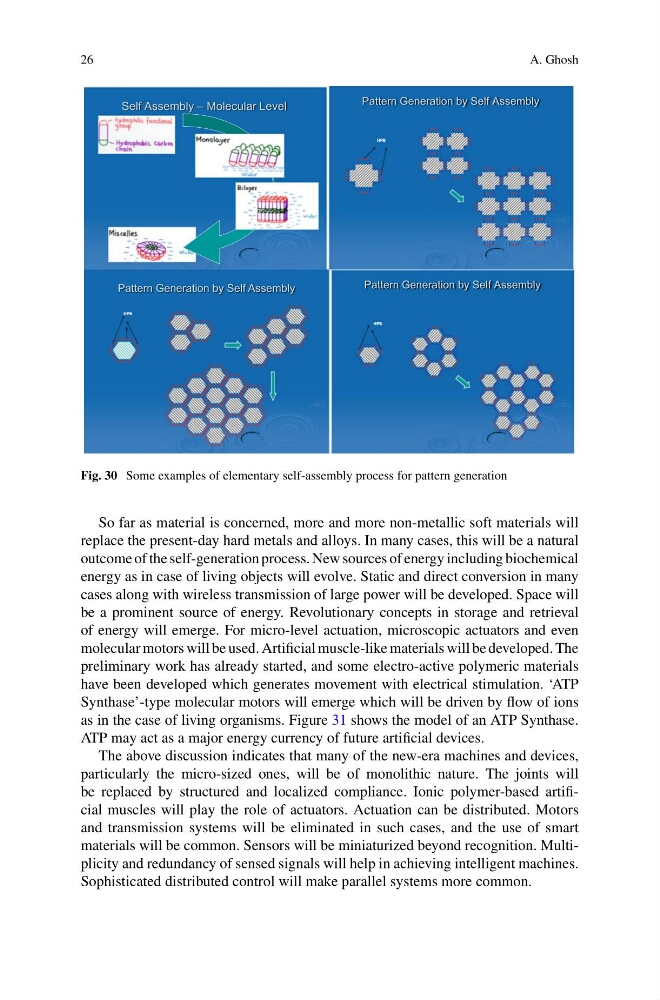
Fig. 30 Some examples of elementary self-assembly process for pattern generation
So far as material is concerned, more and more non-metallic soft materials will
replace the present-day hard metals and alloys. In many cases, this will be a natural
outcome of the self-generation process. New sources of energy including biochemical
energy as in case of living objects will evolve. Static and direct conversion in many
cases along with wireless transmission of large power will be developed. Space will
be a prominent source of energy. Revolutionary concepts in storage and retrieval
of energy will emerge. For micro-level actuation, microscopic actuators and even
molecular motors will be used. Artificial muscle-like materials will be developed. The
preliminary work has already started, and some electro-active polymeric materials
have been developed which generates movement with electrical stimulation. ‘ATP
Synthase’-type molecular motors will emerge which will be driven by flow of ions
as in the case of living organisms. Figure 31 shows the model of an ATP Synthase.
ATP may act as a major energy currency of future artificial devices.
The above discussion indicates that many of the new-era machines and devices,
particularly the micro-sized ones, will be of monolithic nature. The joints will
be replaced by structured and localized compliance. Ionic polymer-based artificial muscles will play the role of actuators. Actuation can be distributed. Motors
and transmission systems will be eliminated in such cases, and the use of smart
materials will be common. Sensors will be miniaturized beyond recognition. Multiplicity and redundancy of sensed signals will help in achieving intelligent machines.
Sophisticated distributed control will make parallel systems more common.
A. Ghosh
Fig. 30 Some examples of elementary self-assembly process for pattern generation
So far as material is concerned, more and more non-metallic soft materials will
replace the present-day hard metals and alloys. In many cases, this will be a natural
outcome of the self-generation process. New sources of energy including biochemical
energy as in case of living objects will evolve. Static and direct conversion in many
cases along with wireless transmission of large power will be developed. Space will
be a prominent source of energy. Revolutionary concepts in storage and retrieval
of energy will emerge. For micro-level actuation, microscopic actuators and even
molecular motors will be used. Artificial muscle-like materials will be developed. The
preliminary work has already started, and some electro-active polymeric materials
have been developed which generates movement with electrical stimulation. ‘ATP
Synthase’-type molecular motors will emerge which will be driven by flow of ions
as in the case of living organisms. Figure 31 shows the model of an ATP Synthase.
ATP may act as a major energy currency of future artificial devices.
The above discussion indicates that many of the new-era machines and devices,
particularly the micro-sized ones, will be of monolithic nature. The joints will
be replaced by structured and localized compliance. Ionic polymer-based artificial muscles will play the role of actuators. Actuation can be distributed. Motors
and transmission systems will be eliminated in such cases, and the use of smart
materials will be common. Sensors will be miniaturized beyond recognition. Multiplicity and redundancy of sensed signals will help in achieving intelligent machines.
Sophisticated distributed control will make parallel systems more common.