

Birth of Mechanical Engineering and a Glimpse …
21
Civil Engineering
Mechanics
Thermodynamics
Military / Mechanical Engineering
Electricity & Magnetism
Materials Technology
Mechanical
Engineering
Electrical
Engineering
Chemistry
Chemical
Engineering
Modern Physics
Quantum Mechanics
Mechanical
Engineering
Aerospace
Engineering
Electrical
Engineering
Electronics
Biotechnology
Life Science
Computer
Engineering
Math
Environmental
Engineering
Communication
Engineering
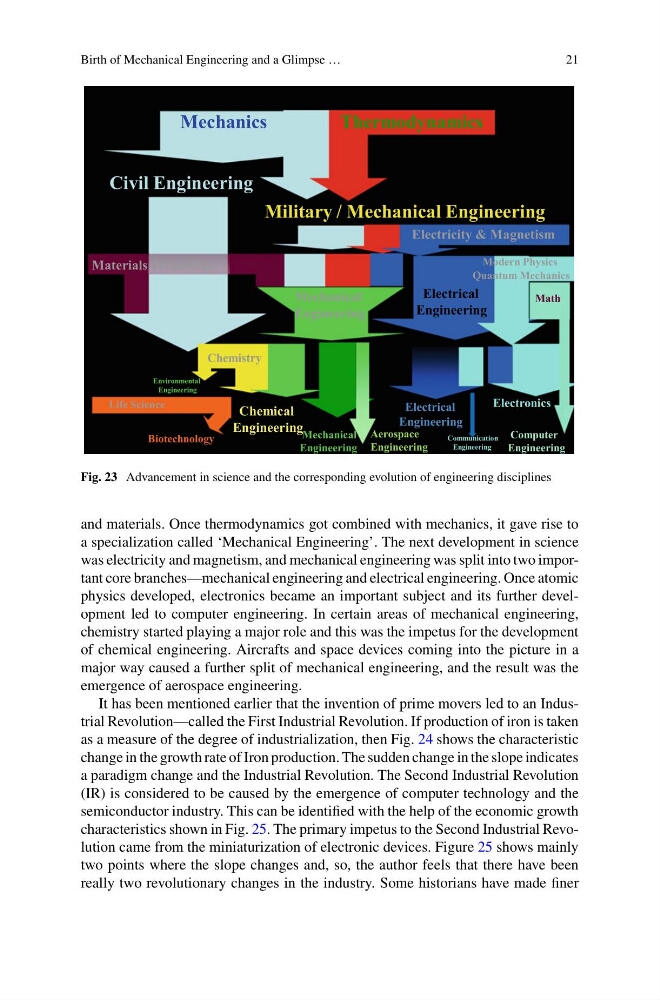
Fig. 23 Advancement in science and the corresponding evolution of engineering disciplines
and materials. Once thermodynamics got combined with mechanics, it gave rise to
a specialization called ‘Mechanical Engineering’. The next development in science
was electricity and magnetism, and mechanical engineering was split into two important core branches—mechanical engineering and electrical engineering. Once atomic
physics developed, electronics became an important subject and its further development led to computer engineering. In certain areas of mechanical engineering,
chemistry started playing a major role and this was the impetus for the development
of chemical engineering. Aircrafts and space devices coming into the picture in a
major way caused a further split of mechanical engineering, and the result was the
emergence of aerospace engineering.
It has been mentioned earlier that the invention of prime movers led to an Industrial Revolution—called the First Industrial Revolution. If production of iron is taken
as a measure of the degree of industrialization, then Fig. 24 shows the characteristic
change in the growth rate of Iron production. The sudden change in the slope indicates
a paradigm change and the Industrial Revolution. The Second Industrial Revolution
(IR) is considered to be caused by the emergence of computer technology and the
semiconductor industry. This can be identified with the help of the economic growth
characteristics shown in Fig. 25. The primary impetus to the Second Industrial Revolution came from the miniaturization of electronic devices. Figure 25 shows mainly
two points where the slope changes and, so, the author feels that there have been
really two revolutionary changes in the industry. Some historians have made finer
21
Civil Engineering
Mechanics
Thermodynamics
Military / Mechanical Engineering
Electricity & Magnetism
Materials Technology
Mechanical
Engineering
Electrical
Engineering
Chemistry
Chemical
Engineering
Modern Physics
Quantum Mechanics
Mechanical
Engineering
Aerospace
Engineering
Electrical
Engineering
Electronics
Biotechnology
Life Science
Computer
Engineering
Math
Environmental
Engineering
Communication
Engineering
Fig. 23 Advancement in science and the corresponding evolution of engineering disciplines
and materials. Once thermodynamics got combined with mechanics, it gave rise to
a specialization called ‘Mechanical Engineering’. The next development in science
was electricity and magnetism, and mechanical engineering was split into two important core branches—mechanical engineering and electrical engineering. Once atomic
physics developed, electronics became an important subject and its further development led to computer engineering. In certain areas of mechanical engineering,
chemistry started playing a major role and this was the impetus for the development
of chemical engineering. Aircrafts and space devices coming into the picture in a
major way caused a further split of mechanical engineering, and the result was the
emergence of aerospace engineering.
It has been mentioned earlier that the invention of prime movers led to an Industrial Revolution—called the First Industrial Revolution. If production of iron is taken
as a measure of the degree of industrialization, then Fig. 24 shows the characteristic
change in the growth rate of Iron production. The sudden change in the slope indicates
a paradigm change and the Industrial Revolution. The Second Industrial Revolution
(IR) is considered to be caused by the emergence of computer technology and the
semiconductor industry. This can be identified with the help of the economic growth
characteristics shown in Fig. 25. The primary impetus to the Second Industrial Revolution came from the miniaturization of electronic devices. Figure 25 shows mainly
two points where the slope changes and, so, the author feels that there have been
really two revolutionary changes in the industry. Some historians have made finer