

10
A. Ghosh
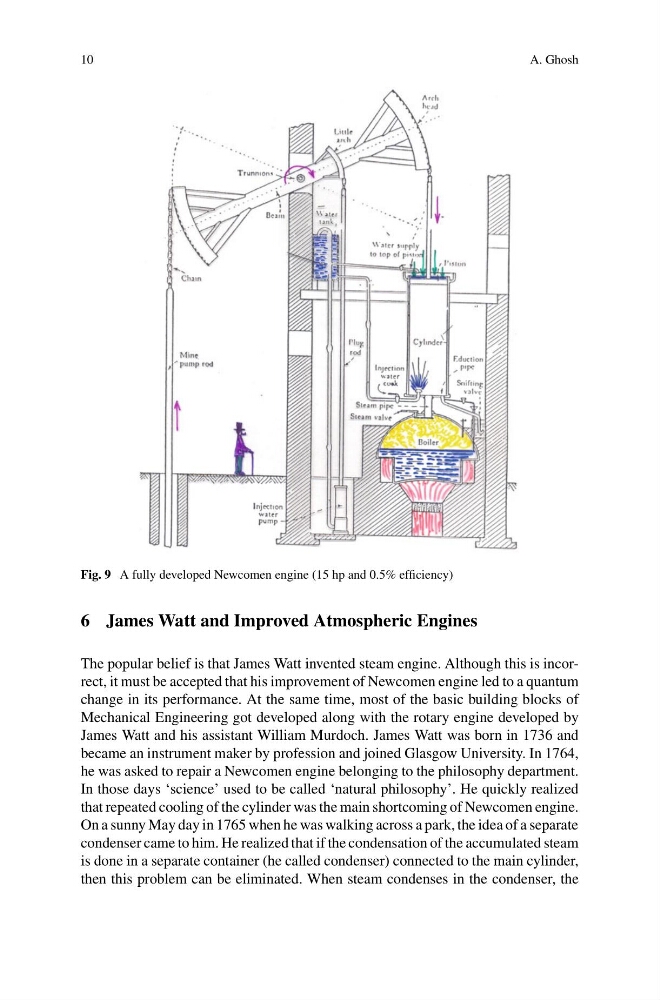
Fig. 9 A fully developed Newcomen engine (15 hp and 0.5% efficiency)
6 James Watt and Improved Atmospheric Engines
The popular belief is that James Watt invented steam engine. Although this is incorrect, it must be accepted that his improvement of Newcomen engine led to a quantum
change in its performance. At the same time, most of the basic building blocks of
Mechanical Engineering got developed along with the rotary engine developed by
James Watt and his assistant William Murdoch. James Watt was born in 1736 and
became an instrument maker by profession and joined Glasgow University. In 1764,
he was asked to repair a Newcomen engine belonging to the philosophy department.
In those days ‘science’ used to be called ‘natural philosophy’. He quickly realized
that repeated cooling of the cylinder was the main shortcoming of Newcomen engine.
On a sunny May day in 1765 when he was walking across a park, the idea of a separate
condenser came to him. He realized that if the condensation of the accumulated steam
is done in a separate container (he called condenser) connected to the main cylinder,
then this problem can be eliminated. When steam condenses in the condenser, the
A. Ghosh
Fig. 9 A fully developed Newcomen engine (15 hp and 0.5% efficiency)
6 James Watt and Improved Atmospheric Engines
The popular belief is that James Watt invented steam engine. Although this is incorrect, it must be accepted that his improvement of Newcomen engine led to a quantum
change in its performance. At the same time, most of the basic building blocks of
Mechanical Engineering got developed along with the rotary engine developed by
James Watt and his assistant William Murdoch. James Watt was born in 1736 and
became an instrument maker by profession and joined Glasgow University. In 1764,
he was asked to repair a Newcomen engine belonging to the philosophy department.
In those days ‘science’ used to be called ‘natural philosophy’. He quickly realized
that repeated cooling of the cylinder was the main shortcoming of Newcomen engine.
On a sunny May day in 1765 when he was walking across a park, the idea of a separate
condenser came to him. He realized that if the condensation of the accumulated steam
is done in a separate container (he called condenser) connected to the main cylinder,
then this problem can be eliminated. When steam condenses in the condenser, the