

Birth of Mechanical Engineering and a Glimpse …
5
9
WOOD FAMINE
TEXTILE
MILLS IN
URBAN
CENTRES
AWAY FROM
SWIFT
STREAMS
IRON MAKING
IN LARGE
QUANTITIES
CANNON
BORING
COAL MINING
DEEP MINE
DRAINAGE
ALL THESE LEAD TO ACUTE DEMAND OF WATER PUMPING IN GREAT QUANTITIES
DISCOVERY OF
ATMOSPHERIC
PRESSURE BY
TORICELLY IN
1643
LARGE AIR
BELLOWS
LEAD TO THE SEARCH
FOR MECHANICAL POWER
Prime Movers
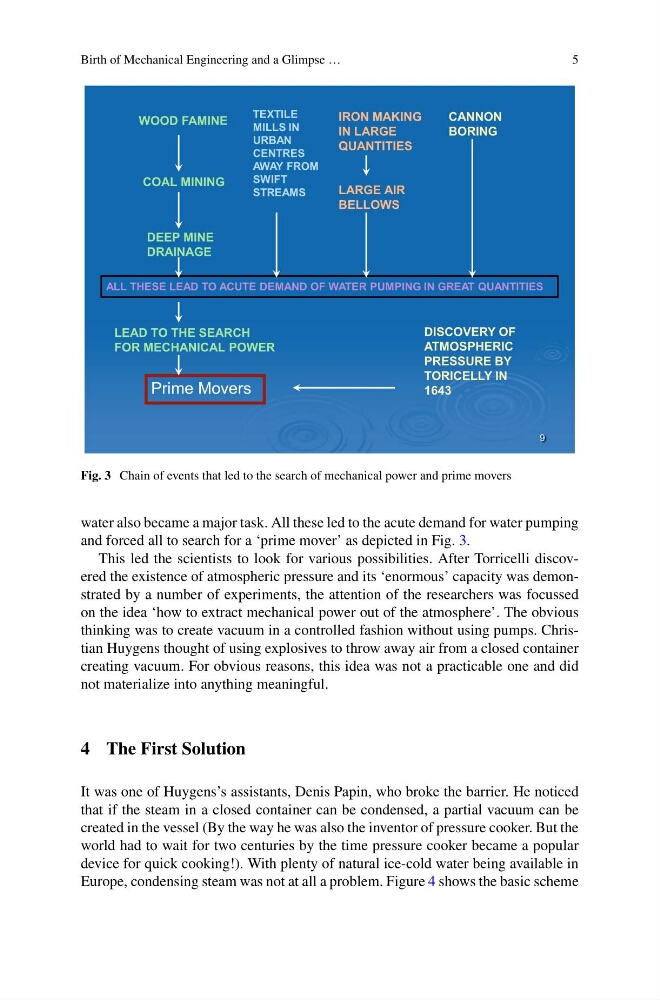
Fig. 3 Chain of events that led to the search of mechanical power and prime movers
water also became a major task. All these led to the acute demand for water pumping
and forced all to search for a ‘prime mover’ as depicted in Fig. 3.
This led the scientists to look for various possibilities. After Torricelli discovered the existence of atmospheric pressure and its ‘enormous’ capacity was demonstrated by a number of experiments, the attention of the researchers was focussed
on the idea ‘how to extract mechanical power out of the atmosphere’. The obvious
thinking was to create vacuum in a controlled fashion without using pumps. Christian Huygens thought of using explosives to throw away air from a closed container
creating vacuum. For obvious reasons, this idea was not a practicable one and did
not materialize into anything meaningful.
4 The First Solution
It was one of Huygens’s assistants, Denis Papin, who broke the barrier. He noticed
that if the steam in a closed container can be condensed, a partial vacuum can be
created in the vessel (By the way he was also the inventor of pressure cooker. But the
world had to wait for two centuries by the time pressure cooker became a popular
device for quick cooking!). With plenty of natural ice-cold water being available in
Europe, condensing steam was not at all a problem. Figure 4 shows the basic scheme
5
9
WOOD FAMINE
TEXTILE
MILLS IN
URBAN
CENTRES
AWAY FROM
SWIFT
STREAMS
IRON MAKING
IN LARGE
QUANTITIES
CANNON
BORING
COAL MINING
DEEP MINE
DRAINAGE
ALL THESE LEAD TO ACUTE DEMAND OF WATER PUMPING IN GREAT QUANTITIES
DISCOVERY OF
ATMOSPHERIC
PRESSURE BY
TORICELLY IN
1643
LARGE AIR
BELLOWS
LEAD TO THE SEARCH
FOR MECHANICAL POWER
Prime Movers
Fig. 3 Chain of events that led to the search of mechanical power and prime movers
water also became a major task. All these led to the acute demand for water pumping
and forced all to search for a ‘prime mover’ as depicted in Fig. 3.
This led the scientists to look for various possibilities. After Torricelli discovered the existence of atmospheric pressure and its ‘enormous’ capacity was demonstrated by a number of experiments, the attention of the researchers was focussed
on the idea ‘how to extract mechanical power out of the atmosphere’. The obvious
thinking was to create vacuum in a controlled fashion without using pumps. Christian Huygens thought of using explosives to throw away air from a closed container
creating vacuum. For obvious reasons, this idea was not a practicable one and did
not materialize into anything meaningful.
4 The First Solution
It was one of Huygens’s assistants, Denis Papin, who broke the barrier. He noticed
that if the steam in a closed container can be condensed, a partial vacuum can be
created in the vessel (By the way he was also the inventor of pressure cooker. But the
world had to wait for two centuries by the time pressure cooker became a popular
device for quick cooking!). With plenty of natural ice-cold water being available in
Europe, condensing steam was not at all a problem. Figure 4 shows the basic scheme