

180
V. Laxmi et al.
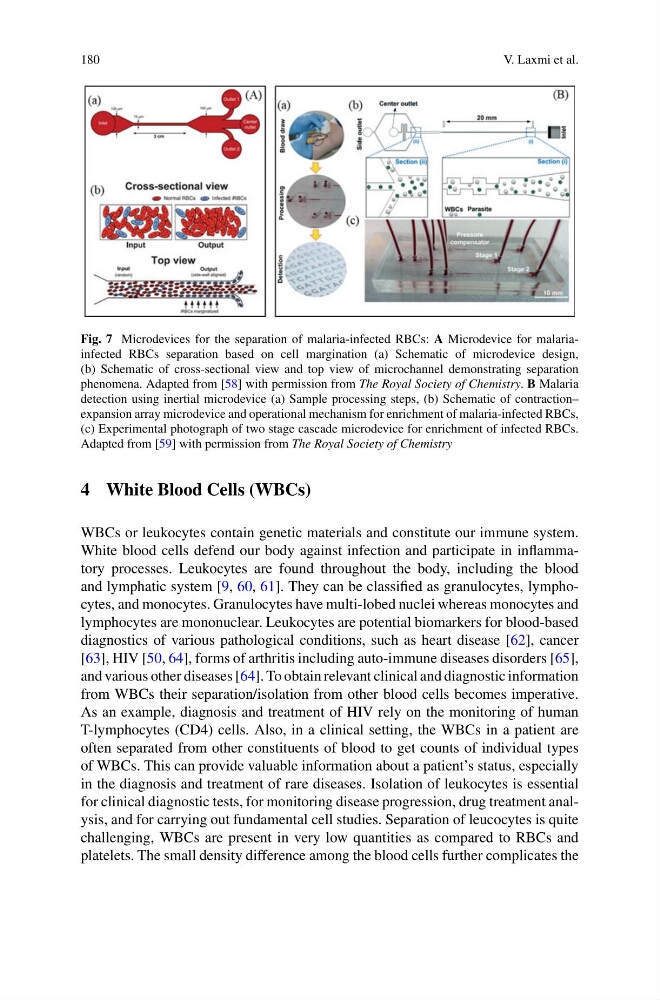
Fig. 7 Microdevices for the separation of malaria-infected RBCs: A Microdevice for malariainfected RBCs separation based on cell margination (a) Schematic of microdevice design,
(b) Schematic of cross-sectional view and top view of microchannel demonstrating separation
phenomena. Adapted from [58] with permission from The Royal Society of Chemistry. B Malaria
detection using inertial microdevice (a) Sample processing steps, (b) Schematic of contraction–
expansion array microdevice and operational mechanism for enrichment of malaria-infected RBCs,
(c) Experimental photograph of two stage cascade microdevice for enrichment of infected RBCs.
Adapted from [59] with permission from The Royal Society of Chemistry
4 White Blood Cells (WBCs)
WBCs or leukocytes contain genetic materials and constitute our immune system.
White blood cells defend our body against infection and participate in inflammatory processes. Leukocytes are found throughout the body, including the blood
and lymphatic system [9, 60, 61]. They can be classified as granulocytes, lymphocytes, and monocytes. Granulocytes have multi-lobed nuclei whereas monocytes and
lymphocytes are mononuclear. Leukocytes are potential biomarkers for blood-based
diagnostics of various pathological conditions, such as heart disease [62], cancer
[63], HIV [50, 64], forms of arthritis including auto-immune diseases disorders [65],
and various other diseases [64]. To obtain relevant clinical and diagnostic information
from WBCs their separation/isolation from other blood cells becomes imperative.
As an example, diagnosis and treatment of HIV rely on the monitoring of human
T-lymphocytes (CD4) cells. Also, in a clinical setting, the WBCs in a patient are
often separated from other constituents of blood to get counts of individual types
of WBCs. This can provide valuable information about a patient’s status, especially
in the diagnosis and treatment of rare diseases. Isolation of leukocytes is essential
for clinical diagnostic tests, for monitoring disease progression, drug treatment analysis, and for carrying out fundamental cell studies. Separation of leucocytes is quite
challenging, WBCs are present in very low quantities as compared to RBCs and
platelets. The small density difference among the blood cells further complicates the
V. Laxmi et al.
Fig. 7 Microdevices for the separation of malaria-infected RBCs: A Microdevice for malariainfected RBCs separation based on cell margination (a) Schematic of microdevice design,
(b) Schematic of cross-sectional view and top view of microchannel demonstrating separation
phenomena. Adapted from [58] with permission from The Royal Society of Chemistry. B Malaria
detection using inertial microdevice (a) Sample processing steps, (b) Schematic of contraction–
expansion array microdevice and operational mechanism for enrichment of malaria-infected RBCs,
(c) Experimental photograph of two stage cascade microdevice for enrichment of infected RBCs.
Adapted from [59] with permission from The Royal Society of Chemistry
4 White Blood Cells (WBCs)
WBCs or leukocytes contain genetic materials and constitute our immune system.
White blood cells defend our body against infection and participate in inflammatory processes. Leukocytes are found throughout the body, including the blood
and lymphatic system [9, 60, 61]. They can be classified as granulocytes, lymphocytes, and monocytes. Granulocytes have multi-lobed nuclei whereas monocytes and
lymphocytes are mononuclear. Leukocytes are potential biomarkers for blood-based
diagnostics of various pathological conditions, such as heart disease [62], cancer
[63], HIV [50, 64], forms of arthritis including auto-immune diseases disorders [65],
and various other diseases [64]. To obtain relevant clinical and diagnostic information
from WBCs their separation/isolation from other blood cells becomes imperative.
As an example, diagnosis and treatment of HIV rely on the monitoring of human
T-lymphocytes (CD4) cells. Also, in a clinical setting, the WBCs in a patient are
often separated from other constituents of blood to get counts of individual types
of WBCs. This can provide valuable information about a patient’s status, especially
in the diagnosis and treatment of rare diseases. Isolation of leukocytes is essential
for clinical diagnostic tests, for monitoring disease progression, drug treatment analysis, and for carrying out fundamental cell studies. Separation of leucocytes is quite
challenging, WBCs are present in very low quantities as compared to RBCs and
platelets. The small density difference among the blood cells further complicates the