

170
V. Laxmi et al.
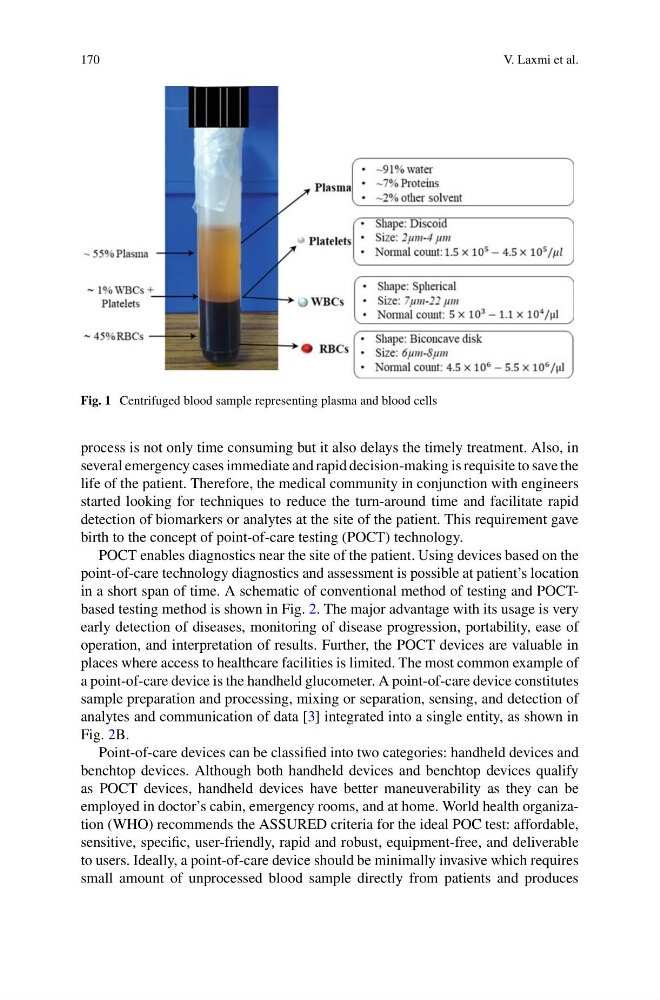
Fig. 1 Centrifuged blood sample representing plasma and blood cells
process is not only time consuming but it also delays the timely treatment. Also, in
several emergency cases immediate and rapid decision-making is requisite to save the
life of the patient. Therefore, the medical community in conjunction with engineers
started looking for techniques to reduce the turn-around time and facilitate rapid
detection of biomarkers or analytes at the site of the patient. This requirement gave
birth to the concept of point-of-care testing (POCT) technology.
POCT enables diagnostics near the site of the patient. Using devices based on the
point-of-care technology diagnostics and assessment is possible at patient’s location
in a short span of time. A schematic of conventional method of testing and POCTbased testing method is shown in Fig. 2. The major advantage with its usage is very
early detection of diseases, monitoring of disease progression, portability, ease of
operation, and interpretation of results. Further, the POCT devices are valuable in
places where access to healthcare facilities is limited. The most common example of
a point-of-care device is the handheld glucometer. A point-of-care device constitutes
sample preparation and processing, mixing or separation, sensing, and detection of
analytes and communication of data [3] integrated into a single entity, as shown in
Fig. 2B.
Point-of-care devices can be classified into two categories: handheld devices and
benchtop devices. Although both handheld devices and benchtop devices qualify
as POCT devices, handheld devices have better maneuverability as they can be
employed in doctor’s cabin, emergency rooms, and at home. World health organization (WHO) recommends the ASSURED criteria for the ideal POC test: affordable,
sensitive, specific, user-friendly, rapid and robust, equipment-free, and deliverable
to users. Ideally, a point-of-care device should be minimally invasive which requires
small amount of unprocessed blood sample directly from patients and produces
V. Laxmi et al.
Fig. 1 Centrifuged blood sample representing plasma and blood cells
process is not only time consuming but it also delays the timely treatment. Also, in
several emergency cases immediate and rapid decision-making is requisite to save the
life of the patient. Therefore, the medical community in conjunction with engineers
started looking for techniques to reduce the turn-around time and facilitate rapid
detection of biomarkers or analytes at the site of the patient. This requirement gave
birth to the concept of point-of-care testing (POCT) technology.
POCT enables diagnostics near the site of the patient. Using devices based on the
point-of-care technology diagnostics and assessment is possible at patient’s location
in a short span of time. A schematic of conventional method of testing and POCTbased testing method is shown in Fig. 2. The major advantage with its usage is very
early detection of diseases, monitoring of disease progression, portability, ease of
operation, and interpretation of results. Further, the POCT devices are valuable in
places where access to healthcare facilities is limited. The most common example of
a point-of-care device is the handheld glucometer. A point-of-care device constitutes
sample preparation and processing, mixing or separation, sensing, and detection of
analytes and communication of data [3] integrated into a single entity, as shown in
Fig. 2B.
Point-of-care devices can be classified into two categories: handheld devices and
benchtop devices. Although both handheld devices and benchtop devices qualify
as POCT devices, handheld devices have better maneuverability as they can be
employed in doctor’s cabin, emergency rooms, and at home. World health organization (WHO) recommends the ASSURED criteria for the ideal POC test: affordable,
sensitive, specific, user-friendly, rapid and robust, equipment-free, and deliverable
to users. Ideally, a point-of-care device should be minimally invasive which requires
small amount of unprocessed blood sample directly from patients and produces