

12 Biomedical Engineering Fundamentals
579
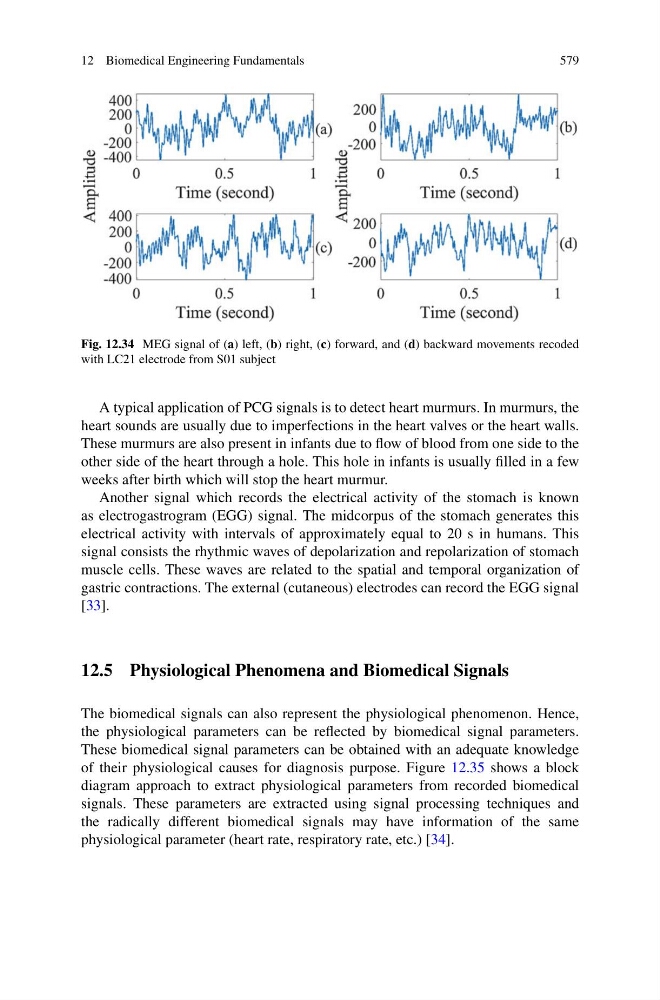
Fig. 12.34 MEG signal of (a) left, (b) right, (c) forward, and (d) backward movements recoded
with LC21 electrode from S01 subject
A typical application of PCG signals is to detect heart murmurs. In murmurs, the
heart sounds are usually due to imperfections in the heart valves or the heart walls.
These murmurs are also present in infants due to flow of blood from one side to the
other side of the heart through a hole. This hole in infants is usually filled in a few
weeks after birth which will stop the heart murmur.
Another signal which records the electrical activity of the stomach is known
as electrogastrogram (EGG) signal. The midcorpus of the stomach generates this
electrical activity with intervals of approximately equal to 20 s in humans. This
signal consists the rhythmic waves of depolarization and repolarization of stomach
muscle cells. These waves are related to the spatial and temporal organization of
gastric contractions. The external (cutaneous) electrodes can record the EGG signal
[33].
12.5 Physiological Phenomena and Biomedical Signals
The biomedical signals can also represent the physiological phenomenon. Hence,
the physiological parameters can be reflected by biomedical signal parameters.
These biomedical signal parameters can be obtained with an adequate knowledge
of their physiological causes for diagnosis purpose. Figure 12.35 shows a block
diagram approach to extract physiological parameters from recorded biomedical
signals. These parameters are extracted using signal processing techniques and
the radically different biomedical signals may have information of the same
physiological parameter (heart rate, respiratory rate, etc.) [34].
579
Fig. 12.34 MEG signal of (a) left, (b) right, (c) forward, and (d) backward movements recoded
with LC21 electrode from S01 subject
A typical application of PCG signals is to detect heart murmurs. In murmurs, the
heart sounds are usually due to imperfections in the heart valves or the heart walls.
These murmurs are also present in infants due to flow of blood from one side to the
other side of the heart through a hole. This hole in infants is usually filled in a few
weeks after birth which will stop the heart murmur.
Another signal which records the electrical activity of the stomach is known
as electrogastrogram (EGG) signal. The midcorpus of the stomach generates this
electrical activity with intervals of approximately equal to 20 s in humans. This
signal consists the rhythmic waves of depolarization and repolarization of stomach
muscle cells. These waves are related to the spatial and temporal organization of
gastric contractions. The external (cutaneous) electrodes can record the EGG signal
[33].
12.5 Physiological Phenomena and Biomedical Signals
The biomedical signals can also represent the physiological phenomenon. Hence,
the physiological parameters can be reflected by biomedical signal parameters.
These biomedical signal parameters can be obtained with an adequate knowledge
of their physiological causes for diagnosis purpose. Figure 12.35 shows a block
diagram approach to extract physiological parameters from recorded biomedical
signals. These parameters are extracted using signal processing techniques and
the radically different biomedical signals may have information of the same
physiological parameter (heart rate, respiratory rate, etc.) [34].