

522
B. Farahani et al.
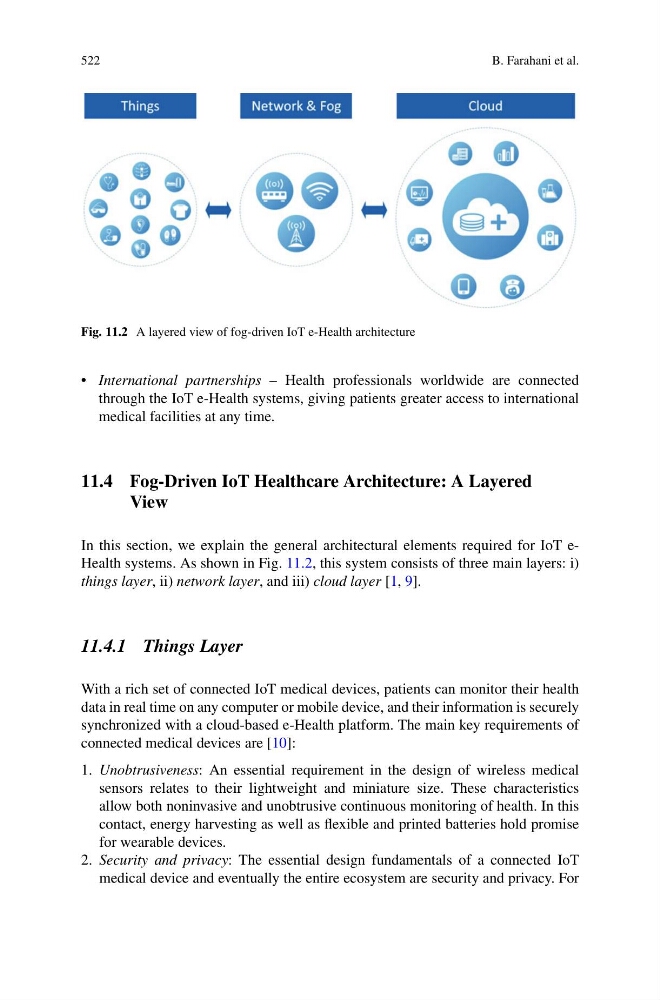
Fig. 11.2 A layered view of fog-driven IoT e-Health architecture
• International partnerships – Health professionals worldwide are connected
through the IoT e-Health systems, giving patients greater access to international
medical facilities at any time.
11.4 Fog-Driven IoT Healthcare Architecture: A Layered
View
In this section, we explain the general architectural elements required for IoT eHealth systems. As shown in Fig. 11.2, this system consists of three main layers: i)
things layer, ii) network layer, and iii) cloud layer [1, 9].
11.4.1 Things Layer
With a rich set of connected IoT medical devices, patients can monitor their health
data in real time on any computer or mobile device, and their information is securely
synchronized with a cloud-based e-Health platform. The main key requirements of
connected medical devices are [10]:
1. Unobtrusiveness: An essential requirement in the design of wireless medical
sensors relates to their lightweight and miniature size. These characteristics
allow both noninvasive and unobtrusive continuous monitoring of health. In this
contact, energy harvesting as well as flexible and printed batteries hold promise
for wearable devices.
2. Security and privacy: The essential design fundamentals of a connected IoT
medical device and eventually the entire ecosystem are security and privacy. For
B. Farahani et al.
Fig. 11.2 A layered view of fog-driven IoT e-Health architecture
• International partnerships – Health professionals worldwide are connected
through the IoT e-Health systems, giving patients greater access to international
medical facilities at any time.
11.4 Fog-Driven IoT Healthcare Architecture: A Layered
View
In this section, we explain the general architectural elements required for IoT eHealth systems. As shown in Fig. 11.2, this system consists of three main layers: i)
things layer, ii) network layer, and iii) cloud layer [1, 9].
11.4.1 Things Layer
With a rich set of connected IoT medical devices, patients can monitor their health
data in real time on any computer or mobile device, and their information is securely
synchronized with a cloud-based e-Health platform. The main key requirements of
connected medical devices are [10]:
1. Unobtrusiveness: An essential requirement in the design of wireless medical
sensors relates to their lightweight and miniature size. These characteristics
allow both noninvasive and unobtrusive continuous monitoring of health. In this
contact, energy harvesting as well as flexible and printed batteries hold promise
for wearable devices.
2. Security and privacy: The essential design fundamentals of a connected IoT
medical device and eventually the entire ecosystem are security and privacy. For