

38
F. Firouzi et al.
Physical
Object
System Integrator
Smart
Home and
City
Transport
&
Logistics
Healthcare
Energy &
Smart
Grid
Insurance
IoT Customer
Manufact
uring
Component
Supplier
Complete
Solution/Product
Provider
IoT Customer
Data
Consumer
Data
Provider
Embedded
System
Connectivity
Application
(Service)
Platform
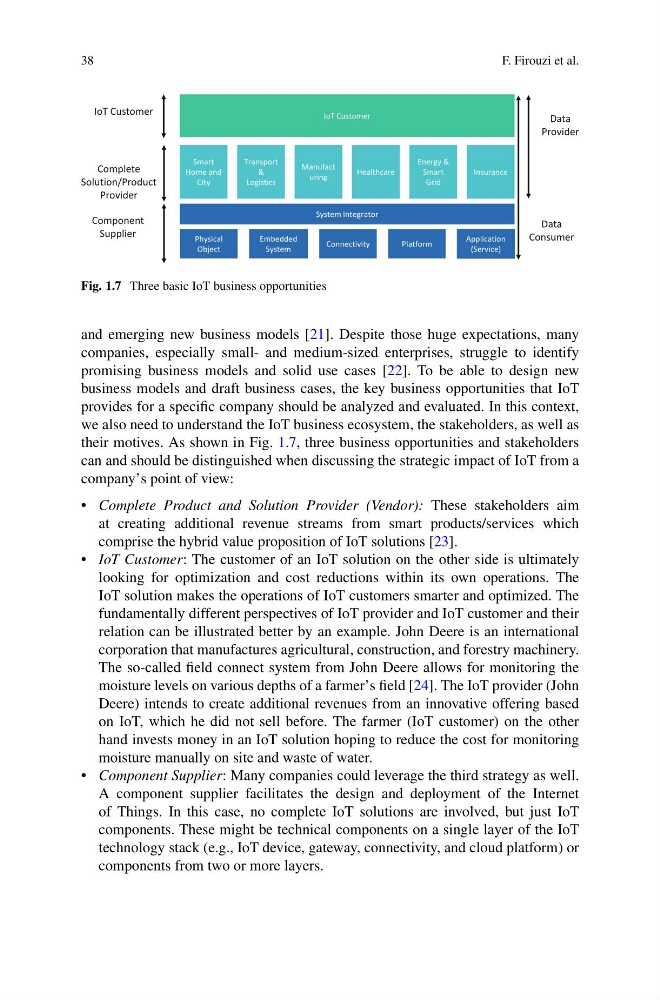
Fig. 1.7 Three basic IoT business opportunities
and emerging new business models [21]. Despite those huge expectations, many
companies, especially small- and medium-sized enterprises, struggle to identify
promising business models and solid use cases [22]. To be able to design new
business models and draft business cases, the key business opportunities that IoT
provides for a specific company should be analyzed and evaluated. In this context,
we also need to understand the IoT business ecosystem, the stakeholders, as well as
their motives. As shown in Fig. 1.7, three business opportunities and stakeholders
can and should be distinguished when discussing the strategic impact of IoT from a
company’s point of view:
• Complete Product and Solution Provider (Vendor): These stakeholders aim
at creating additional revenue streams from smart products/services which
comprise the hybrid value proposition of IoT solutions [23].
• IoT Customer: The customer of an IoT solution on the other side is ultimately
looking for optimization and cost reductions within its own operations. The
IoT solution makes the operations of IoT customers smarter and optimized. The
fundamentally different perspectives of IoT provider and IoT customer and their
relation can be illustrated better by an example. John Deere is an international
corporation that manufactures agricultural, construction, and forestry machinery.
The so-called field connect system from John Deere allows for monitoring the
moisture levels on various depths of a farmer’s field [24]. The IoT provider (John
Deere) intends to create additional revenues from an innovative offering based
on IoT, which he did not sell before. The farmer (IoT customer) on the other
hand invests money in an IoT solution hoping to reduce the cost for monitoring
moisture manually on site and waste of water.
• Component Supplier: Many companies could leverage the third strategy as well.
A component supplier facilitates the design and deployment of the Internet
of Things. In this case, no complete IoT solutions are involved, but just IoT
components. These might be technical components on a single layer of the IoT
technology stack (e.g., IoT device, gateway, connectivity, and cloud platform) or
components from two or more layers.
F. Firouzi et al.
Physical
Object
System Integrator
Smart
Home and
City
Transport
&
Logistics
Healthcare
Energy &
Smart
Grid
Insurance
IoT Customer
Manufact
uring
Component
Supplier
Complete
Solution/Product
Provider
IoT Customer
Data
Consumer
Data
Provider
Embedded
System
Connectivity
Application
(Service)
Platform
Fig. 1.7 Three basic IoT business opportunities
and emerging new business models [21]. Despite those huge expectations, many
companies, especially small- and medium-sized enterprises, struggle to identify
promising business models and solid use cases [22]. To be able to design new
business models and draft business cases, the key business opportunities that IoT
provides for a specific company should be analyzed and evaluated. In this context,
we also need to understand the IoT business ecosystem, the stakeholders, as well as
their motives. As shown in Fig. 1.7, three business opportunities and stakeholders
can and should be distinguished when discussing the strategic impact of IoT from a
company’s point of view:
• Complete Product and Solution Provider (Vendor): These stakeholders aim
at creating additional revenue streams from smart products/services which
comprise the hybrid value proposition of IoT solutions [23].
• IoT Customer: The customer of an IoT solution on the other side is ultimately
looking for optimization and cost reductions within its own operations. The
IoT solution makes the operations of IoT customers smarter and optimized. The
fundamentally different perspectives of IoT provider and IoT customer and their
relation can be illustrated better by an example. John Deere is an international
corporation that manufactures agricultural, construction, and forestry machinery.
The so-called field connect system from John Deere allows for monitoring the
moisture levels on various depths of a farmer’s field [24]. The IoT provider (John
Deere) intends to create additional revenues from an innovative offering based
on IoT, which he did not sell before. The farmer (IoT customer) on the other
hand invests money in an IoT solution hoping to reduce the cost for monitoring
moisture manually on site and waste of water.
• Component Supplier: Many companies could leverage the third strategy as well.
A component supplier facilitates the design and deployment of the Internet
of Things. In this case, no complete IoT solutions are involved, but just IoT
components. These might be technical components on a single layer of the IoT
technology stack (e.g., IoT device, gateway, connectivity, and cloud platform) or
components from two or more layers.