

9 Emerging Hardware Technologies for IoT Data Processing
465
A (1)
B (4)
C (6)
D (9)
0
0
0
1
0
1
1
0
0
0
1
0
1
0
0
1
:
:
:
:
Median
0 1 1 0
:
X(0)
0 0 0 0
:
A (1)
B (4)
C (6)
D (9)
0
0
0
1
0
1
1
0
0
0
1
0
1
0
0
1
:
:
:
:
Median
? ? ? ?
:
A (1)
B (4)
C (6)
D (9)
0
0
0
1
0
1
1
0
0
0
1
0
1
0
0
1
:
:
:
:
Median
0 1 0 0
:
X(15)
1 1 1 1
:
Original Data
Including 0
Including 15
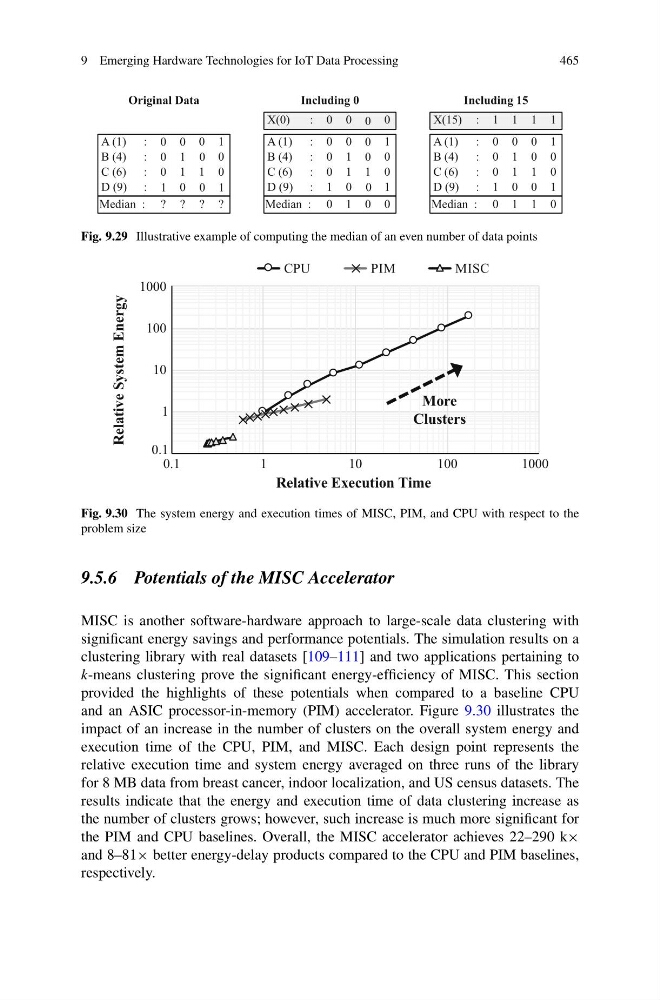
Fig. 9.29 Illustrative example of computing the median of an even number of data points
0.1
1
10
100
1000
0.1
1
10
100
1000
Relative System Energy
Relative Execution Time
CPU
PIM
MISC
More
Clusters
Fig. 9.30 The system energy and execution times of MISC, PIM, and CPU with respect to the
problem size
9.5.6 Potentials of the MISC Accelerator
MISC is another software-hardware approach to large-scale data clustering with
significant energy savings and performance potentials. The simulation results on a
clustering library with real datasets [109–111] and two applications pertaining to
k-means clustering prove the significant energy-efficiency of MISC. This section
provided the highlights of these potentials when compared to a baseline CPU
and an ASIC processor-in-memory (PIM) accelerator. Figure 9.30 illustrates the
impact of an increase in the number of clusters on the overall system energy and
execution time of the CPU, PIM, and MISC. Each design point represents the
relative execution time and system energy averaged on three runs of the library
for 8 MB data from breast cancer, indoor localization, and US census datasets. The
results indicate that the energy and execution time of data clustering increase as
the number of clusters grows; however, such increase is much more significant for
the PIM and CPU baselines. Overall, the MISC accelerator achieves 22–290 k×
and 8–81× better energy-delay products compared to the CPU and PIM baselines,
respectively.
465
A (1)
B (4)
C (6)
D (9)
0
0
0
1
0
1
1
0
0
0
1
0
1
0
0
1
:
:
:
:
Median
0 1 1 0
:
X(0)
0 0 0 0
:
A (1)
B (4)
C (6)
D (9)
0
0
0
1
0
1
1
0
0
0
1
0
1
0
0
1
:
:
:
:
Median
? ? ? ?
:
A (1)
B (4)
C (6)
D (9)
0
0
0
1
0
1
1
0
0
0
1
0
1
0
0
1
:
:
:
:
Median
0 1 0 0
:
X(15)
1 1 1 1
:
Original Data
Including 0
Including 15
Fig. 9.29 Illustrative example of computing the median of an even number of data points
0.1
1
10
100
1000
0.1
1
10
100
1000
Relative System Energy
Relative Execution Time
CPU
PIM
MISC
More
Clusters
Fig. 9.30 The system energy and execution times of MISC, PIM, and CPU with respect to the
problem size
9.5.6 Potentials of the MISC Accelerator
MISC is another software-hardware approach to large-scale data clustering with
significant energy savings and performance potentials. The simulation results on a
clustering library with real datasets [109–111] and two applications pertaining to
k-means clustering prove the significant energy-efficiency of MISC. This section
provided the highlights of these potentials when compared to a baseline CPU
and an ASIC processor-in-memory (PIM) accelerator. Figure 9.30 illustrates the
impact of an increase in the number of clusters on the overall system energy and
execution time of the CPU, PIM, and MISC. Each design point represents the
relative execution time and system energy averaged on three runs of the library
for 8 MB data from breast cancer, indoor localization, and US census datasets. The
results indicate that the energy and execution time of data clustering increase as
the number of clusters grows; however, such increase is much more significant for
the PIM and CPU baselines. Overall, the MISC accelerator achieves 22–290 k×
and 8–81× better energy-delay products compared to the CPU and PIM baselines,
respectively.