

8 Distributed Ledger Technology
415
Physical Object 1
Physical Object 2
Physical Object n
Gateway
Internet
Cloud
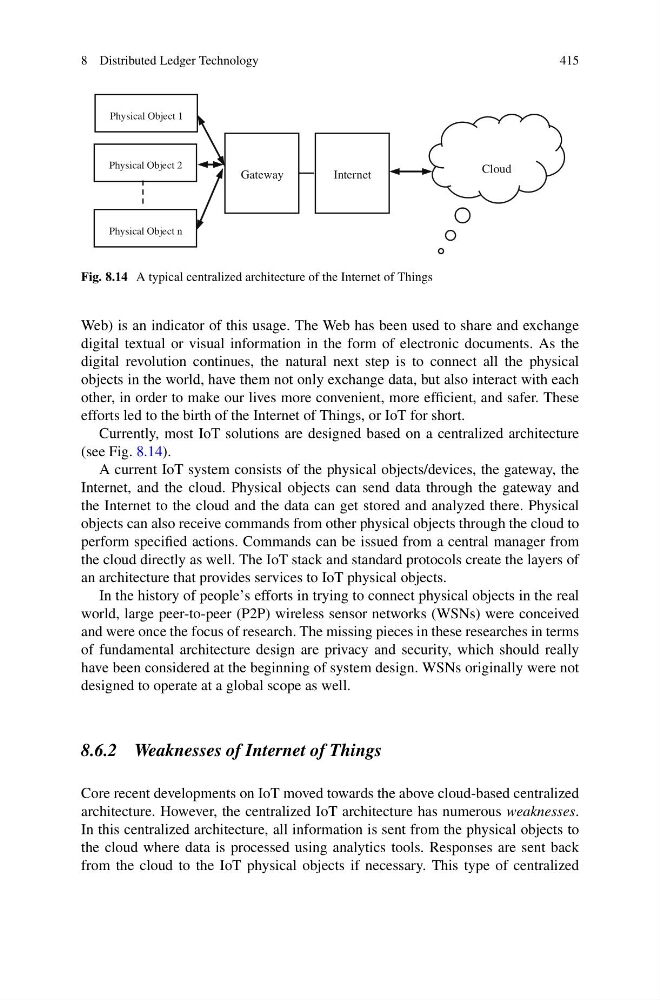
Fig. 8.14 A typical centralized architecture of the Internet of Things
Web) is an indicator of this usage. The Web has been used to share and exchange
digital textual or visual information in the form of electronic documents. As the
digital revolution continues, the natural next step is to connect all the physical
objects in the world, have them not only exchange data, but also interact with each
other, in order to make our lives more convenient, more efficient, and safer. These
efforts led to the birth of the Internet of Things, or IoT for short.
Currently, most IoT solutions are designed based on a centralized architecture
(see Fig. 8.14).
A current IoT system consists of the physical objects/devices, the gateway, the
Internet, and the cloud. Physical objects can send data through the gateway and
the Internet to the cloud and the data can get stored and analyzed there. Physical
objects can also receive commands from other physical objects through the cloud to
perform specified actions. Commands can be issued from a central manager from
the cloud directly as well. The IoT stack and standard protocols create the layers of
an architecture that provides services to IoT physical objects.
In the history of people’s efforts in trying to connect physical objects in the real
world, large peer-to-peer (P2P) wireless sensor networks (WSNs) were conceived
and were once the focus of research. The missing pieces in these researches in terms
of fundamental architecture design are privacy and security, which should really
have been considered at the beginning of system design. WSNs originally were not
designed to operate at a global scope as well.
8.6.2 Weaknesses of Internet of Things
Core recent developments on IoT moved towards the above cloud-based centralized
architecture. However, the centralized IoT architecture has numerous weaknesses.
In this centralized architecture, all information is sent from the physical objects to
the cloud where data is processed using analytics tools. Responses are sent back
from the cloud to the IoT physical objects if necessary. This type of centralized
415
Physical Object 1
Physical Object 2
Physical Object n
Gateway
Internet
Cloud
Fig. 8.14 A typical centralized architecture of the Internet of Things
Web) is an indicator of this usage. The Web has been used to share and exchange
digital textual or visual information in the form of electronic documents. As the
digital revolution continues, the natural next step is to connect all the physical
objects in the world, have them not only exchange data, but also interact with each
other, in order to make our lives more convenient, more efficient, and safer. These
efforts led to the birth of the Internet of Things, or IoT for short.
Currently, most IoT solutions are designed based on a centralized architecture
(see Fig. 8.14).
A current IoT system consists of the physical objects/devices, the gateway, the
Internet, and the cloud. Physical objects can send data through the gateway and
the Internet to the cloud and the data can get stored and analyzed there. Physical
objects can also receive commands from other physical objects through the cloud to
perform specified actions. Commands can be issued from a central manager from
the cloud directly as well. The IoT stack and standard protocols create the layers of
an architecture that provides services to IoT physical objects.
In the history of people’s efforts in trying to connect physical objects in the real
world, large peer-to-peer (P2P) wireless sensor networks (WSNs) were conceived
and were once the focus of research. The missing pieces in these researches in terms
of fundamental architecture design are privacy and security, which should really
have been considered at the beginning of system design. WSNs originally were not
designed to operate at a global scope as well.
8.6.2 Weaknesses of Internet of Things
Core recent developments on IoT moved towards the above cloud-based centralized
architecture. However, the centralized IoT architecture has numerous weaknesses.
In this centralized architecture, all information is sent from the physical objects to
the cloud where data is processed using analytics tools. Responses are sent back
from the cloud to the IoT physical objects if necessary. This type of centralized