

8 Distributed Ledger Technology
395
Distributed Ledger
Technology (DLT)
Directed Acyclic
Graph (DAG)
Blockchain
Hybrid DLT
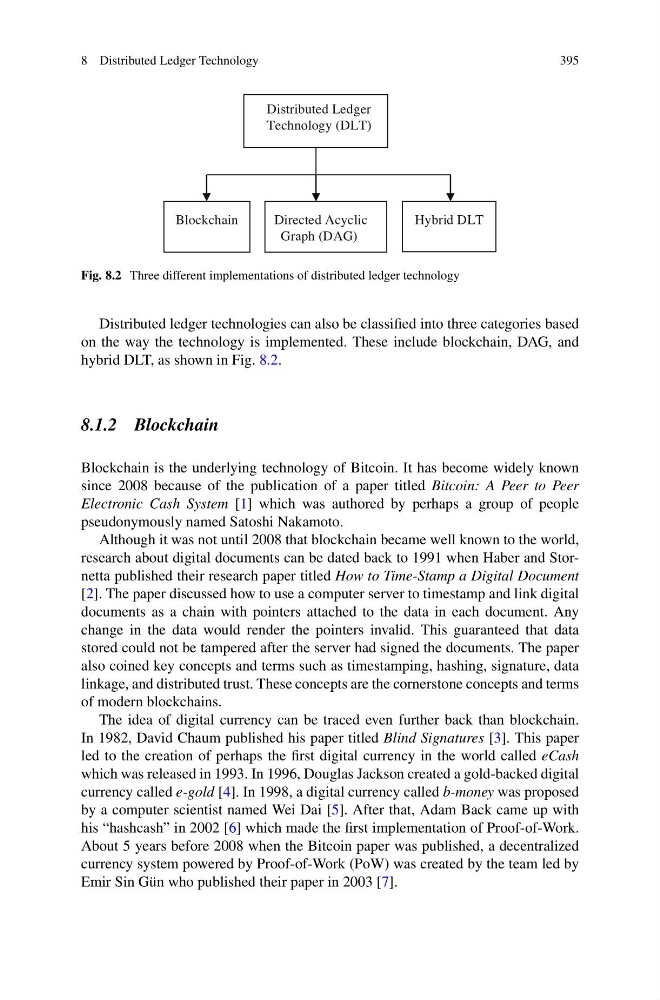
Fig. 8.2 Three different implementations of distributed ledger technology
Distributed ledger technologies can also be classified into three categories based
on the way the technology is implemented. These include blockchain, DAG, and
hybrid DLT, as shown in Fig. 8.2.
8.1.2 Blockchain
Blockchain is the underlying technology of Bitcoin. It has become widely known
since 2008 because of the publication of a paper titled Bitcoin: A Peer to Peer
Electronic Cash System [1] which was authored by perhaps a group of people
pseudonymously named Satoshi Nakamoto.
Although it was not until 2008 that blockchain became well known to the world,
research about digital documents can be dated back to 1991 when Haber and Stornetta published their research paper titled How to Time-Stamp a Digital Document
[2]. The paper discussed how to use a computer server to timestamp and link digital
documents as a chain with pointers attached to the data in each document. Any
change in the data would render the pointers invalid. This guaranteed that data
stored could not be tampered after the server had signed the documents. The paper
also coined key concepts and terms such as timestamping, hashing, signature, data
linkage, and distributed trust. These concepts are the cornerstone concepts and terms
of modern blockchains.
The idea of digital currency can be traced even further back than blockchain.
In 1982, David Chaum published his paper titled Blind Signatures [3]. This paper
led to the creation of perhaps the first digital currency in the world called eCash
which was released in 1993. In 1996, Douglas Jackson created a gold-backed digital
currency called e-gold [4]. In 1998, a digital currency called b-money was proposed
by a computer scientist named Wei Dai [5]. After that, Adam Back came up with
his “hashcash” in 2002 [6] which made the first implementation of Proof-of-Work.
About 5 years before 2008 when the Bitcoin paper was published, a decentralized
currency system powered by Proof-of-Work (PoW) was created by the team led by
Emir Sin Gün who published their paper in 2003 [7].
395
Distributed Ledger
Technology (DLT)
Directed Acyclic
Graph (DAG)
Blockchain
Hybrid DLT
Fig. 8.2 Three different implementations of distributed ledger technology
Distributed ledger technologies can also be classified into three categories based
on the way the technology is implemented. These include blockchain, DAG, and
hybrid DLT, as shown in Fig. 8.2.
8.1.2 Blockchain
Blockchain is the underlying technology of Bitcoin. It has become widely known
since 2008 because of the publication of a paper titled Bitcoin: A Peer to Peer
Electronic Cash System [1] which was authored by perhaps a group of people
pseudonymously named Satoshi Nakamoto.
Although it was not until 2008 that blockchain became well known to the world,
research about digital documents can be dated back to 1991 when Haber and Stornetta published their research paper titled How to Time-Stamp a Digital Document
[2]. The paper discussed how to use a computer server to timestamp and link digital
documents as a chain with pointers attached to the data in each document. Any
change in the data would render the pointers invalid. This guaranteed that data
stored could not be tampered after the server had signed the documents. The paper
also coined key concepts and terms such as timestamping, hashing, signature, data
linkage, and distributed trust. These concepts are the cornerstone concepts and terms
of modern blockchains.
The idea of digital currency can be traced even further back than blockchain.
In 1982, David Chaum published his paper titled Blind Signatures [3]. This paper
led to the creation of perhaps the first digital currency in the world called eCash
which was released in 1993. In 1996, Douglas Jackson created a gold-backed digital
currency called e-gold [4]. In 1998, a digital currency called b-money was proposed
by a computer scientist named Wei Dai [5]. After that, Adam Back came up with
his “hashcash” in 2002 [6] which made the first implementation of Proof-of-Work.
About 5 years before 2008 when the Bitcoin paper was published, a decentralized
currency system powered by Proof-of-Work (PoW) was created by the team led by
Emir Sin Gün who published their paper in 2003 [7].