

394
X. Liu et al.
8.6 Blockchain and Internet of Things ....................................................... 414
8.6.1 Internet of Things ................................................................ 414
8.6.2 Weaknesses of Internet of Things ............................................... 415
8.6.3 Blockchains and IoT ............................................................. 417
8.6.4 How to Combine Blockchains and IoT ......................................... 418
8.7 Prominent Enterprise DLT Platforms .................................................... 419
8.7.1 Hyperledger Fabric .............................................................. 419
8.7.2 Ethereum ......................................................................... 420
8.7.3 IOTA .............................................................................. 420
8.8 Applications of Blockchain ............................................................... 421
8.8.1 Financial Services................................................................ 421
8.8.2 Healthcare ........................................................................ 422
8.8.3 Energy ............................................................................ 422
8.8.4 Identity Management ............................................................ 423
8.8.5 Supply Chain Management...................................................... 424
8.8.6 Other Applications ............................................................... 424
8.9 Other Aspects of DLTs.................................................................... 425
8.9.1 Scalability and Other Practical Considerations ................................. 425
8.9.2 Token and Token Economics .................................................... 427
8.10 Vulnerabilities of Blockchain............................................................. 428
8.11 Summary .................................................................................. 429
References ........................................................................................ 429
8.1 Introduction to Distributed Ledger Technology and IoT
8.1.1 What Is a Distributed Ledger?
Distributed ledger technology is a general term that is used to describe technologies
for the storage, distribution, and exchange of data between users over private or
public distributed computer networks. Essentially, a distributed ledger is a database
that is spread and stored over multiple computers located at physically different
locations. Each of such computers is frequently referred to as a node. A distributed
ledger can also be considered as a common datasheet stored on multiple distributed
nodes.
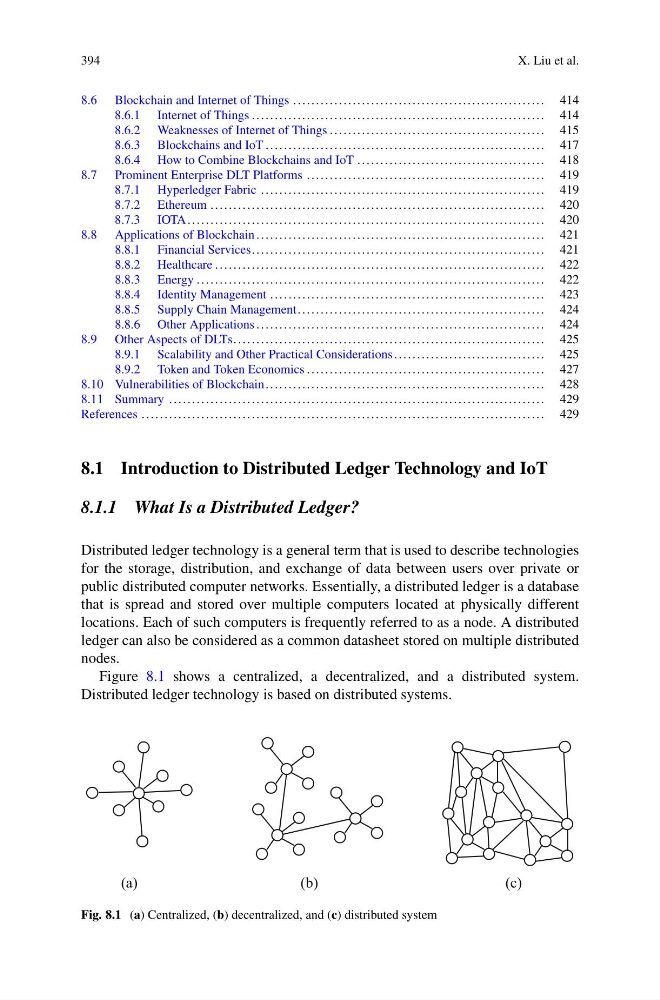
Figure 8.1 shows a centralized, a decentralized, and a distributed system.
Distributed ledger technology is based on distributed systems.
(a)
(b)
(c)
Fig. 8.1 (a) Centralized, (b) decentralized, and (c) distributed system
X. Liu et al.
8.6 Blockchain and Internet of Things ....................................................... 414
8.6.1 Internet of Things ................................................................ 414
8.6.2 Weaknesses of Internet of Things ............................................... 415
8.6.3 Blockchains and IoT ............................................................. 417
8.6.4 How to Combine Blockchains and IoT ......................................... 418
8.7 Prominent Enterprise DLT Platforms .................................................... 419
8.7.1 Hyperledger Fabric .............................................................. 419
8.7.2 Ethereum ......................................................................... 420
8.7.3 IOTA .............................................................................. 420
8.8 Applications of Blockchain ............................................................... 421
8.8.1 Financial Services................................................................ 421
8.8.2 Healthcare ........................................................................ 422
8.8.3 Energy ............................................................................ 422
8.8.4 Identity Management ............................................................ 423
8.8.5 Supply Chain Management...................................................... 424
8.8.6 Other Applications ............................................................... 424
8.9 Other Aspects of DLTs.................................................................... 425
8.9.1 Scalability and Other Practical Considerations ................................. 425
8.9.2 Token and Token Economics .................................................... 427
8.10 Vulnerabilities of Blockchain............................................................. 428
8.11 Summary .................................................................................. 429
References ........................................................................................ 429
8.1 Introduction to Distributed Ledger Technology and IoT
8.1.1 What Is a Distributed Ledger?
Distributed ledger technology is a general term that is used to describe technologies
for the storage, distribution, and exchange of data between users over private or
public distributed computer networks. Essentially, a distributed ledger is a database
that is spread and stored over multiple computers located at physically different
locations. Each of such computers is frequently referred to as a node. A distributed
ledger can also be considered as a common datasheet stored on multiple distributed
nodes.
Figure 8.1 shows a centralized, a decentralized, and a distributed system.
Distributed ledger technology is based on distributed systems.
(a)
(b)
(c)
Fig. 8.1 (a) Centralized, (b) decentralized, and (c) distributed system