

1 IoT Fundamentals: Definitions, Architectures, Challenges, and Promises
27
Environmental Intelligence &
Storage conditions control
End-to-end visibility to
delivery process
Workforce monitoring
Smart Energy Management
Smart labels
Inventory tracking &
analytics
Real-time asset & fleet
management
Cargo integrity monitoring
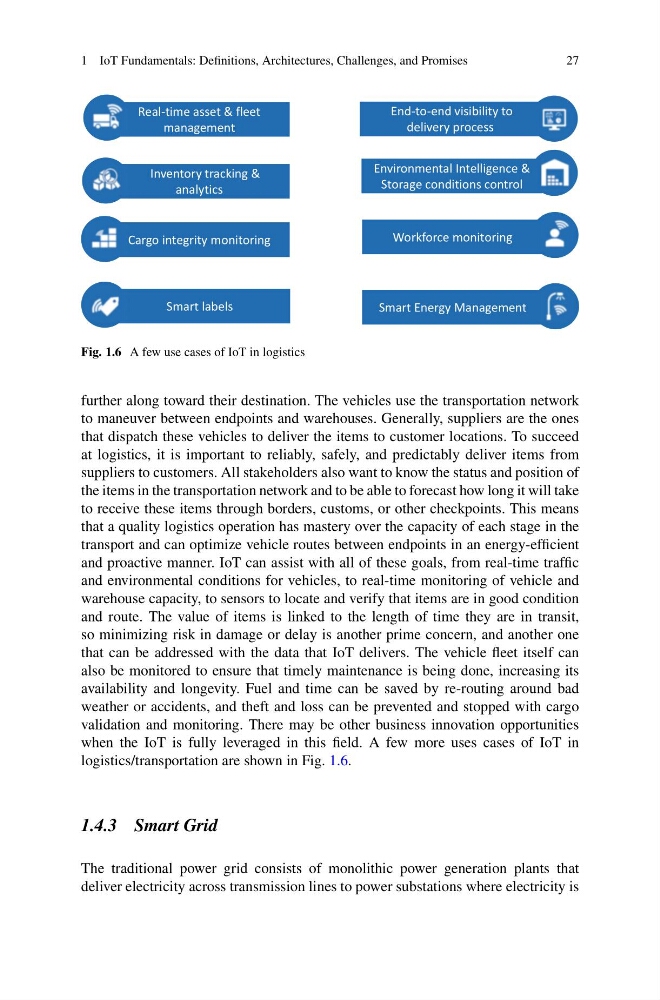
Fig. 1.6 A few use cases of IoT in logistics
further along toward their destination. The vehicles use the transportation network
to maneuver between endpoints and warehouses. Generally, suppliers are the ones
that dispatch these vehicles to deliver the items to customer locations. To succeed
at logistics, it is important to reliably, safely, and predictably deliver items from
suppliers to customers. All stakeholders also want to know the status and position of
the items in the transportation network and to be able to forecast how long it will take
to receive these items through borders, customs, or other checkpoints. This means
that a quality logistics operation has mastery over the capacity of each stage in the
transport and can optimize vehicle routes between endpoints in an energy-efficient
and proactive manner. IoT can assist with all of these goals, from real-time traffic
and environmental conditions for vehicles, to real-time monitoring of vehicle and
warehouse capacity, to sensors to locate and verify that items are in good condition
and route. The value of items is linked to the length of time they are in transit,
so minimizing risk in damage or delay is another prime concern, and another one
that can be addressed with the data that IoT delivers. The vehicle fleet itself can
also be monitored to ensure that timely maintenance is being done, increasing its
availability and longevity. Fuel and time can be saved by re-routing around bad
weather or accidents, and theft and loss can be prevented and stopped with cargo
validation and monitoring. There may be other business innovation opportunities
when the IoT is fully leveraged in this field. A few more uses cases of IoT in
logistics/transportation are shown in Fig. 1.6.
1.4.3 Smart Grid
The traditional power grid consists of monolithic power generation plants that
deliver electricity across transmission lines to power substations where electricity is
27
Environmental Intelligence &
Storage conditions control
End-to-end visibility to
delivery process
Workforce monitoring
Smart Energy Management
Smart labels
Inventory tracking &
analytics
Real-time asset & fleet
management
Cargo integrity monitoring
Fig. 1.6 A few use cases of IoT in logistics
further along toward their destination. The vehicles use the transportation network
to maneuver between endpoints and warehouses. Generally, suppliers are the ones
that dispatch these vehicles to deliver the items to customer locations. To succeed
at logistics, it is important to reliably, safely, and predictably deliver items from
suppliers to customers. All stakeholders also want to know the status and position of
the items in the transportation network and to be able to forecast how long it will take
to receive these items through borders, customs, or other checkpoints. This means
that a quality logistics operation has mastery over the capacity of each stage in the
transport and can optimize vehicle routes between endpoints in an energy-efficient
and proactive manner. IoT can assist with all of these goals, from real-time traffic
and environmental conditions for vehicles, to real-time monitoring of vehicle and
warehouse capacity, to sensors to locate and verify that items are in good condition
and route. The value of items is linked to the length of time they are in transit,
so minimizing risk in damage or delay is another prime concern, and another one
that can be addressed with the data that IoT delivers. The vehicle fleet itself can
also be monitored to ensure that timely maintenance is being done, increasing its
availability and longevity. Fuel and time can be saved by re-routing around bad
weather or accidents, and theft and loss can be prevented and stopped with cargo
validation and monitoring. There may be other business innovation opportunities
when the IoT is fully leveraged in this field. A few more uses cases of IoT in
logistics/transportation are shown in Fig. 1.6.
1.4.3 Smart Grid
The traditional power grid consists of monolithic power generation plants that
deliver electricity across transmission lines to power substations where electricity is