

304
F. Firouzi et al.
. . .
. . .
. . .
Input
Convolution
Pooling
Convolution + Pooling
Fully connected Softmax
Negin
Sani
Farshad
…
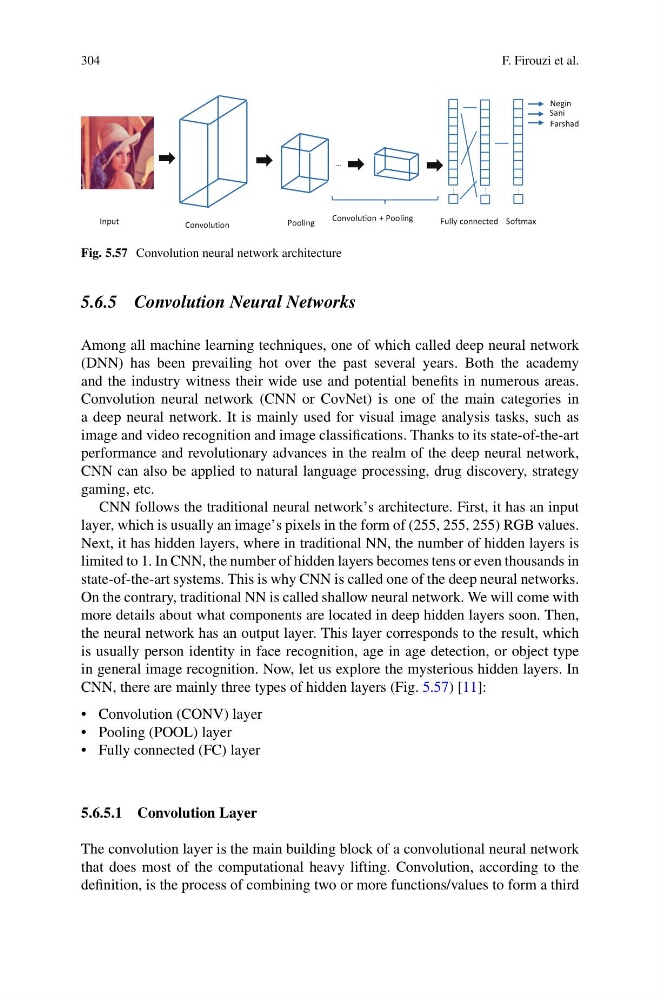
Fig. 5.57 Convolution neural network architecture
5.6.5 Convolution Neural Networks
Among all machine learning techniques, one of which called deep neural network
(DNN) has been prevailing hot over the past several years. Both the academy
and the industry witness their wide use and potential benefits in numerous areas.
Convolution neural network (CNN or CovNet) is one of the main categories in
a deep neural network. It is mainly used for visual image analysis tasks, such as
image and video recognition and image classifications. Thanks to its state-of-the-art
performance and revolutionary advances in the realm of the deep neural network,
CNN can also be applied to natural language processing, drug discovery, strategy
gaming, etc.
CNN follows the traditional neural network’s architecture. First, it has an input
layer, which is usually an image’s pixels in the form of (255, 255, 255) RGB values.
Next, it has hidden layers, where in traditional NN, the number of hidden layers is
limited to 1. In CNN, the number of hidden layers becomes tens or even thousands in
state-of-the-art systems. This is why CNN is called one of the deep neural networks.
On the contrary, traditional NN is called shallow neural network. We will come with
more details about what components are located in deep hidden layers soon. Then,
the neural network has an output layer. This layer corresponds to the result, which
is usually person identity in face recognition, age in age detection, or object type
in general image recognition. Now, let us explore the mysterious hidden layers. In
CNN, there are mainly three types of hidden layers (Fig. 5.57) [11]:
• Convolution (CONV) layer
• Pooling (POOL) layer
• Fully connected (FC) layer
5.6.5.1 Convolution Layer
The convolution layer is the main building block of a convolutional neural network
that does most of the computational heavy lifting. Convolution, according to the
definition, is the process of combining two or more functions/values to form a third
F. Firouzi et al.
. . .
. . .
. . .
Input
Convolution
Pooling
Convolution + Pooling
Fully connected Softmax
Negin
Sani
Farshad
…
Fig. 5.57 Convolution neural network architecture
5.6.5 Convolution Neural Networks
Among all machine learning techniques, one of which called deep neural network
(DNN) has been prevailing hot over the past several years. Both the academy
and the industry witness their wide use and potential benefits in numerous areas.
Convolution neural network (CNN or CovNet) is one of the main categories in
a deep neural network. It is mainly used for visual image analysis tasks, such as
image and video recognition and image classifications. Thanks to its state-of-the-art
performance and revolutionary advances in the realm of the deep neural network,
CNN can also be applied to natural language processing, drug discovery, strategy
gaming, etc.
CNN follows the traditional neural network’s architecture. First, it has an input
layer, which is usually an image’s pixels in the form of (255, 255, 255) RGB values.
Next, it has hidden layers, where in traditional NN, the number of hidden layers is
limited to 1. In CNN, the number of hidden layers becomes tens or even thousands in
state-of-the-art systems. This is why CNN is called one of the deep neural networks.
On the contrary, traditional NN is called shallow neural network. We will come with
more details about what components are located in deep hidden layers soon. Then,
the neural network has an output layer. This layer corresponds to the result, which
is usually person identity in face recognition, age in age detection, or object type
in general image recognition. Now, let us explore the mysterious hidden layers. In
CNN, there are mainly three types of hidden layers (Fig. 5.57) [11]:
• Convolution (CONV) layer
• Pooling (POOL) layer
• Fully connected (FC) layer
5.6.5.1 Convolution Layer
The convolution layer is the main building block of a convolutional neural network
that does most of the computational heavy lifting. Convolution, according to the
definition, is the process of combining two or more functions/values to form a third