

262
F. Firouzi et al.
Fig. 5.15 An example of an
outlier data point
Outlier
Heteroscedasticity
Homoscedasticity
X
Y
X
Y
Unequal error variances
Equal error variances
Low error
High error
Regression model
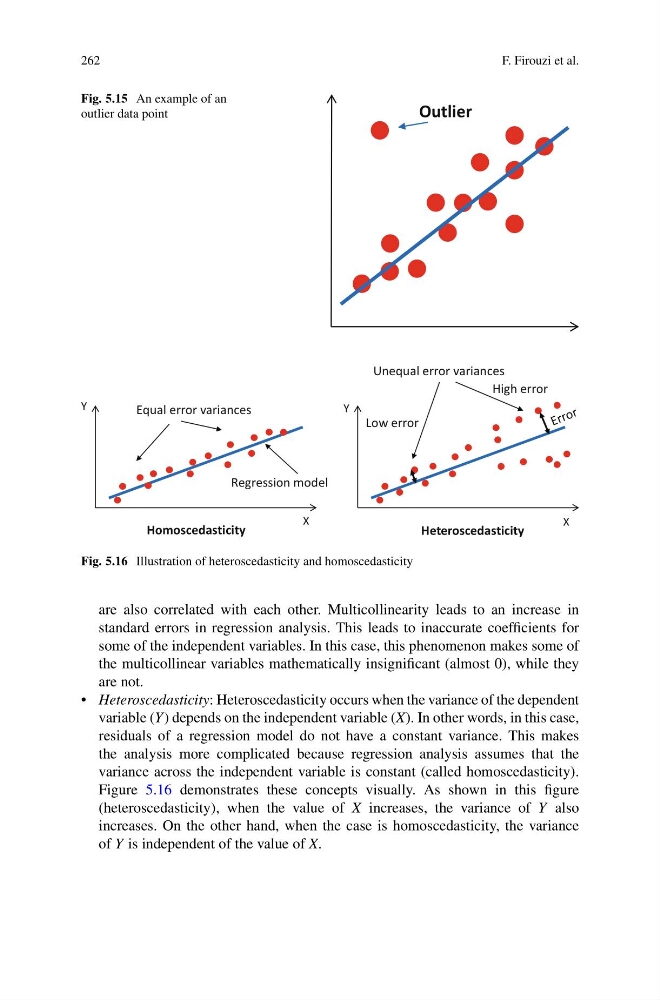
Fig. 5.16 Illustration of heteroscedasticity and homoscedasticity
are also correlated with each other. Multicollinearity leads to an increase in
standard errors in regression analysis. This leads to inaccurate coefficients for
some of the independent variables. In this case, this phenomenon makes some of
the multicollinear variables mathematically insignificant (almost 0), while they
are not.
• Heteroscedasticity: Heteroscedasticity occurs when the variance of the dependent
variable (Y) depends on the independent variable (X). In other words, in this case,
residuals of a regression model do not have a constant variance. This makes
the analysis more complicated because regression analysis assumes that the
variance across the independent variable is constant (called homoscedasticity).
Figure 5.16 demonstrates these concepts visually. As shown in this figure
(heteroscedasticity), when the value of X increases, the variance of Y also
increases. On the other hand, when the case is homoscedasticity, the variance
of Y is independent of the value of X.
F. Firouzi et al.
Fig. 5.15 An example of an
outlier data point
Outlier
Heteroscedasticity
Homoscedasticity
X
Y
X
Y
Unequal error variances
Equal error variances
Low error
High error
Regression model
Fig. 5.16 Illustration of heteroscedasticity and homoscedasticity
are also correlated with each other. Multicollinearity leads to an increase in
standard errors in regression analysis. This leads to inaccurate coefficients for
some of the independent variables. In this case, this phenomenon makes some of
the multicollinear variables mathematically insignificant (almost 0), while they
are not.
• Heteroscedasticity: Heteroscedasticity occurs when the variance of the dependent
variable (Y) depends on the independent variable (X). In other words, in this case,
residuals of a regression model do not have a constant variance. This makes
the analysis more complicated because regression analysis assumes that the
variance across the independent variable is constant (called homoscedasticity).
Figure 5.16 demonstrates these concepts visually. As shown in this figure
(heteroscedasticity), when the value of X increases, the variance of Y also
increases. On the other hand, when the case is homoscedasticity, the variance
of Y is independent of the value of X.