

3 Engineering IoT Networks
131
Table 3.3 LoRa data rates
Data rate type
Configuration
Physical bitrate (b/s)
Max payload size (byte)
DR0
SF12/125 kHz
250
59
DR1
SF11/125 kHz
440
59
DR2
SF10/125 kHz
980
59
DR3
SF9/125 kHz
1,760
123
DR4
SF8/125 kHz
3,125
230
DR5
SF7/125 kHz
5,470
230
DR6
SF7/250 kHz
11,000
230
DR7
FSK: 50 kb/s
50,000
230
865.0
868.0
1%
25 mW
868.0
868.6
1%
25 mW
868.7
869.2
0.1%
25 mW
869.3
869.4
10 mW
869.4 869.65
10%
500 mW
LoRaWAN
Downlink channels
869.7
870.0
1%
25 mW
868.0 868.1
868.1 868.2
868.2 868.3
868.3 868.4
868.4 868.5
868.6 868.6
LoRaWAN and Sigfox
Standard channels
LoRaWAN
Standard channel
LoRaWAN
Standard channel
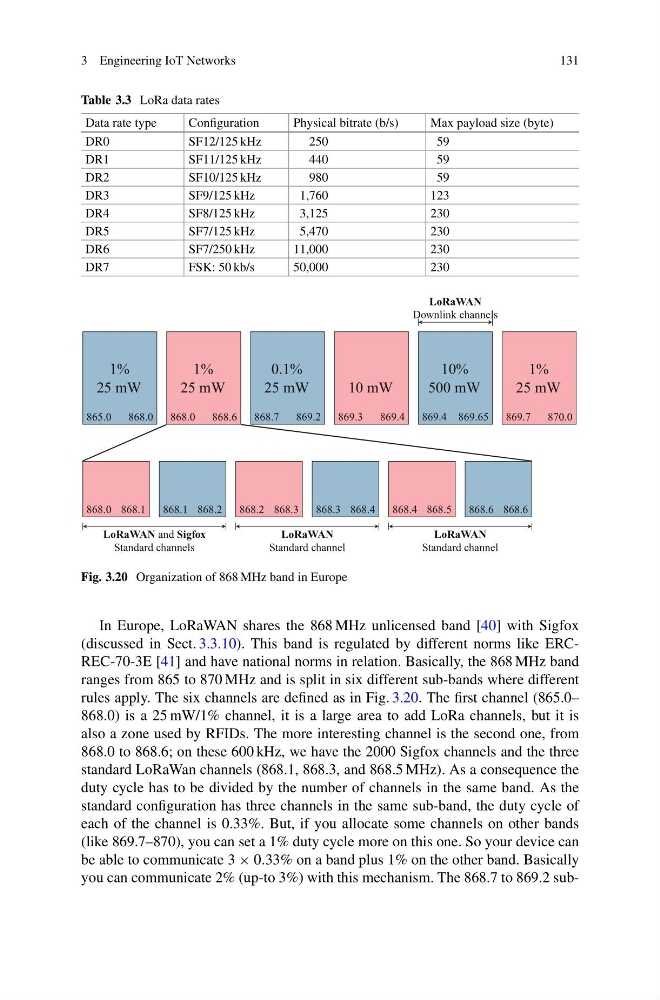
Fig. 3.20 Organization of 868 MHz band in Europe
In Europe, LoRaWAN shares the 868 MHz unlicensed band [40] with Sigfox
(discussed in Sect. 3.3.10). This band is regulated by different norms like ERCREC-70-3E [41] and have national norms in relation. Basically, the 868 MHz band
ranges from 865 to 870 MHz and is split in six different sub-bands where different
rules apply. The six channels are defined as in Fig. 3.20. The first channel (865.0–
868.0) is a 25 mW/1% channel, it is a large area to add LoRa channels, but it is
also a zone used by RFIDs. The more interesting channel is the second one, from
868.0 to 868.6; on these 600 kHz, we have the 2000 Sigfox channels and the three
standard LoRaWan channels (868.1, 868.3, and 868.5 MHz). As a consequence the
duty cycle has to be divided by the number of channels in the same band. As the
standard configuration has three channels in the same sub-band, the duty cycle of
each of the channel is 0.33%. But, if you allocate some channels on other bands
(like 869.7–870), you can set a 1% duty cycle more on this one. So your device can
be able to communicate 3 × 0.33% on a band plus 1% on the other band. Basically
you can communicate 2% (up-to 3%) with this mechanism. The 868.7 to 869.2 sub-
131
Table 3.3 LoRa data rates
Data rate type
Configuration
Physical bitrate (b/s)
Max payload size (byte)
DR0
SF12/125 kHz
250
59
DR1
SF11/125 kHz
440
59
DR2
SF10/125 kHz
980
59
DR3
SF9/125 kHz
1,760
123
DR4
SF8/125 kHz
3,125
230
DR5
SF7/125 kHz
5,470
230
DR6
SF7/250 kHz
11,000
230
DR7
FSK: 50 kb/s
50,000
230
865.0
868.0
1%
25 mW
868.0
868.6
1%
25 mW
868.7
869.2
0.1%
25 mW
869.3
869.4
10 mW
869.4 869.65
10%
500 mW
LoRaWAN
Downlink channels
869.7
870.0
1%
25 mW
868.0 868.1
868.1 868.2
868.2 868.3
868.3 868.4
868.4 868.5
868.6 868.6
LoRaWAN and Sigfox
Standard channels
LoRaWAN
Standard channel
LoRaWAN
Standard channel
Fig. 3.20 Organization of 868 MHz band in Europe
In Europe, LoRaWAN shares the 868 MHz unlicensed band [40] with Sigfox
(discussed in Sect. 3.3.10). This band is regulated by different norms like ERCREC-70-3E [41] and have national norms in relation. Basically, the 868 MHz band
ranges from 865 to 870 MHz and is split in six different sub-bands where different
rules apply. The six channels are defined as in Fig. 3.20. The first channel (865.0–
868.0) is a 25 mW/1% channel, it is a large area to add LoRa channels, but it is
also a zone used by RFIDs. The more interesting channel is the second one, from
868.0 to 868.6; on these 600 kHz, we have the 2000 Sigfox channels and the three
standard LoRaWan channels (868.1, 868.3, and 868.5 MHz). As a consequence the
duty cycle has to be divided by the number of channels in the same band. As the
standard configuration has three channels in the same sub-band, the duty cycle of
each of the channel is 0.33%. But, if you allocate some channels on other bands
(like 869.7–870), you can set a 1% duty cycle more on this one. So your device can
be able to communicate 3 × 0.33% on a band plus 1% on the other band. Basically
you can communicate 2% (up-to 3%) with this mechanism. The 868.7 to 869.2 sub-