

50
A. Hu et al.
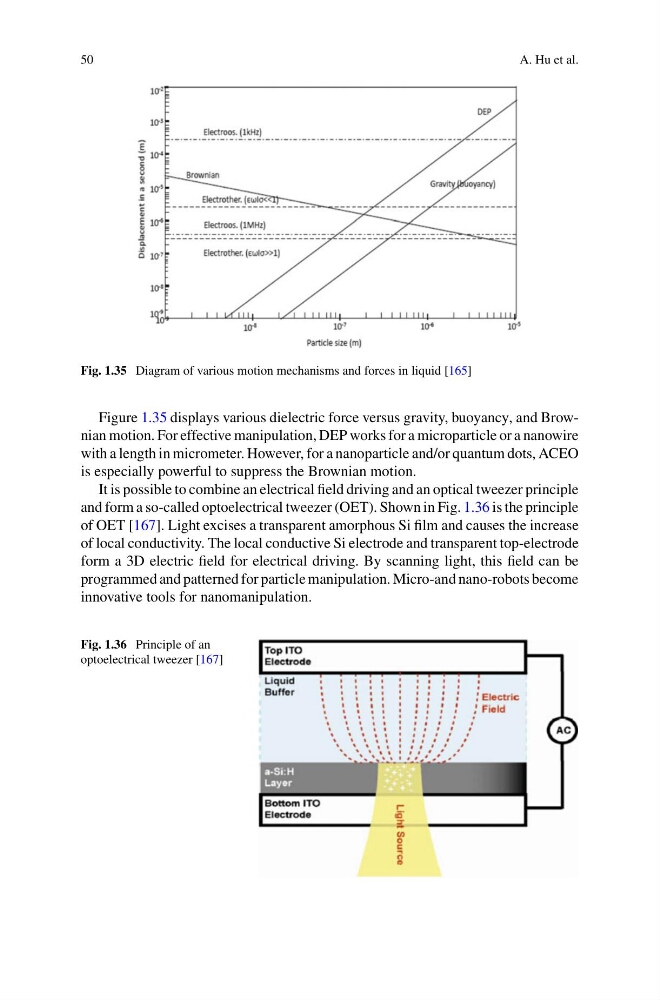
Fig. 1.35 Diagram of various motion mechanisms and forces in liquid [165]
Figure 1.35 displays various dielectric force versus gravity, buoyancy, and Brownian motion. For effective manipulation, DEP works for a microparticle or a nanowire
with a length in micrometer. However, for a nanoparticle and/or quantum dots, ACEO
is especially powerful to suppress the Brownian motion.
It is possible to combine an electrical field driving and an optical tweezer principle
and form a so-called optoelectrical tweezer (OET). Shown in Fig. 1.36 is the principle
of OET [167]. Light excises a transparent amorphous Si film and causes the increase
of local conductivity. The local conductive Si electrode and transparent top-electrode
form a 3D electric field for electrical driving. By scanning light, this field can be
programmed and patterned for particle manipulation. Micro-and nano-robots become
innovative tools for nanomanipulation.
Fig. 1.36 Principle of an
optoelectrical tweezer [167]
A. Hu et al.
Fig. 1.35 Diagram of various motion mechanisms and forces in liquid [165]
Figure 1.35 displays various dielectric force versus gravity, buoyancy, and Brownian motion. For effective manipulation, DEP works for a microparticle or a nanowire
with a length in micrometer. However, for a nanoparticle and/or quantum dots, ACEO
is especially powerful to suppress the Brownian motion.
It is possible to combine an electrical field driving and an optical tweezer principle
and form a so-called optoelectrical tweezer (OET). Shown in Fig. 1.36 is the principle
of OET [167]. Light excises a transparent amorphous Si film and causes the increase
of local conductivity. The local conductive Si electrode and transparent top-electrode
form a 3D electric field for electrical driving. By scanning light, this field can be
programmed and patterned for particle manipulation. Micro-and nano-robots become
innovative tools for nanomanipulation.
Fig. 1.36 Principle of an
optoelectrical tweezer [167]