

1 Introduction to Laser Micro-to-Nano Manufacturing
29
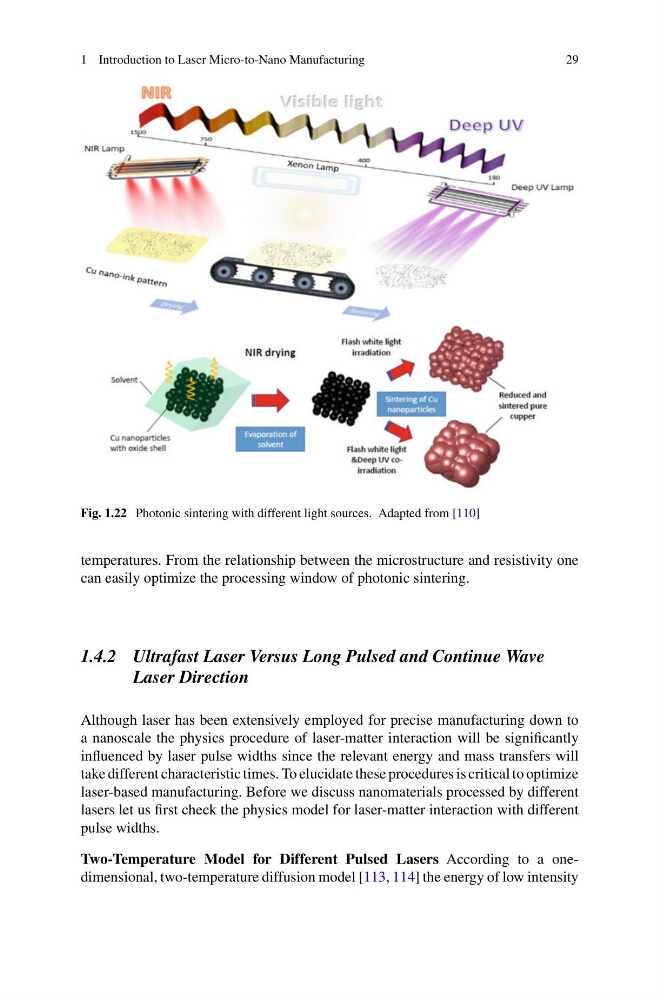
Fig. 1.22 Photonic sintering with different light sources. Adapted from [110]
temperatures. From the relationship between the microstructure and resistivity one
can easily optimize the processing window of photonic sintering.
1.4.2 Ultrafast Laser Versus Long Pulsed and Continue Wave
Laser Direction
Although laser has been extensively employed for precise manufacturing down to
a nanoscale the physics procedure of laser-matter interaction will be significantly
influenced by laser pulse widths since the relevant energy and mass transfers will
take different characteristic times. To elucidate these procedures is critical to optimize
laser-based manufacturing. Before we discuss nanomaterials processed by different
lasers let us first check the physics model for laser-matter interaction with different
pulse widths.
Two-Temperature Model for Different Pulsed Lasers According to a onedimensional, two-temperature diffusion model [113, 114] the energy of low intensity
29
Fig. 1.22 Photonic sintering with different light sources. Adapted from [110]
temperatures. From the relationship between the microstructure and resistivity one
can easily optimize the processing window of photonic sintering.
1.4.2 Ultrafast Laser Versus Long Pulsed and Continue Wave
Laser Direction
Although laser has been extensively employed for precise manufacturing down to
a nanoscale the physics procedure of laser-matter interaction will be significantly
influenced by laser pulse widths since the relevant energy and mass transfers will
take different characteristic times. To elucidate these procedures is critical to optimize
laser-based manufacturing. Before we discuss nanomaterials processed by different
lasers let us first check the physics model for laser-matter interaction with different
pulse widths.
Two-Temperature Model for Different Pulsed Lasers According to a onedimensional, two-temperature diffusion model [113, 114] the energy of low intensity