

11 Lithium-Ion Battery—3D Micro-/Nano-Structuring, Modification …
339
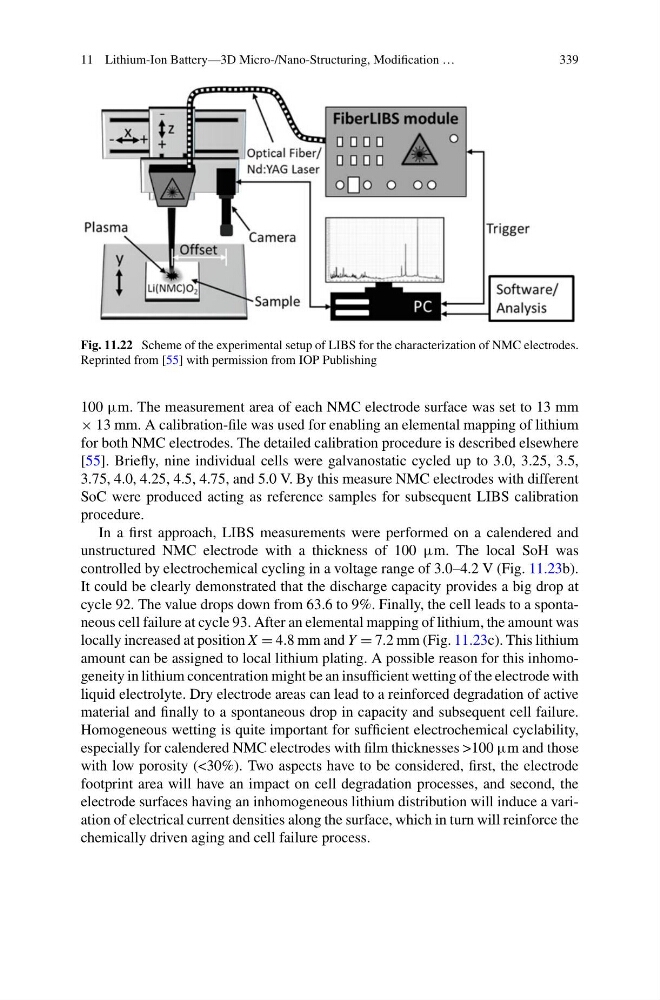
Fig. 11.22 Scheme of the experimental setup of LIBS for the characterization of NMC electrodes.
Reprinted from [55] with permission from IOP Publishing
100 μm. The measurement area of each NMC electrode surface was set to 13 mm
× 13 mm. A calibration-file was used for enabling an elemental mapping of lithium
for both NMC electrodes. The detailed calibration procedure is described elsewhere
[55]. Briefly, nine individual cells were galvanostatic cycled up to 3.0, 3.25, 3.5,
3.75, 4.0, 4.25, 4.5, 4.75, and 5.0 V. By this measure NMC electrodes with different
SoC were produced acting as reference samples for subsequent LIBS calibration
procedure.
In a first approach, LIBS measurements were performed on a calendered and
unstructured NMC electrode with a thickness of 100 μm. The local SoH was
controlled by electrochemical cycling in a voltage range of 3.0–4.2 V (Fig. 11.23b).
It could be clearly demonstrated that the discharge capacity provides a big drop at
cycle 92. The value drops down from 63.6 to 9%. Finally, the cell leads to a spontaneous cell failure at cycle 93. After an elemental mapping of lithium, the amount was
locally increased at position X = 4.8 mm and Y = 7.2 mm (Fig. 11.23c). This lithium
amount can be assigned to local lithium plating. A possible reason for this inhomogeneity in lithium concentration might be an insufficient wetting of the electrode with
liquid electrolyte. Dry electrode areas can lead to a reinforced degradation of active
material and finally to a spontaneous drop in capacity and subsequent cell failure.
Homogeneous wetting is quite important for sufficient electrochemical cyclability,
especially for calendered NMC electrodes with film thicknesses >100 μm and those
with low porosity (<30%). Two aspects have to be considered, first, the electrode
footprint area will have an impact on cell degradation processes, and second, the
electrode surfaces having an inhomogeneous lithium distribution will induce a variation of electrical current densities along the surface, which in turn will reinforce the
chemically driven aging and cell failure process.
339
Fig. 11.22 Scheme of the experimental setup of LIBS for the characterization of NMC electrodes.
Reprinted from [55] with permission from IOP Publishing
100 μm. The measurement area of each NMC electrode surface was set to 13 mm
× 13 mm. A calibration-file was used for enabling an elemental mapping of lithium
for both NMC electrodes. The detailed calibration procedure is described elsewhere
[55]. Briefly, nine individual cells were galvanostatic cycled up to 3.0, 3.25, 3.5,
3.75, 4.0, 4.25, 4.5, 4.75, and 5.0 V. By this measure NMC electrodes with different
SoC were produced acting as reference samples for subsequent LIBS calibration
procedure.
In a first approach, LIBS measurements were performed on a calendered and
unstructured NMC electrode with a thickness of 100 μm. The local SoH was
controlled by electrochemical cycling in a voltage range of 3.0–4.2 V (Fig. 11.23b).
It could be clearly demonstrated that the discharge capacity provides a big drop at
cycle 92. The value drops down from 63.6 to 9%. Finally, the cell leads to a spontaneous cell failure at cycle 93. After an elemental mapping of lithium, the amount was
locally increased at position X = 4.8 mm and Y = 7.2 mm (Fig. 11.23c). This lithium
amount can be assigned to local lithium plating. A possible reason for this inhomogeneity in lithium concentration might be an insufficient wetting of the electrode with
liquid electrolyte. Dry electrode areas can lead to a reinforced degradation of active
material and finally to a spontaneous drop in capacity and subsequent cell failure.
Homogeneous wetting is quite important for sufficient electrochemical cyclability,
especially for calendered NMC electrodes with film thicknesses >100 μm and those
with low porosity (<30%). Two aspects have to be considered, first, the electrode
footprint area will have an impact on cell degradation processes, and second, the
electrode surfaces having an inhomogeneous lithium distribution will induce a variation of electrical current densities along the surface, which in turn will reinforce the
chemically driven aging and cell failure process.