

7 Micro-hole Arrays and Net-like Structure Fabrication …
227
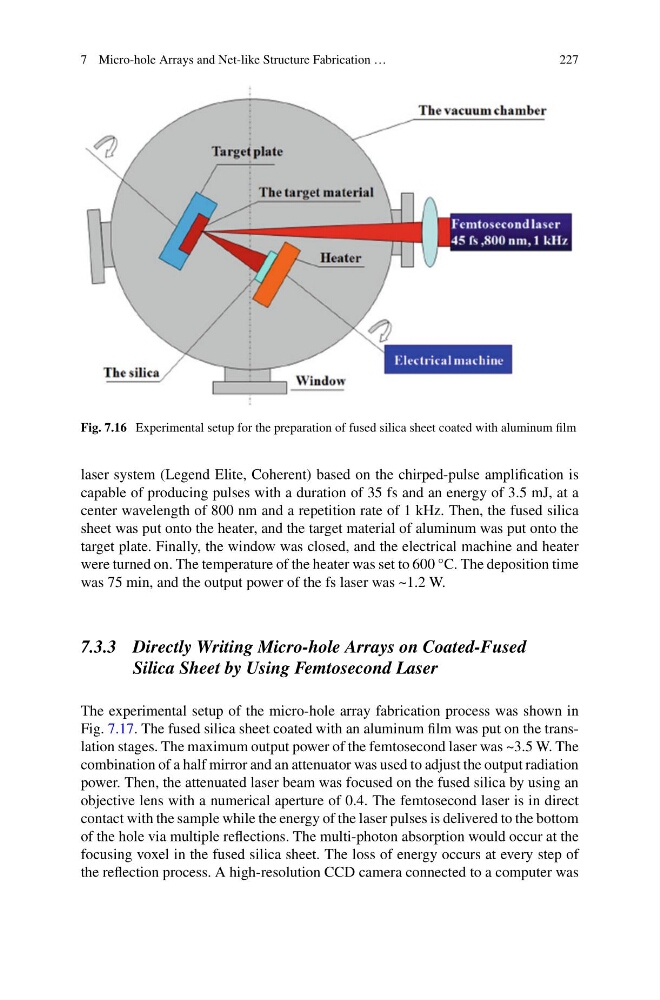
Fig. 7.16 Experimental setup for the preparation of fused silica sheet coated with aluminum film
laser system (Legend Elite, Coherent) based on the chirped-pulse amplification is
capable of producing pulses with a duration of 35 fs and an energy of 3.5 mJ, at a
center wavelength of 800 nm and a repetition rate of 1 kHz. Then, the fused silica
sheet was put onto the heater, and the target material of aluminum was put onto the
target plate. Finally, the window was closed, and the electrical machine and heater
were turned on. The temperature of the heater was set to 600 °C. The deposition time
was 75 min, and the output power of the fs laser was ~1.2 W.
7.3.3 Directly Writing Micro-hole Arrays on Coated-Fused
Silica Sheet by Using Femtosecond Laser
The experimental setup of the micro-hole array fabrication process was shown in
Fig. 7.17. The fused silica sheet coated with an aluminum film was put on the translation stages. The maximum output power of the femtosecond laser was ~3.5 W. The
combination of a half mirror and an attenuator was used to adjust the output radiation
power. Then, the attenuated laser beam was focused on the fused silica by using an
objective lens with a numerical aperture of 0.4. The femtosecond laser is in direct
contact with the sample while the energy of the laser pulses is delivered to the bottom
of the hole via multiple reflections. The multi-photon absorption would occur at the
focusing voxel in the fused silica sheet. The loss of energy occurs at every step of
the reflection process. A high-resolution CCD camera connected to a computer was
227
Fig. 7.16 Experimental setup for the preparation of fused silica sheet coated with aluminum film
laser system (Legend Elite, Coherent) based on the chirped-pulse amplification is
capable of producing pulses with a duration of 35 fs and an energy of 3.5 mJ, at a
center wavelength of 800 nm and a repetition rate of 1 kHz. Then, the fused silica
sheet was put onto the heater, and the target material of aluminum was put onto the
target plate. Finally, the window was closed, and the electrical machine and heater
were turned on. The temperature of the heater was set to 600 °C. The deposition time
was 75 min, and the output power of the fs laser was ~1.2 W.
7.3.3 Directly Writing Micro-hole Arrays on Coated-Fused
Silica Sheet by Using Femtosecond Laser
The experimental setup of the micro-hole array fabrication process was shown in
Fig. 7.17. The fused silica sheet coated with an aluminum film was put on the translation stages. The maximum output power of the femtosecond laser was ~3.5 W. The
combination of a half mirror and an attenuator was used to adjust the output radiation
power. Then, the attenuated laser beam was focused on the fused silica by using an
objective lens with a numerical aperture of 0.4. The femtosecond laser is in direct
contact with the sample while the energy of the laser pulses is delivered to the bottom
of the hole via multiple reflections. The multi-photon absorption would occur at the
focusing voxel in the fused silica sheet. The loss of energy occurs at every step of
the reflection process. A high-resolution CCD camera connected to a computer was