

7 Micro-hole Arrays and Net-like Structure Fabrication …
225
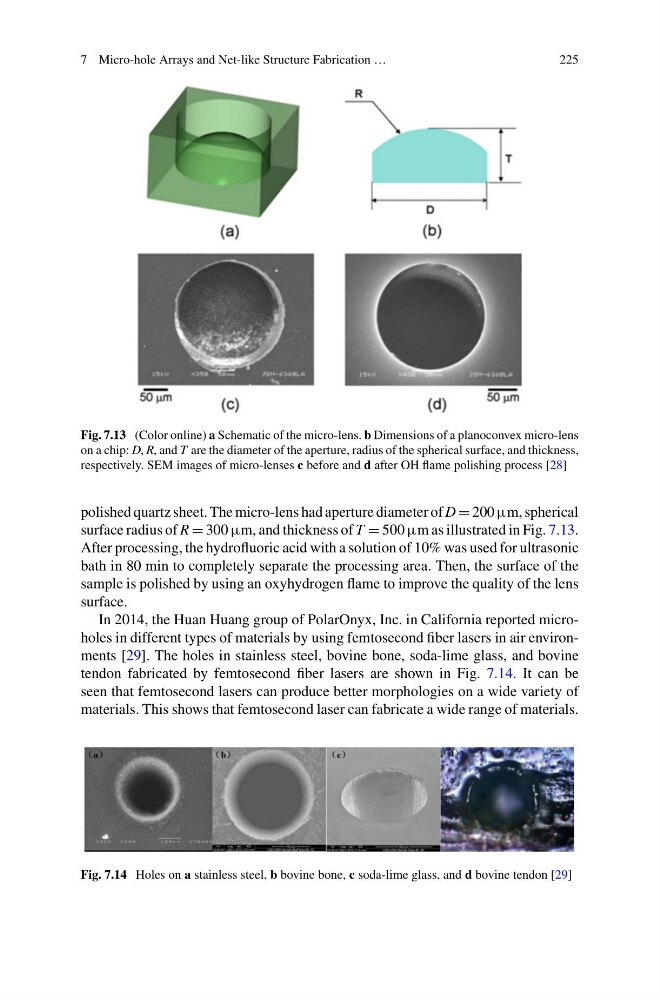
Fig. 7.13 (Color online) a Schematic of the micro-lens. b Dimensions of a planoconvex micro-lens
on a chip: D, R, and T are the diameter of the aperture, radius of the spherical surface, and thickness,
respectively. SEM images of micro-lenses c before and d after OH flame polishing process [28]
polished quartz sheet. The micro-lens had aperture diameter of D = 200 μm, spherical
surface radius of R = 300 μm, and thickness of T = 500 μm as illustrated in Fig. 7.13.
After processing, the hydrofluoric acid with a solution of 10% was used for ultrasonic
bath in 80 min to completely separate the processing area. Then, the surface of the
sample is polished by using an oxyhydrogen flame to improve the quality of the lens
surface.
In 2014, the Huan Huang group of PolarOnyx, Inc. in California reported microholes in different types of materials by using femtosecond fiber lasers in air environments [29]. The holes in stainless steel, bovine bone, soda-lime glass, and bovine
tendon fabricated by femtosecond fiber lasers are shown in Fig. 7.14. It can be
seen that femtosecond lasers can produce better morphologies on a wide variety of
materials. This shows that femtosecond laser can fabricate a wide range of materials.
Fig. 7.14 Holes on a stainless steel, b bovine bone, c soda-lime glass, and d bovine tendon [29]
225
Fig. 7.13 (Color online) a Schematic of the micro-lens. b Dimensions of a planoconvex micro-lens
on a chip: D, R, and T are the diameter of the aperture, radius of the spherical surface, and thickness,
respectively. SEM images of micro-lenses c before and d after OH flame polishing process [28]
polished quartz sheet. The micro-lens had aperture diameter of D = 200 μm, spherical
surface radius of R = 300 μm, and thickness of T = 500 μm as illustrated in Fig. 7.13.
After processing, the hydrofluoric acid with a solution of 10% was used for ultrasonic
bath in 80 min to completely separate the processing area. Then, the surface of the
sample is polished by using an oxyhydrogen flame to improve the quality of the lens
surface.
In 2014, the Huan Huang group of PolarOnyx, Inc. in California reported microholes in different types of materials by using femtosecond fiber lasers in air environments [29]. The holes in stainless steel, bovine bone, soda-lime glass, and bovine
tendon fabricated by femtosecond fiber lasers are shown in Fig. 7.14. It can be
seen that femtosecond lasers can produce better morphologies on a wide variety of
materials. This shows that femtosecond laser can fabricate a wide range of materials.
Fig. 7.14 Holes on a stainless steel, b bovine bone, c soda-lime glass, and d bovine tendon [29]