

8
2 The Ether and the Wave Equation
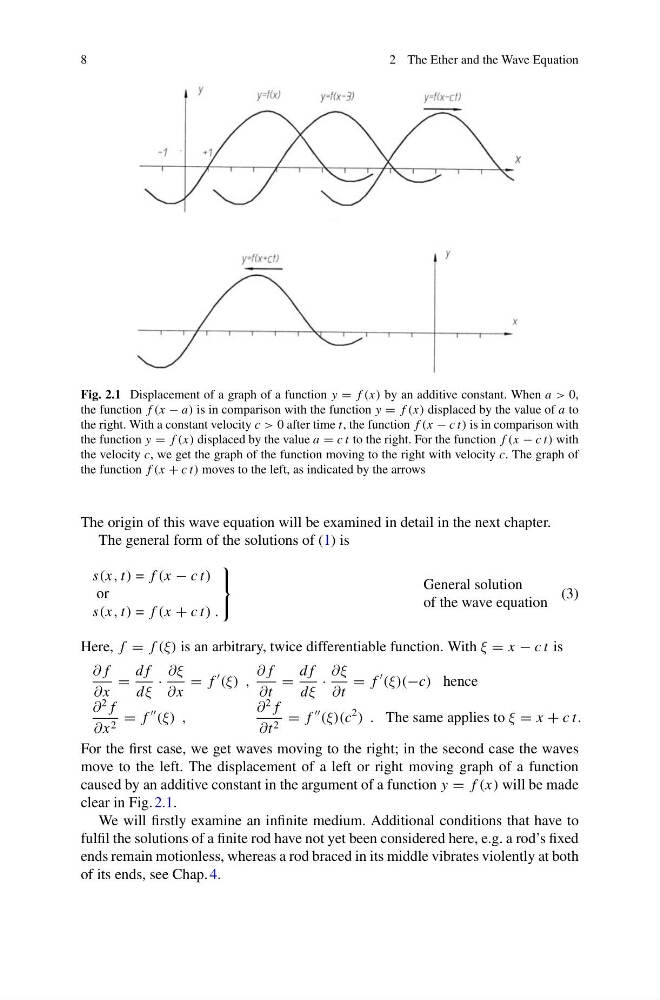
Fig. 2.1 Displacement of a graph of a function y = f (x) by an additive constant. When a > 0,
the function f (x − a) is in comparison with the function y = f (x) displaced by the value of a to
the right. With a constant velocity c > 0 after time t, the function f (x − c t) is in comparison with
the function y = f (x) displaced by the value a = c t to the right. For the function f (x − c t) with
the velocity c, we get the graph of the function moving to the right with velocity c. The graph of
the function f (x + c t) moves to the left, as indicated by the arrows
The origin of this wave equation will be examined in detail in the next chapter.
The general form of the solutions of (1) is
s(x, t) = f (x − c t)
or
s(x, t) = f (x + c t) .
⎫
⎬
⎭
General solution
of the wave equation
(3)
Here, f = f (ξ) is an arbitrary, twice differentiable function. With ξ = x − c t is
∂ f
∂x
=
d f
dξ
·
∂ξ
∂x
= f
(ξ) ,
∂ f
∂t
=
d f
dξ
·
∂ξ
∂t
= f
(ξ)(−c) hence
∂
2 f
∂x 2 = f
(ξ) ,
∂
2 f
∂t 2 = f
(ξ)(c
2
) . The same applies to ξ = x + c t.
For the first case, we get waves moving to the right; in the second case the waves
move to the left. The displacement of a left or right moving graph of a function
caused by an additive constant in the argument of a function y = f (x) will be made
clear in Fig. 2.1.
We will firstly examine an infinite medium. Additional conditions that have to
fulfil the solutions of a finite rod have not yet been considered here, e.g. a rod’s fixed
ends remain motionless, whereas a rod braced in its middle vibrates violently at both
of its ends, see Chap. 4.
2 The Ether and the Wave Equation
Fig. 2.1 Displacement of a graph of a function y = f (x) by an additive constant. When a > 0,
the function f (x − a) is in comparison with the function y = f (x) displaced by the value of a to
the right. With a constant velocity c > 0 after time t, the function f (x − c t) is in comparison with
the function y = f (x) displaced by the value a = c t to the right. For the function f (x − c t) with
the velocity c, we get the graph of the function moving to the right with velocity c. The graph of
the function f (x + c t) moves to the left, as indicated by the arrows
The origin of this wave equation will be examined in detail in the next chapter.
The general form of the solutions of (1) is
s(x, t) = f (x − c t)
or
s(x, t) = f (x + c t) .
⎫
⎬
⎭
General solution
of the wave equation
(3)
Here, f = f (ξ) is an arbitrary, twice differentiable function. With ξ = x − c t is
∂ f
∂x
=
d f
dξ
·
∂ξ
∂x
= f
(ξ) ,
∂ f
∂t
=
d f
dξ
·
∂ξ
∂t
= f
(ξ)(−c) hence
∂
2 f
∂x 2 = f
(ξ) ,
∂
2 f
∂t 2 = f
(ξ)(c
2
) . The same applies to ξ = x + c t.
For the first case, we get waves moving to the right; in the second case the waves
move to the left. The displacement of a left or right moving graph of a function
caused by an additive constant in the argument of a function y = f (x) will be made
clear in Fig. 2.1.
We will firstly examine an infinite medium. Additional conditions that have to
fulfil the solutions of a finite rod have not yet been considered here, e.g. a rod’s fixed
ends remain motionless, whereas a rod braced in its middle vibrates violently at both
of its ends, see Chap. 4.