

12.1 GaN-Based Nanorod LED
257
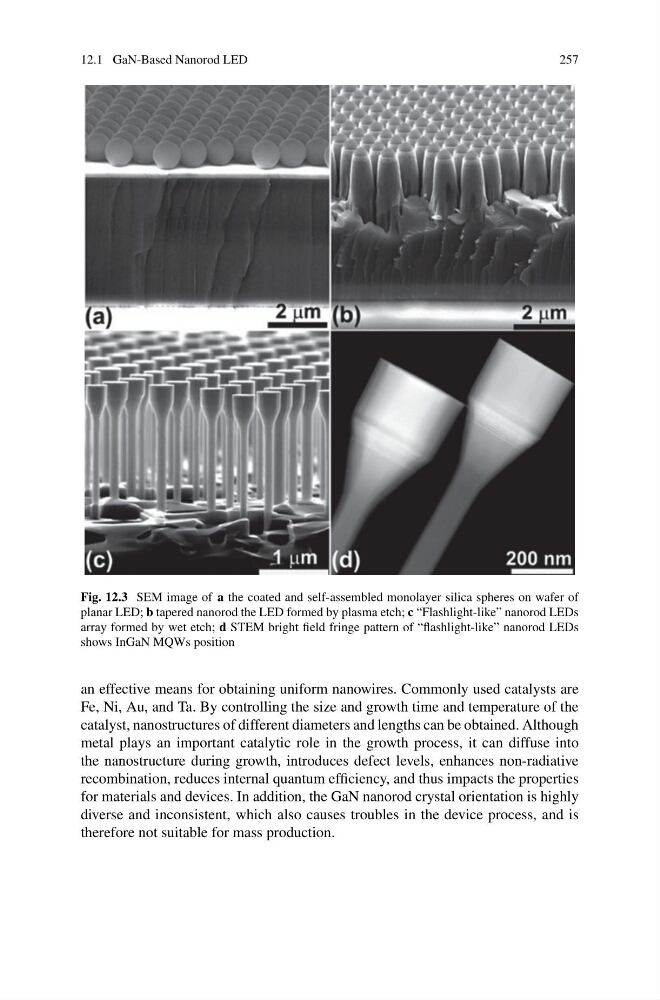
Fig. 12.3 SEM image of a the coated and self-assembled monolayer silica spheres on wafer of
planar LED; b tapered nanorod the LED formed by plasma etch; c “Flashlight-like” nanorod LEDs
array formed by wet etch; d STEM bright field fringe pattern of “flashlight-like” nanorod LEDs
shows InGaN MQWs position
an effective means for obtaining uniform nanowires. Commonly used catalysts are
Fe, Ni, Au, and Ta. By controlling the size and growth time and temperature of the
catalyst, nanostructures of different diameters and lengths can be obtained. Although
metal plays an important catalytic role in the growth process, it can diffuse into
the nanostructure during growth, introduces defect levels, enhances non-radiative
recombination, reduces internal quantum efficiency, and thus impacts the properties
for materials and devices. In addition, the GaN nanorod crystal orientation is highly
diverse and inconsistent, which also causes troubles in the device process, and is
therefore not suitable for mass production.
257
Fig. 12.3 SEM image of a the coated and self-assembled monolayer silica spheres on wafer of
planar LED; b tapered nanorod the LED formed by plasma etch; c “Flashlight-like” nanorod LEDs
array formed by wet etch; d STEM bright field fringe pattern of “flashlight-like” nanorod LEDs
shows InGaN MQWs position
an effective means for obtaining uniform nanowires. Commonly used catalysts are
Fe, Ni, Au, and Ta. By controlling the size and growth time and temperature of the
catalyst, nanostructures of different diameters and lengths can be obtained. Although
metal plays an important catalytic role in the growth process, it can diffuse into
the nanostructure during growth, introduces defect levels, enhances non-radiative
recombination, reduces internal quantum efficiency, and thus impacts the properties
for materials and devices. In addition, the GaN nanorod crystal orientation is highly
diverse and inconsistent, which also causes troubles in the device process, and is
therefore not suitable for mass production.