

7.3 Light Extraction Efficiency Improvement Technology
125
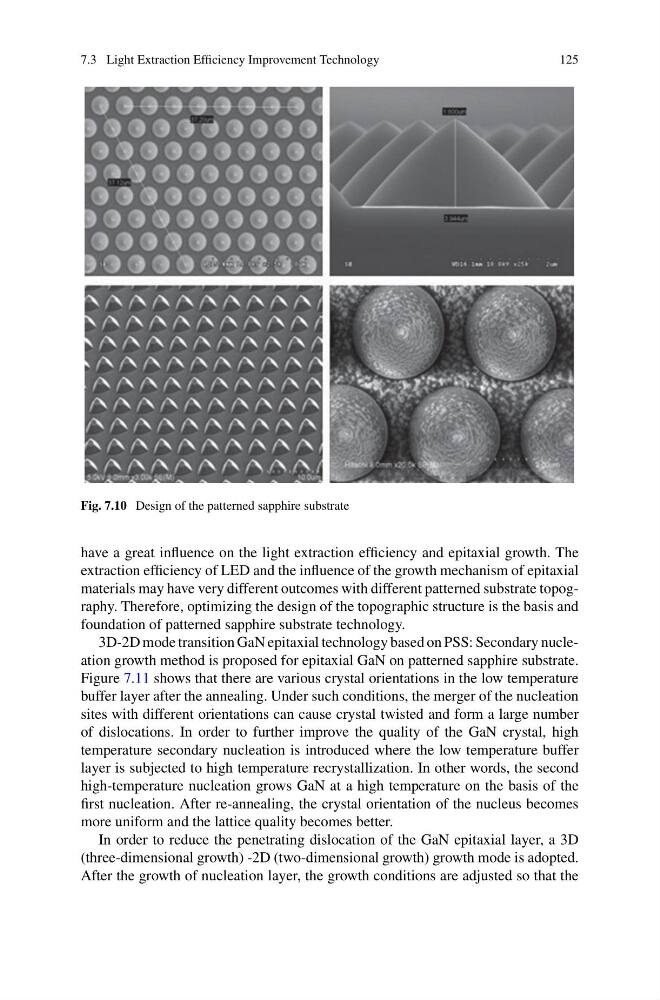
Fig. 7.10 Design of the patterned sapphire substrate
have a great influence on the light extraction efficiency and epitaxial growth. The
extraction efficiency of LED and the influence of the growth mechanism of epitaxial
materials may have very different outcomes with different patterned substrate topography. Therefore, optimizing the design of the topographic structure is the basis and
foundation of patterned sapphire substrate technology.
3D-2D mode transition GaN epitaxial technology based on PSS: Secondary nucleation growth method is proposed for epitaxial GaN on patterned sapphire substrate.
Figure 7.11 shows that there are various crystal orientations in the low temperature
buffer layer after the annealing. Under such conditions, the merger of the nucleation
sites with different orientations can cause crystal twisted and form a large number
of dislocations. In order to further improve the quality of the GaN crystal, high
temperature secondary nucleation is introduced where the low temperature buffer
layer is subjected to high temperature recrystallization. In other words, the second
high-temperature nucleation grows GaN at a high temperature on the basis of the
first nucleation. After re-annealing, the crystal orientation of the nucleus becomes
more uniform and the lattice quality becomes better.
In order to reduce the penetrating dislocation of the GaN epitaxial layer, a 3D
(three-dimensional growth) -2D (two-dimensional growth) growth mode is adopted.
After the growth of nucleation layer, the growth conditions are adjusted so that the
125
Fig. 7.10 Design of the patterned sapphire substrate
have a great influence on the light extraction efficiency and epitaxial growth. The
extraction efficiency of LED and the influence of the growth mechanism of epitaxial
materials may have very different outcomes with different patterned substrate topography. Therefore, optimizing the design of the topographic structure is the basis and
foundation of patterned sapphire substrate technology.
3D-2D mode transition GaN epitaxial technology based on PSS: Secondary nucleation growth method is proposed for epitaxial GaN on patterned sapphire substrate.
Figure 7.11 shows that there are various crystal orientations in the low temperature
buffer layer after the annealing. Under such conditions, the merger of the nucleation
sites with different orientations can cause crystal twisted and form a large number
of dislocations. In order to further improve the quality of the GaN crystal, high
temperature secondary nucleation is introduced where the low temperature buffer
layer is subjected to high temperature recrystallization. In other words, the second
high-temperature nucleation grows GaN at a high temperature on the basis of the
first nucleation. After re-annealing, the crystal orientation of the nucleus becomes
more uniform and the lattice quality becomes better.
In order to reduce the penetrating dislocation of the GaN epitaxial layer, a 3D
(three-dimensional growth) -2D (two-dimensional growth) growth mode is adopted.
After the growth of nucleation layer, the growth conditions are adjusted so that the