

5 Control of Crystal Size Distribution and Polymorphs …
89
respectively. Methanol was used as an antisolvent. The solution and methanol were
injected into the crystallizer by a syringe pump. The flow rate of a solution/methanol
mixture was set to 1.6, 16, and 160 mL/min. These flow rates correspond to 33, 3.3,
and 0.33 s of the average residence time τ, respectively.
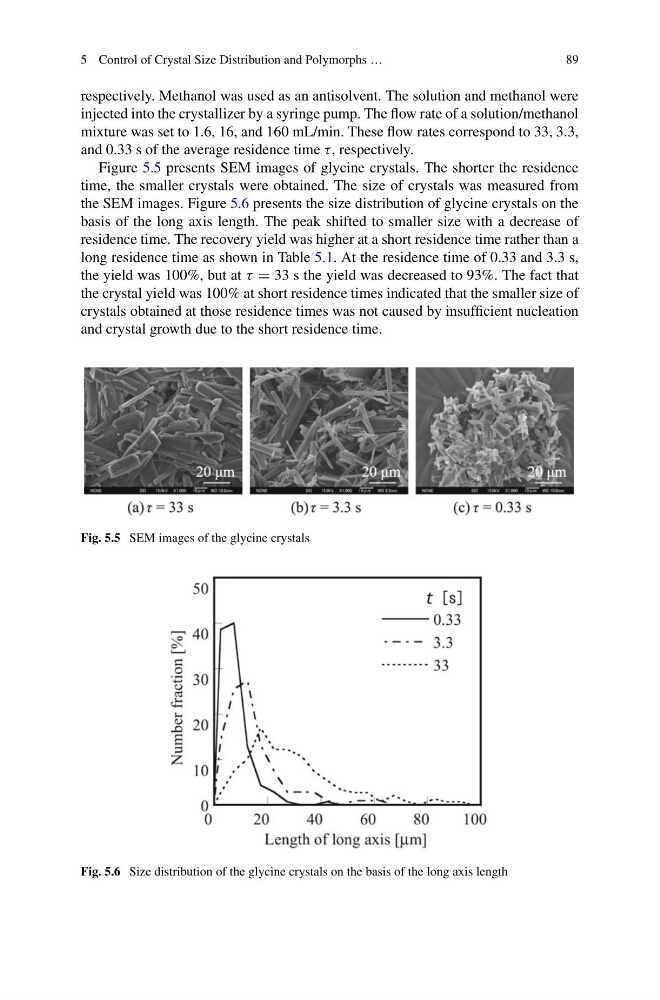
Figure 5.5 presents SEM images of glycine crystals. The shorter the residence
time, the smaller crystals were obtained. The size of crystals was measured from
the SEM images. Figure 5.6 presents the size distribution of glycine crystals on the
basis of the long axis length. The peak shifted to smaller size with a decrease of
residence time. The recovery yield was higher at a short residence time rather than a
long residence time as shown in Table 5.1. At the residence time of 0.33 and 3.3 s,
the yield was 100%, but at τ = 33 s the yield was decreased to 93%. The fact that
the crystal yield was 100% at short residence times indicated that the smaller size of
crystals obtained at those residence times was not caused by insufficient nucleation
and crystal growth due to the short residence time.
Fig. 5.5 SEM images of the glycine crystals
Fig. 5.6 Size distribution of the glycine crystals on the basis of the long axis length
89
respectively. Methanol was used as an antisolvent. The solution and methanol were
injected into the crystallizer by a syringe pump. The flow rate of a solution/methanol
mixture was set to 1.6, 16, and 160 mL/min. These flow rates correspond to 33, 3.3,
and 0.33 s of the average residence time τ, respectively.
Figure 5.5 presents SEM images of glycine crystals. The shorter the residence
time, the smaller crystals were obtained. The size of crystals was measured from
the SEM images. Figure 5.6 presents the size distribution of glycine crystals on the
basis of the long axis length. The peak shifted to smaller size with a decrease of
residence time. The recovery yield was higher at a short residence time rather than a
long residence time as shown in Table 5.1. At the residence time of 0.33 and 3.3 s,
the yield was 100%, but at τ = 33 s the yield was decreased to 93%. The fact that
the crystal yield was 100% at short residence times indicated that the smaller size of
crystals obtained at those residence times was not caused by insufficient nucleation
and crystal growth due to the short residence time.
Fig. 5.5 SEM images of the glycine crystals
Fig. 5.6 Size distribution of the glycine crystals on the basis of the long axis length