

86
K. Igarashi and H. Ooshima
and 10.3 °C, respectively. The upper jacket temperature was not changed during the
crystallization. The temperature difference between the slurry falling down the upper
wall and the slurry in the lower crystallization part, that is the driving force of the
dissolution of fine crystals, was set at 7 °C.
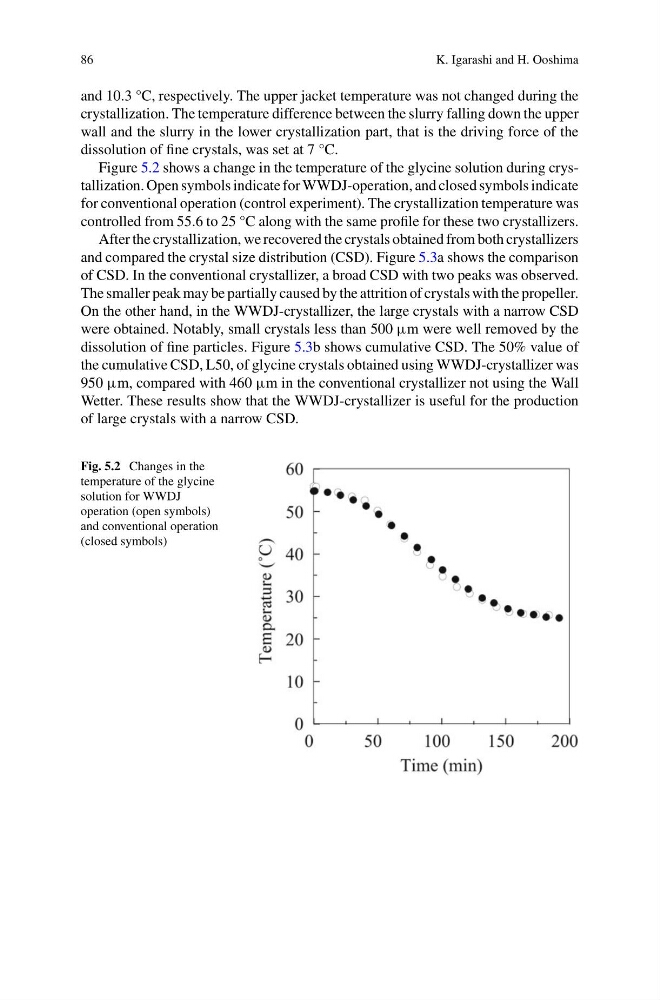
Figure 5.2 shows a change in the temperature of the glycine solution during crystallization. Open symbols indicate for WWDJ-operation, and closed symbols indicate
for conventional operation (control experiment). The crystallization temperature was
controlled from 55.6 to 25 °C along with the same profile for these two crystallizers.
After the crystallization, we recovered the crystals obtained from both crystallizers
and compared the crystal size distribution (CSD). Figure 5.3a shows the comparison
of CSD. In the conventional crystallizer, a broad CSD with two peaks was observed.
The smaller peak may be partially caused by the attrition of crystals with the propeller.
On the other hand, in the WWDJ-crystallizer, the large crystals with a narrow CSD
were obtained. Notably, small crystals less than 500 µm were well removed by the
dissolution of fine particles. Figure 5.3b shows cumulative CSD. The 50% value of
the cumulative CSD, L50, of glycine crystals obtained using WWDJ-crystallizer was
950 µm, compared with 460 µm in the conventional crystallizer not using the Wall
Wetter. These results show that the WWDJ-crystallizer is useful for the production
of large crystals with a narrow CSD.
Fig. 5.2 Changes in the
temperature of the glycine
solution for WWDJ
operation (open symbols)
and conventional operation
(closed symbols)
K. Igarashi and H. Ooshima
and 10.3 °C, respectively. The upper jacket temperature was not changed during the
crystallization. The temperature difference between the slurry falling down the upper
wall and the slurry in the lower crystallization part, that is the driving force of the
dissolution of fine crystals, was set at 7 °C.
Figure 5.2 shows a change in the temperature of the glycine solution during crystallization. Open symbols indicate for WWDJ-operation, and closed symbols indicate
for conventional operation (control experiment). The crystallization temperature was
controlled from 55.6 to 25 °C along with the same profile for these two crystallizers.
After the crystallization, we recovered the crystals obtained from both crystallizers
and compared the crystal size distribution (CSD). Figure 5.3a shows the comparison
of CSD. In the conventional crystallizer, a broad CSD with two peaks was observed.
The smaller peak may be partially caused by the attrition of crystals with the propeller.
On the other hand, in the WWDJ-crystallizer, the large crystals with a narrow CSD
were obtained. Notably, small crystals less than 500 µm were well removed by the
dissolution of fine particles. Figure 5.3b shows cumulative CSD. The 50% value of
the cumulative CSD, L50, of glycine crystals obtained using WWDJ-crystallizer was
950 µm, compared with 460 µm in the conventional crystallizer not using the Wall
Wetter. These results show that the WWDJ-crystallizer is useful for the production
of large crystals with a narrow CSD.
Fig. 5.2 Changes in the
temperature of the glycine
solution for WWDJ
operation (open symbols)
and conventional operation
(closed symbols)