

66
H. Takiyama
0
0.2
0.4
0.6
0.8
1
0
0.1
0.2
0.3
Heptane w H [mass fraction]
IMC w
I [mass fraction]
at 313 K
α-form
α'-form
γ-form
0
0.2
0.4
0.6
0.8
1
0
0.1
0.2
0.3
Heptane w H [mass fraction]
IMC
w
I [mass fraction]
at 323 K
α-form
α'-form
γ-form
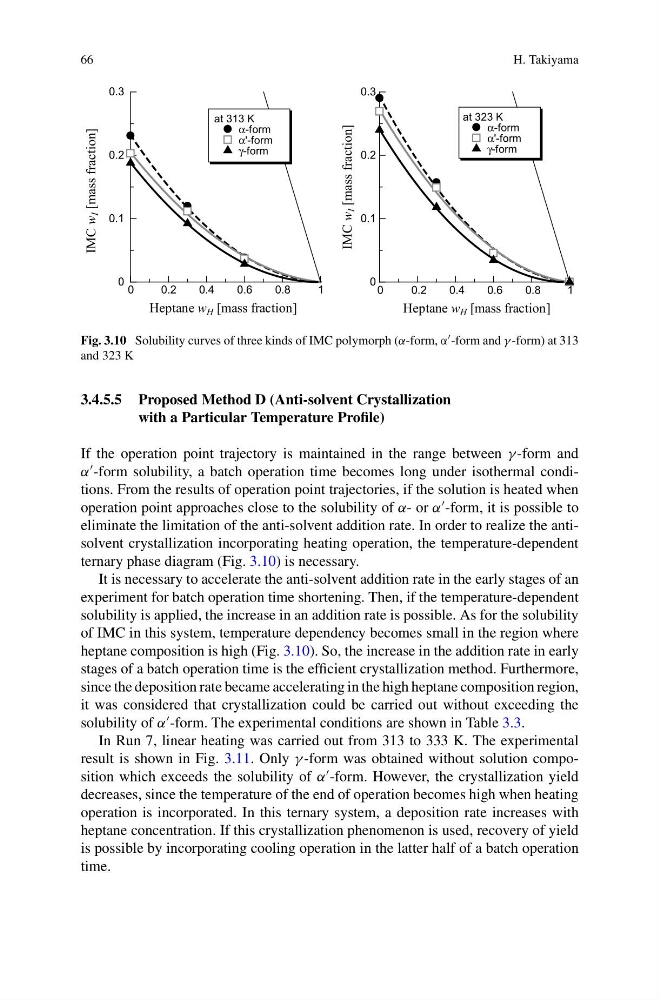
Fig. 3.10 Solubility curves of three kinds of IMC polymorph (α-form, α -form and γ -form) at 313
and 323 K
3.4.5.5 Proposed Method D (Anti-solvent Crystallization
with a Particular Temperature Profile)
If the operation point trajectory is maintained in the range between γ -form and
α
-form solubility, a batch operation time becomes long under isothermal conditions. From the results of operation point trajectories, if the solution is heated when
operation point approaches close to the solubility of α- or α
-form, it is possible to
eliminate the limitation of the anti-solvent addition rate. In order to realize the antisolvent crystallization incorporating heating operation, the temperature-dependent
ternary phase diagram (Fig. 3.10) is necessary.
It is necessary to accelerate the anti-solvent addition rate in the early stages of an
experiment for batch operation time shortening. Then, if the temperature-dependent
solubility is applied, the increase in an addition rate is possible. As for the solubility
of IMC in this system, temperature dependency becomes small in the region where
heptane composition is high (Fig. 3.10). So, the increase in the addition rate in early
stages of a batch operation time is the efficient crystallization method. Furthermore,
since the deposition rate became accelerating in the high heptane composition region,
it was considered that crystallization could be carried out without exceeding the
solubility of α
-form. The experimental conditions are shown in Table 3.3.
In Run 7, linear heating was carried out from 313 to 333 K. The experimental
result is shown in Fig. 3.11. Only γ -form was obtained without solution composition which exceeds the solubility of α
-form. However, the crystallization yield
decreases, since the temperature of the end of operation becomes high when heating
operation is incorporated. In this ternary system, a deposition rate increases with
heptane concentration. If this crystallization phenomenon is used, recovery of yield
is possible by incorporating cooling operation in the latter half of a batch operation
time.
H. Takiyama
0
0.2
0.4
0.6
0.8
1
0
0.1
0.2
0.3
Heptane w H [mass fraction]
IMC w
I [mass fraction]
at 313 K
α-form
α'-form
γ-form
0
0.2
0.4
0.6
0.8
1
0
0.1
0.2
0.3
Heptane w H [mass fraction]
IMC
w
I [mass fraction]
at 323 K
α-form
α'-form
γ-form
Fig. 3.10 Solubility curves of three kinds of IMC polymorph (α-form, α -form and γ -form) at 313
and 323 K
3.4.5.5 Proposed Method D (Anti-solvent Crystallization
with a Particular Temperature Profile)
If the operation point trajectory is maintained in the range between γ -form and
α
-form solubility, a batch operation time becomes long under isothermal conditions. From the results of operation point trajectories, if the solution is heated when
operation point approaches close to the solubility of α- or α
-form, it is possible to
eliminate the limitation of the anti-solvent addition rate. In order to realize the antisolvent crystallization incorporating heating operation, the temperature-dependent
ternary phase diagram (Fig. 3.10) is necessary.
It is necessary to accelerate the anti-solvent addition rate in the early stages of an
experiment for batch operation time shortening. Then, if the temperature-dependent
solubility is applied, the increase in an addition rate is possible. As for the solubility
of IMC in this system, temperature dependency becomes small in the region where
heptane composition is high (Fig. 3.10). So, the increase in the addition rate in early
stages of a batch operation time is the efficient crystallization method. Furthermore,
since the deposition rate became accelerating in the high heptane composition region,
it was considered that crystallization could be carried out without exceeding the
solubility of α
-form. The experimental conditions are shown in Table 3.3.
In Run 7, linear heating was carried out from 313 to 333 K. The experimental
result is shown in Fig. 3.11. Only γ -form was obtained without solution composition which exceeds the solubility of α
-form. However, the crystallization yield
decreases, since the temperature of the end of operation becomes high when heating
operation is incorporated. In this ternary system, a deposition rate increases with
heptane concentration. If this crystallization phenomenon is used, recovery of yield
is possible by incorporating cooling operation in the latter half of a batch operation
time.