

60
H. Takiyama
α-form
γ-form
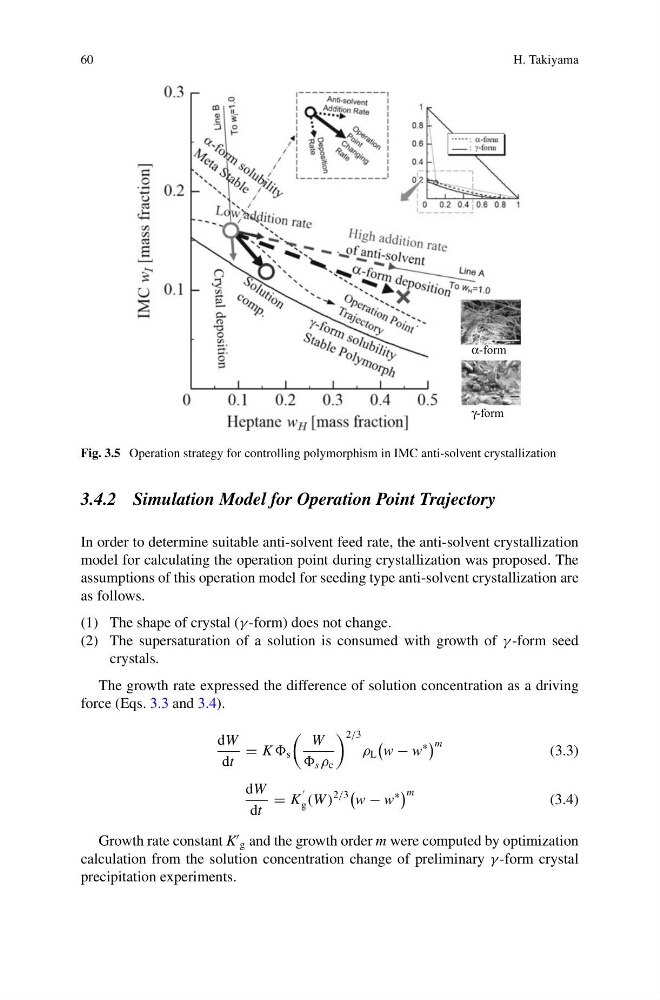
Fig. 3.5 Operation strategy for controlling polymorphism in IMC anti-solvent crystallization
3.4.2 Simulation Model for Operation Point Trajectory
In order to determine suitable anti-solvent feed rate, the anti-solvent crystallization
model for calculating the operation point during crystallization was proposed. The
assumptions of this operation model for seeding type anti-solvent crystallization are
as follows.
(1) The shape of crystal (γ -form) does not change.
(2) The supersaturation of a solution is consumed with growth of γ -form seed
crystals.
The growth rate expressed the difference of solution concentration as a driving
force (Eqs. 3.3 and 3.4).
dW
dt
= K s
W
s ρ c
2/3
ρ L
w − w
∗
m
(3.3)
dW
dt
= K
g (W )
2/3
w − w
∗
m
(3.4)
Growth rate constant K
g and the growth order m were computed by optimization
calculation from the solution concentration change of preliminary γ -form crystal
precipitation experiments.
H. Takiyama
α-form
γ-form
Fig. 3.5 Operation strategy for controlling polymorphism in IMC anti-solvent crystallization
3.4.2 Simulation Model for Operation Point Trajectory
In order to determine suitable anti-solvent feed rate, the anti-solvent crystallization
model for calculating the operation point during crystallization was proposed. The
assumptions of this operation model for seeding type anti-solvent crystallization are
as follows.
(1) The shape of crystal (γ -form) does not change.
(2) The supersaturation of a solution is consumed with growth of γ -form seed
crystals.
The growth rate expressed the difference of solution concentration as a driving
force (Eqs. 3.3 and 3.4).
dW
dt
= K s
W
s ρ c
2/3
ρ L
w − w
∗
m
(3.3)
dW
dt
= K
g (W )
2/3
w − w
∗
m
(3.4)
Growth rate constant K
g and the growth order m were computed by optimization
calculation from the solution concentration change of preliminary γ -form crystal
precipitation experiments.