

24 Solid-State Polymerization of Conjugated …
515
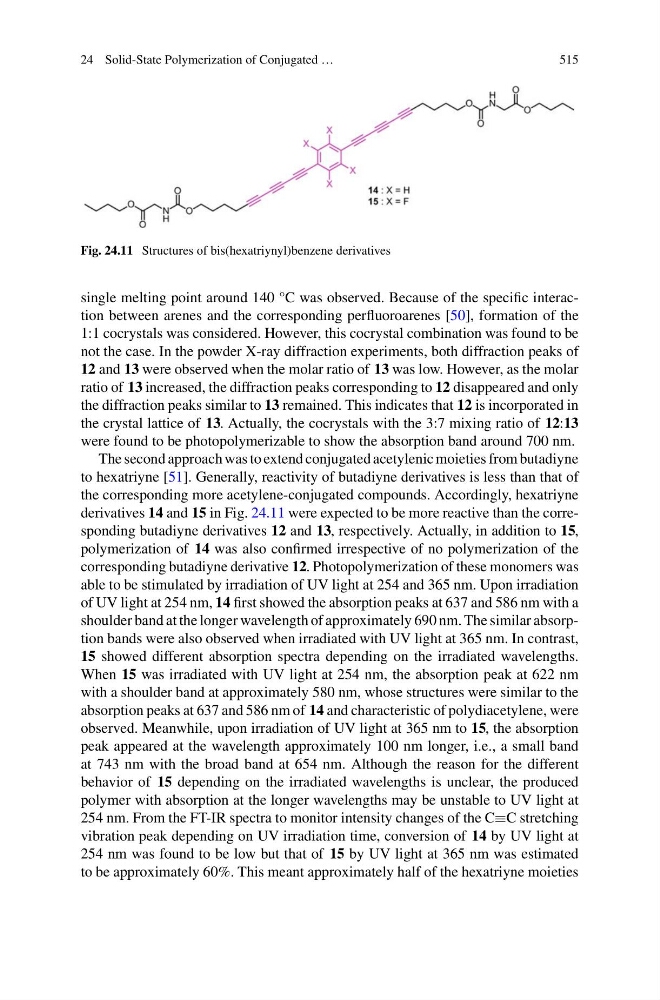
Fig. 24.11 Structures of bis(hexatriynyl)benzene derivatives
single melting point around 140 °C was observed. Because of the specific interaction between arenes and the corresponding perfluoroarenes [50], formation of the
1:1 cocrystals was considered. However, this cocrystal combination was found to be
not the case. In the powder X-ray diffraction experiments, both diffraction peaks of
12 and 13 were observed when the molar ratio of 13 was low. However, as the molar
ratio of 13 increased, the diffraction peaks corresponding to 12 disappeared and only
the diffraction peaks similar to 13 remained. This indicates that 12 is incorporated in
the crystal lattice of 13. Actually, the cocrystals with the 3:7 mixing ratio of 12:13
were found to be photopolymerizable to show the absorption band around 700 nm.
The second approach was to extend conjugated acetylenic moieties from butadiyne
to hexatriyne [51]. Generally, reactivity of butadiyne derivatives is less than that of
the corresponding more acetylene-conjugated compounds. Accordingly, hexatriyne
derivatives 14 and 15 in Fig. 24.11 were expected to be more reactive than the corresponding butadiyne derivatives 12 and 13, respectively. Actually, in addition to 15,
polymerization of 14 was also confirmed irrespective of no polymerization of the
corresponding butadiyne derivative 12. Photopolymerization of these monomers was
able to be stimulated by irradiation of UV light at 254 and 365 nm. Upon irradiation
of UV light at 254 nm, 14 first showed the absorption peaks at 637 and 586 nm with a
shoulder band at the longer wavelength of approximately 690 nm. The similar absorption bands were also observed when irradiated with UV light at 365 nm. In contrast,
15 showed different absorption spectra depending on the irradiated wavelengths.
When 15 was irradiated with UV light at 254 nm, the absorption peak at 622 nm
with a shoulder band at approximately 580 nm, whose structures were similar to the
absorption peaks at 637 and 586 nm of 14 and characteristic of polydiacetylene, were
observed. Meanwhile, upon irradiation of UV light at 365 nm to 15, the absorption
peak appeared at the wavelength approximately 100 nm longer, i.e., a small band
at 743 nm with the broad band at 654 nm. Although the reason for the different
behavior of 15 depending on the irradiated wavelengths is unclear, the produced
polymer with absorption at the longer wavelengths may be unstable to UV light at
254 nm. From the FT-IR spectra to monitor intensity changes of the C≡C stretching
vibration peak depending on UV irradiation time, conversion of 14 by UV light at
254 nm was found to be low but that of 15 by UV light at 365 nm was estimated
to be approximately 60%. This meant approximately half of the hexatriyne moieties
515
Fig. 24.11 Structures of bis(hexatriynyl)benzene derivatives
single melting point around 140 °C was observed. Because of the specific interaction between arenes and the corresponding perfluoroarenes [50], formation of the
1:1 cocrystals was considered. However, this cocrystal combination was found to be
not the case. In the powder X-ray diffraction experiments, both diffraction peaks of
12 and 13 were observed when the molar ratio of 13 was low. However, as the molar
ratio of 13 increased, the diffraction peaks corresponding to 12 disappeared and only
the diffraction peaks similar to 13 remained. This indicates that 12 is incorporated in
the crystal lattice of 13. Actually, the cocrystals with the 3:7 mixing ratio of 12:13
were found to be photopolymerizable to show the absorption band around 700 nm.
The second approach was to extend conjugated acetylenic moieties from butadiyne
to hexatriyne [51]. Generally, reactivity of butadiyne derivatives is less than that of
the corresponding more acetylene-conjugated compounds. Accordingly, hexatriyne
derivatives 14 and 15 in Fig. 24.11 were expected to be more reactive than the corresponding butadiyne derivatives 12 and 13, respectively. Actually, in addition to 15,
polymerization of 14 was also confirmed irrespective of no polymerization of the
corresponding butadiyne derivative 12. Photopolymerization of these monomers was
able to be stimulated by irradiation of UV light at 254 and 365 nm. Upon irradiation
of UV light at 254 nm, 14 first showed the absorption peaks at 637 and 586 nm with a
shoulder band at the longer wavelength of approximately 690 nm. The similar absorption bands were also observed when irradiated with UV light at 365 nm. In contrast,
15 showed different absorption spectra depending on the irradiated wavelengths.
When 15 was irradiated with UV light at 254 nm, the absorption peak at 622 nm
with a shoulder band at approximately 580 nm, whose structures were similar to the
absorption peaks at 637 and 586 nm of 14 and characteristic of polydiacetylene, were
observed. Meanwhile, upon irradiation of UV light at 365 nm to 15, the absorption
peak appeared at the wavelength approximately 100 nm longer, i.e., a small band
at 743 nm with the broad band at 654 nm. Although the reason for the different
behavior of 15 depending on the irradiated wavelengths is unclear, the produced
polymer with absorption at the longer wavelengths may be unstable to UV light at
254 nm. From the FT-IR spectra to monitor intensity changes of the C≡C stretching
vibration peak depending on UV irradiation time, conversion of 14 by UV light at
254 nm was found to be low but that of 15 by UV light at 365 nm was estimated
to be approximately 60%. This meant approximately half of the hexatriyne moieties