

466
M. Akazome and S. Matsumoto
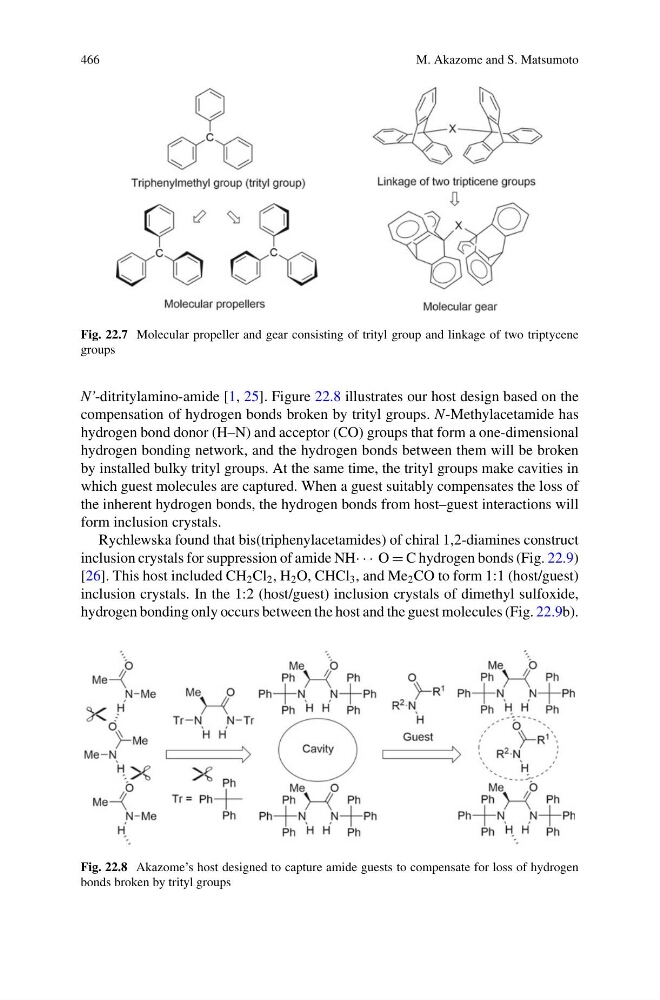
Fig. 22.7 Molecular propeller and gear consisting of trityl group and linkage of two triptycene
groups
N’-ditritylamino-amide [1, 25]. Figure 22.8 illustrates our host design based on the
compensation of hydrogen bonds broken by trityl groups. N-Methylacetamide has
hydrogen bond donor (H–N) and acceptor (CO) groups that form a one-dimensional
hydrogen bonding network, and the hydrogen bonds between them will be broken
by installed bulky trityl groups. At the same time, the trityl groups make cavities in
which guest molecules are captured. When a guest suitably compensates the loss of
the inherent hydrogen bonds, the hydrogen bonds from host–guest interactions will
form inclusion crystals.
Rychlewska found that bis(triphenylacetamides) of chiral 1,2-diamines construct
inclusion crystals for suppression of amide NH· · · O = C hydrogen bonds (Fig. 22.9)
[26]. This host included CH 2 Cl 2 , H 2 O, CHCl 3 , and Me 2 CO to form 1:1 (host/guest)
inclusion crystals. In the 1:2 (host/guest) inclusion crystals of dimethyl sulfoxide,
hydrogen bonding only occurs between the host and the guest molecules (Fig. 22.9b).
Fig. 22.8 Akazome’s host designed to capture amide guests to compensate for loss of hydrogen
bonds broken by trityl groups
M. Akazome and S. Matsumoto
Fig. 22.7 Molecular propeller and gear consisting of trityl group and linkage of two triptycene
groups
N’-ditritylamino-amide [1, 25]. Figure 22.8 illustrates our host design based on the
compensation of hydrogen bonds broken by trityl groups. N-Methylacetamide has
hydrogen bond donor (H–N) and acceptor (CO) groups that form a one-dimensional
hydrogen bonding network, and the hydrogen bonds between them will be broken
by installed bulky trityl groups. At the same time, the trityl groups make cavities in
which guest molecules are captured. When a guest suitably compensates the loss of
the inherent hydrogen bonds, the hydrogen bonds from host–guest interactions will
form inclusion crystals.
Rychlewska found that bis(triphenylacetamides) of chiral 1,2-diamines construct
inclusion crystals for suppression of amide NH· · · O = C hydrogen bonds (Fig. 22.9)
[26]. This host included CH 2 Cl 2 , H 2 O, CHCl 3 , and Me 2 CO to form 1:1 (host/guest)
inclusion crystals. In the 1:2 (host/guest) inclusion crystals of dimethyl sulfoxide,
hydrogen bonding only occurs between the host and the guest molecules (Fig. 22.9b).
Fig. 22.8 Akazome’s host designed to capture amide guests to compensate for loss of hydrogen
bonds broken by trityl groups