

22 Molecular Recognition by Inclusion …
461
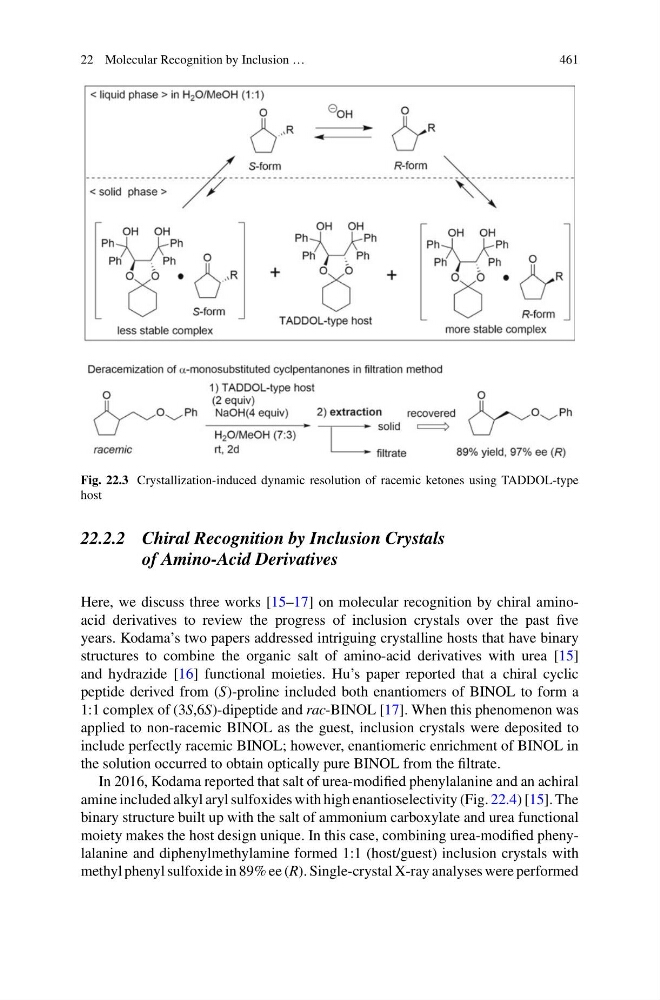
Fig. 22.3 Crystallization-induced dynamic resolution of racemic ketones using TADDOL-type
host
22.2.2 Chiral Recognition by Inclusion Crystals
of Amino-Acid Derivatives
Here, we discuss three works [15–17] on molecular recognition by chiral aminoacid derivatives to review the progress of inclusion crystals over the past five
years. Kodama’s two papers addressed intriguing crystalline hosts that have binary
structures to combine the organic salt of amino-acid derivatives with urea [15]
and hydrazide [16] functional moieties. Hu’s paper reported that a chiral cyclic
peptide derived from (S)-proline included both enantiomers of BINOL to form a
1:1 complex of (3S,6S)-dipeptide and rac-BINOL [17]. When this phenomenon was
applied to non-racemic BINOL as the guest, inclusion crystals were deposited to
include perfectly racemic BINOL; however, enantiomeric enrichment of BINOL in
the solution occurred to obtain optically pure BINOL from the filtrate.
In 2016, Kodama reported that salt of urea-modified phenylalanine and an achiral
amine included alkyl aryl sulfoxides with high enantioselectivity (Fig. 22.4) [15]. The
binary structure built up with the salt of ammonium carboxylate and urea functional
moiety makes the host design unique. In this case, combining urea-modified phenylalanine and diphenylmethylamine formed 1:1 (host/guest) inclusion crystals with
methyl phenyl sulfoxide in 89% ee (R). Single-crystal X-ray analyses were performed
461
Fig. 22.3 Crystallization-induced dynamic resolution of racemic ketones using TADDOL-type
host
22.2.2 Chiral Recognition by Inclusion Crystals
of Amino-Acid Derivatives
Here, we discuss three works [15–17] on molecular recognition by chiral aminoacid derivatives to review the progress of inclusion crystals over the past five
years. Kodama’s two papers addressed intriguing crystalline hosts that have binary
structures to combine the organic salt of amino-acid derivatives with urea [15]
and hydrazide [16] functional moieties. Hu’s paper reported that a chiral cyclic
peptide derived from (S)-proline included both enantiomers of BINOL to form a
1:1 complex of (3S,6S)-dipeptide and rac-BINOL [17]. When this phenomenon was
applied to non-racemic BINOL as the guest, inclusion crystals were deposited to
include perfectly racemic BINOL; however, enantiomeric enrichment of BINOL in
the solution occurred to obtain optically pure BINOL from the filtrate.
In 2016, Kodama reported that salt of urea-modified phenylalanine and an achiral
amine included alkyl aryl sulfoxides with high enantioselectivity (Fig. 22.4) [15]. The
binary structure built up with the salt of ammonium carboxylate and urea functional
moiety makes the host design unique. In this case, combining urea-modified phenylalanine and diphenylmethylamine formed 1:1 (host/guest) inclusion crystals with
methyl phenyl sulfoxide in 89% ee (R). Single-crystal X-ray analyses were performed