

20 Twenty-Five Years’ History, Mechanism, and Generality …
427
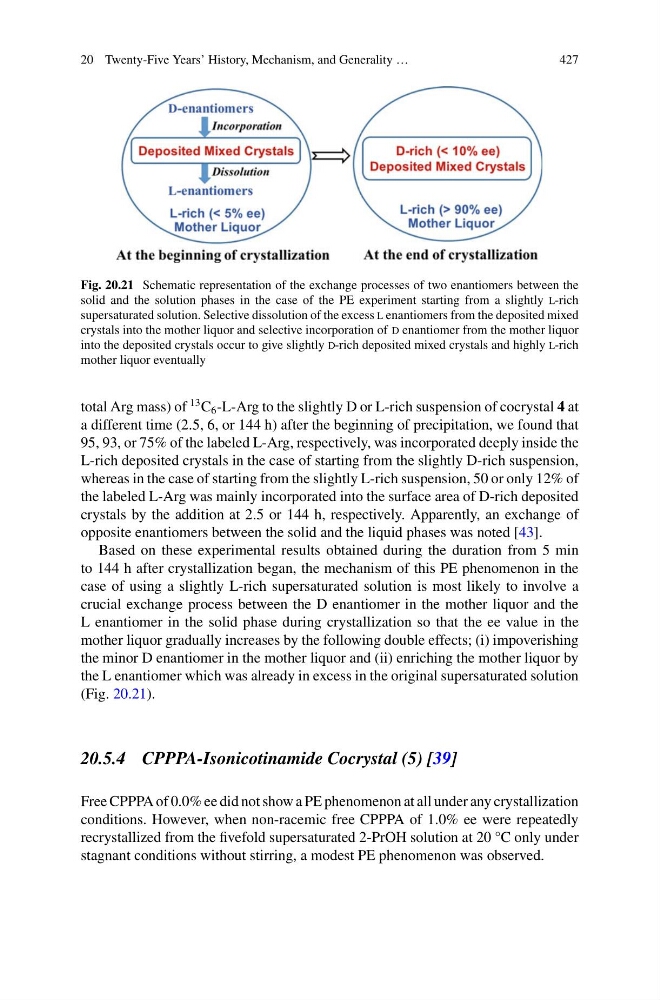
Fig. 20.21 Schematic representation of the exchange processes of two enantiomers between the
solid and the solution phases in the case of the PE experiment starting from a slightly l-rich
supersaturated solution. Selective dissolution of the excess l enantiomers from the deposited mixed
crystals into the mother liquor and selective incorporation of d enantiomer from the mother liquor
into the deposited crystals occur to give slightly d-rich deposited mixed crystals and highly l-rich
mother liquor eventually
total Arg mass) of
13 C 6 -L-Arg to the slightly D or L-rich suspension of cocrystal 4 at
a different time (2.5, 6, or 144 h) after the beginning of precipitation, we found that
95, 93, or 75% of the labeled L-Arg, respectively, was incorporated deeply inside the
L-rich deposited crystals in the case of starting from the slightly D-rich suspension,
whereas in the case of starting from the slightly L-rich suspension, 50 or only 12% of
the labeled L-Arg was mainly incorporated into the surface area of D-rich deposited
crystals by the addition at 2.5 or 144 h, respectively. Apparently, an exchange of
opposite enantiomers between the solid and the liquid phases was noted [43].
Based on these experimental results obtained during the duration from 5 min
to 144 h after crystallization began, the mechanism of this PE phenomenon in the
case of using a slightly L-rich supersaturated solution is most likely to involve a
crucial exchange process between the D enantiomer in the mother liquor and the
L enantiomer in the solid phase during crystallization so that the ee value in the
mother liquor gradually increases by the following double effects; (i) impoverishing
the minor D enantiomer in the mother liquor and (ii) enriching the mother liquor by
the L enantiomer which was already in excess in the original supersaturated solution
(Fig. 20.21).
20.5.4 CPPPA-Isonicotinamide Cocrystal (5) [39]
Free CPPPA of 0.0% ee did not show a PE phenomenon at all under any crystallization
conditions. However, when non-racemic free CPPPA of 1.0% ee were repeatedly
recrystallized from the fivefold supersaturated 2-PrOH solution at 20 °C only under
stagnant conditions without stirring, a modest PE phenomenon was observed.
427
Fig. 20.21 Schematic representation of the exchange processes of two enantiomers between the
solid and the solution phases in the case of the PE experiment starting from a slightly l-rich
supersaturated solution. Selective dissolution of the excess l enantiomers from the deposited mixed
crystals into the mother liquor and selective incorporation of d enantiomer from the mother liquor
into the deposited crystals occur to give slightly d-rich deposited mixed crystals and highly l-rich
mother liquor eventually
total Arg mass) of
13 C 6 -L-Arg to the slightly D or L-rich suspension of cocrystal 4 at
a different time (2.5, 6, or 144 h) after the beginning of precipitation, we found that
95, 93, or 75% of the labeled L-Arg, respectively, was incorporated deeply inside the
L-rich deposited crystals in the case of starting from the slightly D-rich suspension,
whereas in the case of starting from the slightly L-rich suspension, 50 or only 12% of
the labeled L-Arg was mainly incorporated into the surface area of D-rich deposited
crystals by the addition at 2.5 or 144 h, respectively. Apparently, an exchange of
opposite enantiomers between the solid and the liquid phases was noted [43].
Based on these experimental results obtained during the duration from 5 min
to 144 h after crystallization began, the mechanism of this PE phenomenon in the
case of using a slightly L-rich supersaturated solution is most likely to involve a
crucial exchange process between the D enantiomer in the mother liquor and the
L enantiomer in the solid phase during crystallization so that the ee value in the
mother liquor gradually increases by the following double effects; (i) impoverishing
the minor D enantiomer in the mother liquor and (ii) enriching the mother liquor by
the L enantiomer which was already in excess in the original supersaturated solution
(Fig. 20.21).
20.5.4 CPPPA-Isonicotinamide Cocrystal (5) [39]
Free CPPPA of 0.0% ee did not show a PE phenomenon at all under any crystallization
conditions. However, when non-racemic free CPPPA of 1.0% ee were repeatedly
recrystallized from the fivefold supersaturated 2-PrOH solution at 20 °C only under
stagnant conditions without stirring, a modest PE phenomenon was observed.