

306
S. Kobatake and T. Nakahama
(Φ f = 0.02). A pair of diarylethene 8a and DHBO satisfies the essential spectral
points for the efficient fluorescence switching (Fig. 15.5b). High on/off contrast fluorescence switching (fluorescence on/off contrast > 290), non-destructive readout, and
the reversibility were accomplished as shown in Fig. 15.5c [48].
15.2.3 Three-Dimensional Fluorescence Recording
Previous studies have dealt with ultra-high-density optical memory in twodimensional planes. If three-dimensional (3D) reading becomes possible, the
capacity of the recording medium will be dramatically improved. Irie and
coworkers demonstrated 3D erasable optical recording in a single crystal of a
fluorescent diarylethene, 1,2-bis(3-methyl-2-thienyl)perfluorocyclopentene (9a) [2].
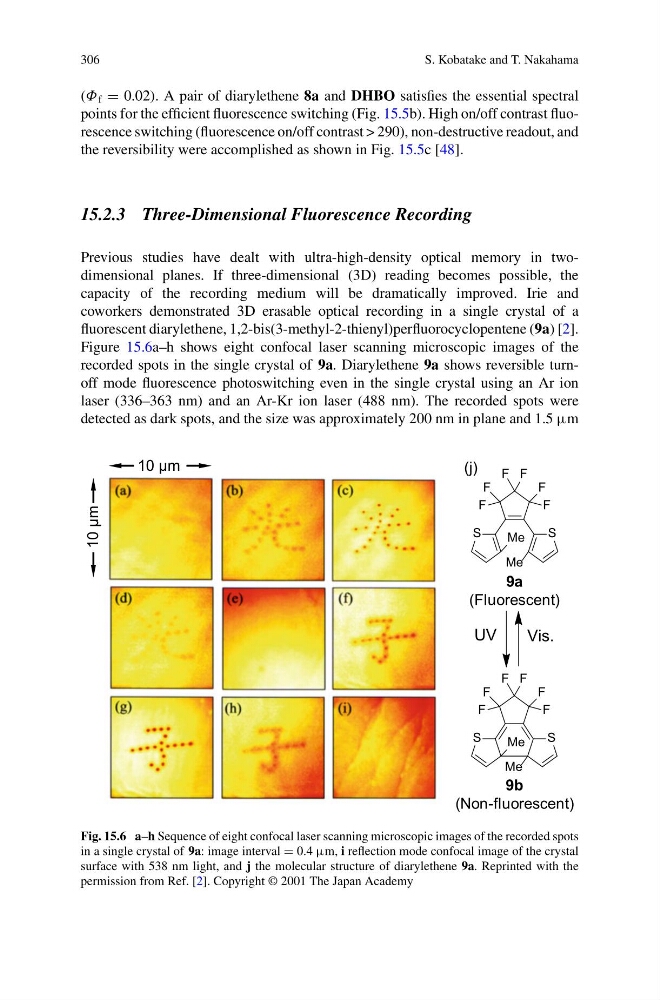
Figure 15.6a–h shows eight confocal laser scanning microscopic images of the
recorded spots in the single crystal of 9a. Diarylethene 9a shows reversible turnoff mode fluorescence photoswitching even in the single crystal using an Ar ion
laser (336–363 nm) and an Ar-Kr ion laser (488 nm). The recorded spots were
detected as dark spots, and the size was approximately 200 nm in plane and 1.5 μm
S
S
F
F
F
F
F
F
Me
Me
S
S
F
F
F
F
F
F
Me
Me
(j)
UV
Vis.
10 μm
10 μm
9b
(Non-fluorescent)
9a
(Fluorescent)
Fig. 15.6 a–h Sequence of eight confocal laser scanning microscopic images of the recorded spots
in a single crystal of 9a: image interval = 0.4 μm, i reflection mode confocal image of the crystal
surface with 538 nm light, and j the molecular structure of diarylethene 9a. Reprinted with the
permission from Ref. [2]. Copyright © 2001 The Japan Academy
S. Kobatake and T. Nakahama
(Φ f = 0.02). A pair of diarylethene 8a and DHBO satisfies the essential spectral
points for the efficient fluorescence switching (Fig. 15.5b). High on/off contrast fluorescence switching (fluorescence on/off contrast > 290), non-destructive readout, and
the reversibility were accomplished as shown in Fig. 15.5c [48].
15.2.3 Three-Dimensional Fluorescence Recording
Previous studies have dealt with ultra-high-density optical memory in twodimensional planes. If three-dimensional (3D) reading becomes possible, the
capacity of the recording medium will be dramatically improved. Irie and
coworkers demonstrated 3D erasable optical recording in a single crystal of a
fluorescent diarylethene, 1,2-bis(3-methyl-2-thienyl)perfluorocyclopentene (9a) [2].
Figure 15.6a–h shows eight confocal laser scanning microscopic images of the
recorded spots in the single crystal of 9a. Diarylethene 9a shows reversible turnoff mode fluorescence photoswitching even in the single crystal using an Ar ion
laser (336–363 nm) and an Ar-Kr ion laser (488 nm). The recorded spots were
detected as dark spots, and the size was approximately 200 nm in plane and 1.5 μm
S
S
F
F
F
F
F
F
Me
Me
S
S
F
F
F
F
F
F
Me
Me
(j)
UV
Vis.
10 μm
10 μm
9b
(Non-fluorescent)
9a
(Fluorescent)
Fig. 15.6 a–h Sequence of eight confocal laser scanning microscopic images of the recorded spots
in a single crystal of 9a: image interval = 0.4 μm, i reflection mode confocal image of the crystal
surface with 538 nm light, and j the molecular structure of diarylethene 9a. Reprinted with the
permission from Ref. [2]. Copyright © 2001 The Japan Academy