

11 Layered Hydrogen-Bonded Organic …
205
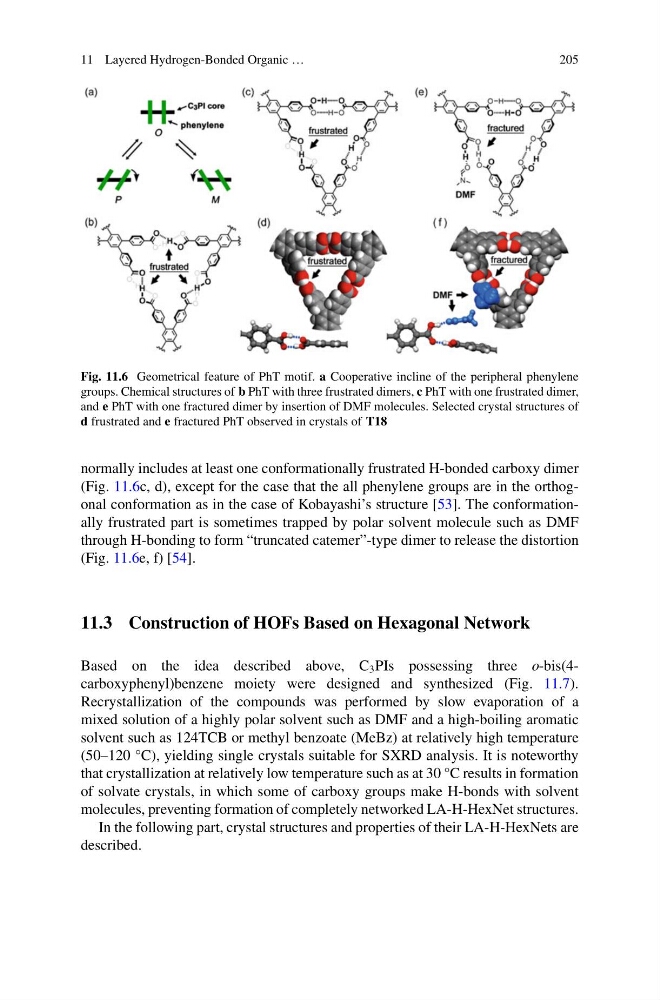
Fig. 11.6 Geometrical feature of PhT motif. a Cooperative incline of the peripheral phenylene
groups. Chemical structures of b PhT with three frustrated dimers, c PhT with one frustrated dimer,
and e PhT with one fractured dimer by insertion of DMF molecules. Selected crystal structures of
d frustrated and e fractured PhT observed in crystals of T18
normally includes at least one conformationally frustrated H-bonded carboxy dimer
(Fig. 11.6c, d), except for the case that the all phenylene groups are in the orthogonal conformation as in the case of Kobayashi’s structure [53]. The conformationally frustrated part is sometimes trapped by polar solvent molecule such as DMF
through H-bonding to form “truncated catemer”-type dimer to release the distortion
(Fig. 11.6e, f) [54].
11.3 Construction of HOFs Based on Hexagonal Network
Based on the idea described above, C 3 PIs possessing three o-bis(4carboxyphenyl)benzene moiety were designed and synthesized (Fig. 11.7).
Recrystallization of the compounds was performed by slow evaporation of a
mixed solution of a highly polar solvent such as DMF and a high-boiling aromatic
solvent such as 124TCB or methyl benzoate (MeBz) at relatively high temperature
(50–120 °C), yielding single crystals suitable for SXRD analysis. It is noteworthy
that crystallization at relatively low temperature such as at 30 °C results in formation
of solvate crystals, in which some of carboxy groups make H-bonds with solvent
molecules, preventing formation of completely networked LA-H-HexNet structures.
In the following part, crystal structures and properties of their LA-H-HexNets are
described.
205
Fig. 11.6 Geometrical feature of PhT motif. a Cooperative incline of the peripheral phenylene
groups. Chemical structures of b PhT with three frustrated dimers, c PhT with one frustrated dimer,
and e PhT with one fractured dimer by insertion of DMF molecules. Selected crystal structures of
d frustrated and e fractured PhT observed in crystals of T18
normally includes at least one conformationally frustrated H-bonded carboxy dimer
(Fig. 11.6c, d), except for the case that the all phenylene groups are in the orthogonal conformation as in the case of Kobayashi’s structure [53]. The conformationally frustrated part is sometimes trapped by polar solvent molecule such as DMF
through H-bonding to form “truncated catemer”-type dimer to release the distortion
(Fig. 11.6e, f) [54].
11.3 Construction of HOFs Based on Hexagonal Network
Based on the idea described above, C 3 PIs possessing three o-bis(4carboxyphenyl)benzene moiety were designed and synthesized (Fig. 11.7).
Recrystallization of the compounds was performed by slow evaporation of a
mixed solution of a highly polar solvent such as DMF and a high-boiling aromatic
solvent such as 124TCB or methyl benzoate (MeBz) at relatively high temperature
(50–120 °C), yielding single crystals suitable for SXRD analysis. It is noteworthy
that crystallization at relatively low temperature such as at 30 °C results in formation
of solvate crystals, in which some of carboxy groups make H-bonds with solvent
molecules, preventing formation of completely networked LA-H-HexNet structures.
In the following part, crystal structures and properties of their LA-H-HexNets are
described.