

(based on bioactives from green algae such as Ulva lactuca, or terrestrial plants as
Carpobrotus edulis), low requirements to oxygen, resistance to high temperatures,
and absence of aestivation (Cánovas et al. 2019; Domínguez-Godino and GonzálezWangüemert 2018a, b, 2019, 2020). Also, H. arguinensis can be cultured on
polyculture systems with another commercial species as Ulva lactuca and
Paracentrotus lividus (Domínguez-Godino and González-Wangüemert 2018c) and
used on IMTA (Integrated Multitrophic Aquaculture) systems allowing the reduction of organic matter levels on sediments under fish cages (sea bream and sea bass)
or under mussel/oyster batting.
The biotechnology which has allowed the aquaculture of this target species has
been a perfect example of knowledge transference from a research center to a
company, resulting in the start-up of Guatizamar S.L., whose aquaculture installations are located in Chiclana de la Frontera (Cadiz). It is important to highlight that it
is the first European company focused on sea cucumber aquaculture (larva and
juvenile production, fattening, and processing) and the first world company on
aquaculture production of H. arguinensis.
20.3.5 Others
In August 1986, ACUINOVA (a company from the Pescanova group) started a
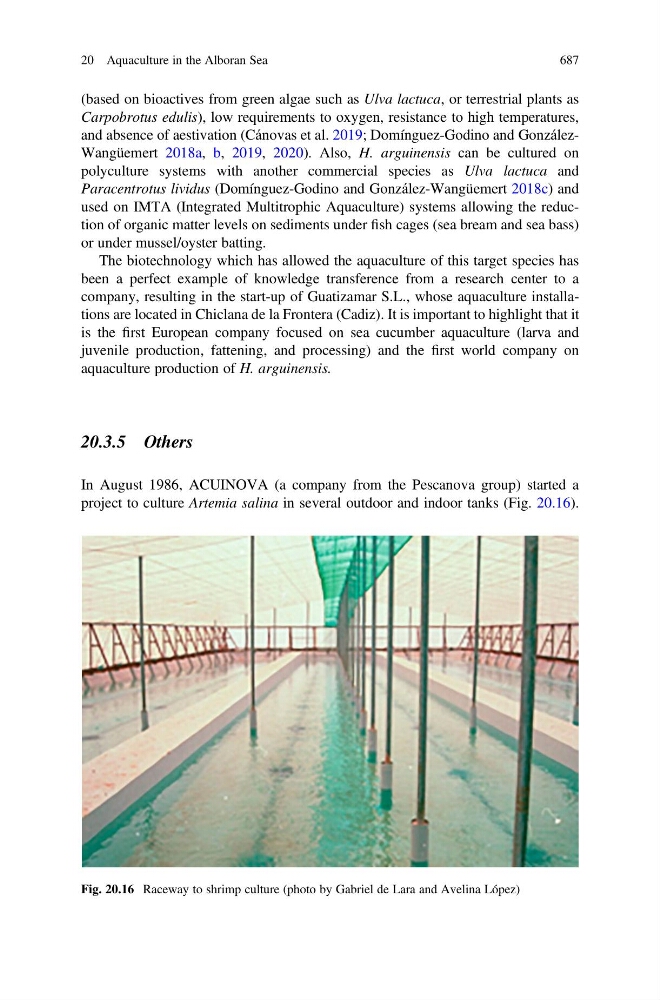
project to culture Artemia salina in several outdoor and indoor tanks (Fig. 20.16).
Fig. 20.16 Raceway to shrimp culture (photo by Gabriel de Lara and Avelina López)
20 Aquaculture in the Alboran Sea
687