

(Figs. 3.3, 3.4, and 3.5). It is a Mediterranean-type climate, which is loosely defined
as a subtropical to midlatitude climate; Csa climate in the Köppen-Geiger Classification System updated by Peel et al. (2007). However, on the easternmost side, there
are small areas with BSh (hot steppe) and BWh (hot desert) climates (AEMET-IM
2011). The strong summer–winter rainfall contrast that characterizes the Mediterranean climate is associated with pronounced seasonal cycles in most climatic
variables.
3.1.1 Precipitation
The periods of precipitation occurrence are associated with the passage of synoptic
midlatitude cyclonic systems: extratropical baroclinic cyclones and high-level
cyclonic systems, stretched toward subtropics troughs and cut-off lows, both generated by Rossby waves breaking. The distribution of precipitation (Algeciras: 991.8;
Malaga: 533.7; Almeria 199.9; Melilla 388.8 mm year
À1 during the period
1981–2010) shows large westward longitudinal precipitation gradients along both
coasts, mainly in winter (Figs. 3.4, 3.5, and 3.6), being shadowed by mountain
ranges. The most common explanation for this pattern is that precipitation is
enhanced as air ascends on the windward side of the mountains and reduced as air
descends on the leeward side. The rainfall annual minima occur on the east coast of
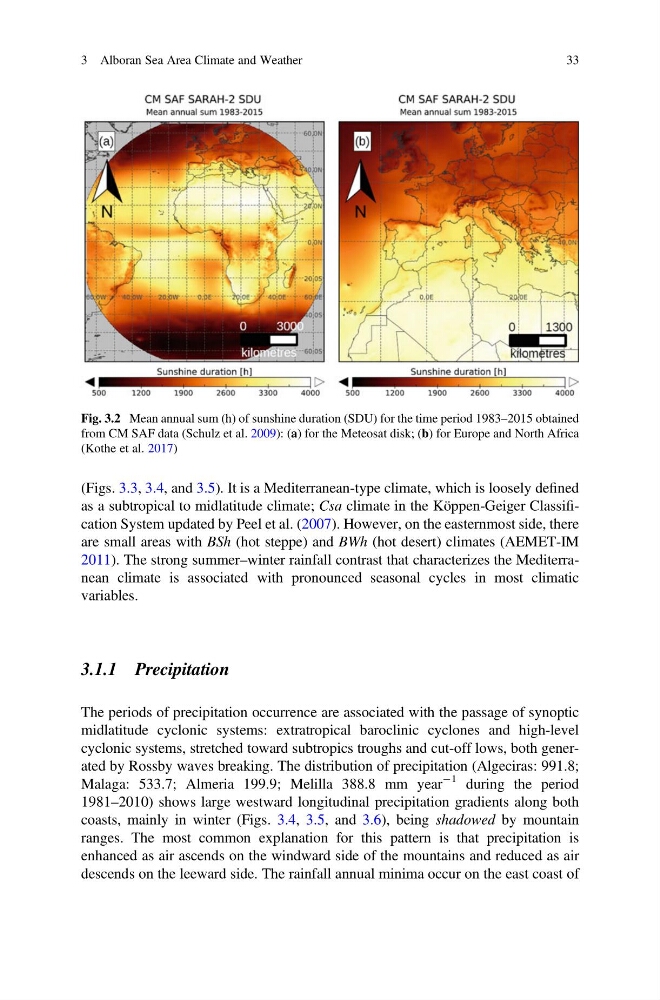
Fig. 3.2 Mean annual sum (h) of sunshine duration (SDU) for the time period 1983–2015 obtained
from CM SAF data (Schulz et al. 2009): (a) for the Meteosat disk; (b) for Europe and North Africa
(Kothe et al. 2017)
3 Alboran Sea Area Climate and Weather
33
as a subtropical to midlatitude climate; Csa climate in the Köppen-Geiger Classification System updated by Peel et al. (2007). However, on the easternmost side, there
are small areas with BSh (hot steppe) and BWh (hot desert) climates (AEMET-IM
2011). The strong summer–winter rainfall contrast that characterizes the Mediterranean climate is associated with pronounced seasonal cycles in most climatic
variables.
3.1.1 Precipitation
The periods of precipitation occurrence are associated with the passage of synoptic
midlatitude cyclonic systems: extratropical baroclinic cyclones and high-level
cyclonic systems, stretched toward subtropics troughs and cut-off lows, both generated by Rossby waves breaking. The distribution of precipitation (Algeciras: 991.8;
Malaga: 533.7; Almeria 199.9; Melilla 388.8 mm year
À1 during the period
1981–2010) shows large westward longitudinal precipitation gradients along both
coasts, mainly in winter (Figs. 3.4, 3.5, and 3.6), being shadowed by mountain
ranges. The most common explanation for this pattern is that precipitation is
enhanced as air ascends on the windward side of the mountains and reduced as air
descends on the leeward side. The rainfall annual minima occur on the east coast of
Fig. 3.2 Mean annual sum (h) of sunshine duration (SDU) for the time period 1983–2015 obtained
from CM SAF data (Schulz et al. 2009): (a) for the Meteosat disk; (b) for Europe and North Africa
(Kothe et al. 2017)
3 Alboran Sea Area Climate and Weather
33