

such as Sprattus sprattus, Platichthys flesus, or Raja clavata also occurred during the
cold episodes.
At present, the Mediterranean biota is still changing, mainly due to the regional or
global effects of human activity. Since 1869, new species of Indo-Pacific origin are
arriving again through the Red Sea into the Mediterranean via the Suez Canal. These
current migrations of species have been called Lessepsians, in honour of Ferdinand
de Lesseps, an engineer who designed the Suez Canal. Fistularia commersonii is the
first Indo-Pacific fish species cited in the Alboran Sea (Sánchez-Tocino et al. 2007),
which spent years to colonize the entire Mediterranean, from the Sea Red to the
Atlantic, since it was cited for the first time in the coasts of Israel in the year 2000
(Golani 2000).
11.3 The Alboran Sea as a Biogeographical Entity
The Alboran Sea is defined by the existence of geographical limits, at both sides of
its longitudinal range, that work as permeable biogeographical barriers, mainly the
Strait of Gibraltar and the hydrographic front between Oran and Almeria. They not
only are geographic limits, but also affect the distribution of species and become the
boundaries of a biogeographical area, the Alboran Sea.
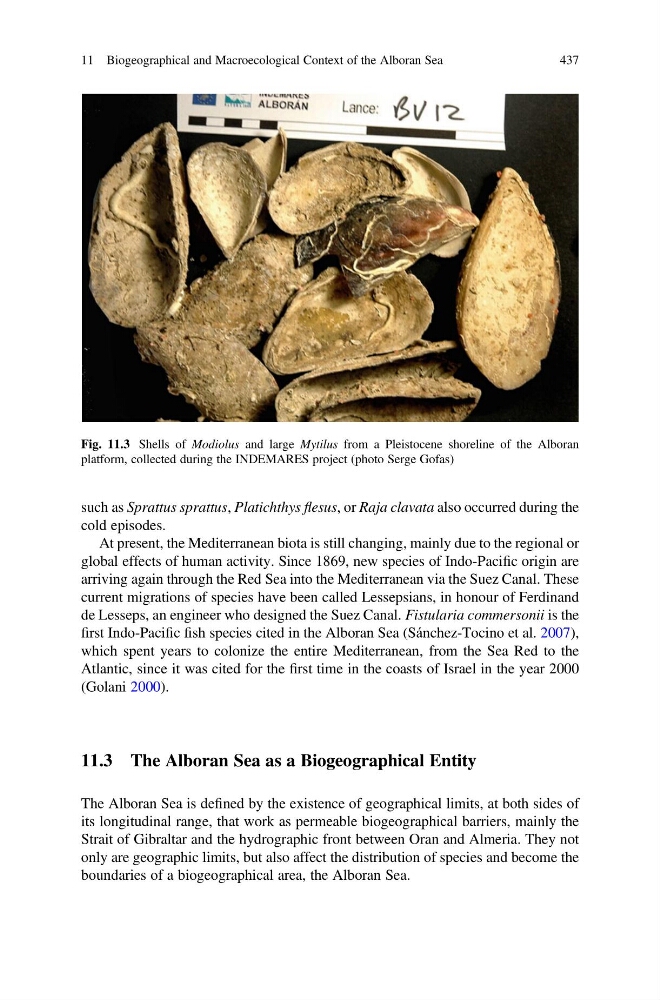
Fig. 11.3 Shells of Modiolus and large Mytilus from a Pleistocene shoreline of the Alboran
platform, collected during the INDEMARES project (photo Serge Gofas)
11 Biogeographical and Macroecological Context of the Alboran Sea
437
cold episodes.
At present, the Mediterranean biota is still changing, mainly due to the regional or
global effects of human activity. Since 1869, new species of Indo-Pacific origin are
arriving again through the Red Sea into the Mediterranean via the Suez Canal. These
current migrations of species have been called Lessepsians, in honour of Ferdinand
de Lesseps, an engineer who designed the Suez Canal. Fistularia commersonii is the
first Indo-Pacific fish species cited in the Alboran Sea (Sánchez-Tocino et al. 2007),
which spent years to colonize the entire Mediterranean, from the Sea Red to the
Atlantic, since it was cited for the first time in the coasts of Israel in the year 2000
(Golani 2000).
11.3 The Alboran Sea as a Biogeographical Entity
The Alboran Sea is defined by the existence of geographical limits, at both sides of
its longitudinal range, that work as permeable biogeographical barriers, mainly the
Strait of Gibraltar and the hydrographic front between Oran and Almeria. They not
only are geographic limits, but also affect the distribution of species and become the
boundaries of a biogeographical area, the Alboran Sea.
Fig. 11.3 Shells of Modiolus and large Mytilus from a Pleistocene shoreline of the Alboran
platform, collected during the INDEMARES project (photo Serge Gofas)
11 Biogeographical and Macroecological Context of the Alboran Sea
437